This page details the history of the Tewson family in England (as well as the related Cayley family) through a detailed ancestry of David George Cayley Tewson.
Tree: Ancestors of David George Cayley Tewson
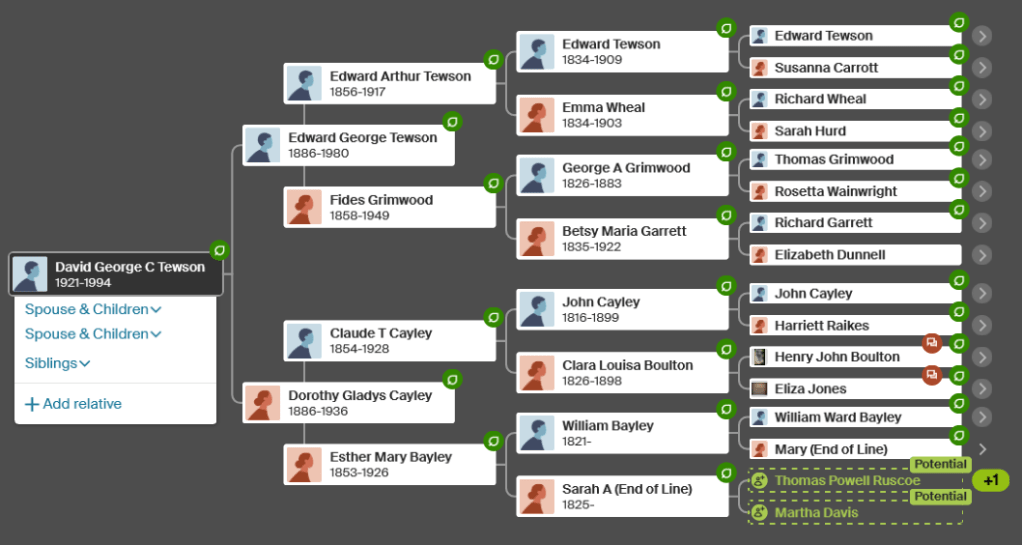
Origins
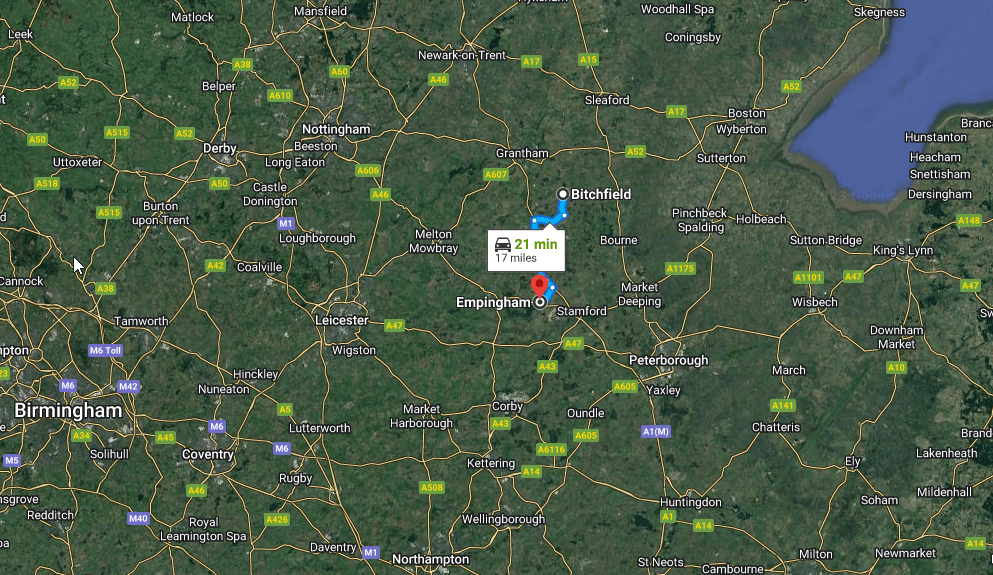
The earliest known Tewsons that are direct ancestors in this tree are associated with Lincolnshire, England.
On 20 December 1607, a John Tuson was christened in Deeping Saint James, the son of Johanis Tuson. Nothing else is known about him, including any marriages or children. However, his baptism location is quite close to the first ancestors who can be connected to this family tree, who came from Market Deeping which is less than two miles away and in current times essentially the other side of the same town. The area as a whole is known as “The Deepings” after its low-lying geography.
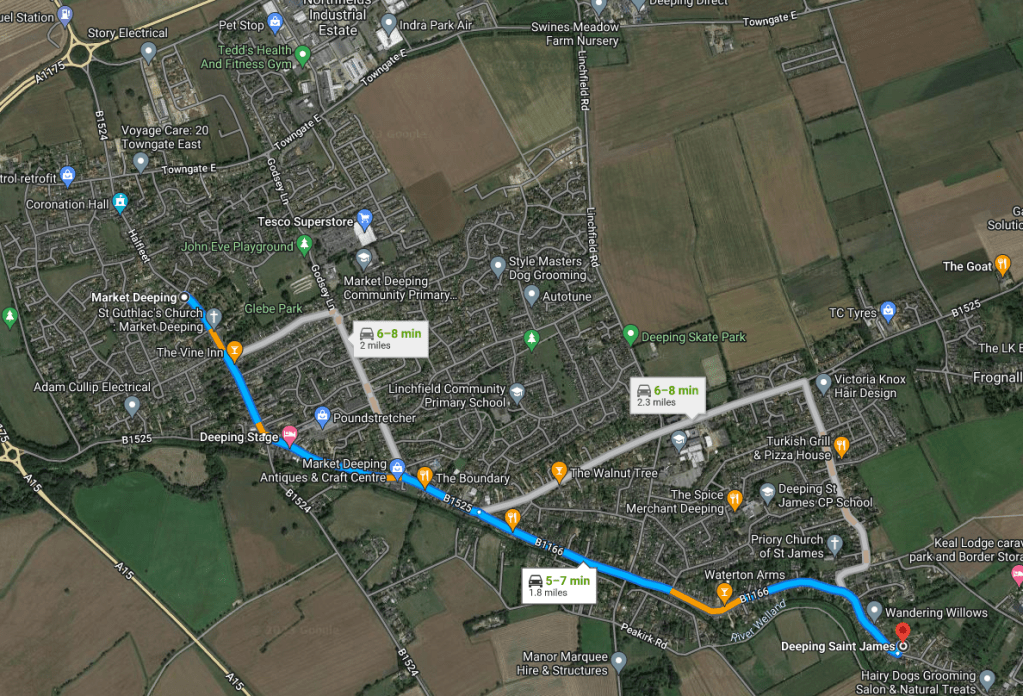
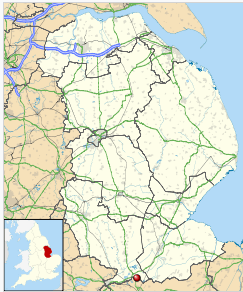
Henry Tuson (1646-1681)
Henry Tuson is listed as the father in two baptism records: Francis Tuson on 31 August 1672 and Jonnathan Tuson on 6 May 1677, both in Market Deeping, Lincolnshire, England. His wife’s name “Ann” is provided in the second record (for Jonnathan) but might also be the mother of Francis.
Other sources are scarce. Trees have his birth year as 1646 and his burial date as 28 March 1681 (both plausible given the dates of his children’s births) but without sources. Those trees also have his parents as John (1607-1646) and Susanna Tuson, again without sources.
His name shows up in relation to a maintenance bond in Market Deeping (see here).

This Henry Tuson is likely the same person or a family member given the names, place, and date.
Francis Tuson (1672-1756)
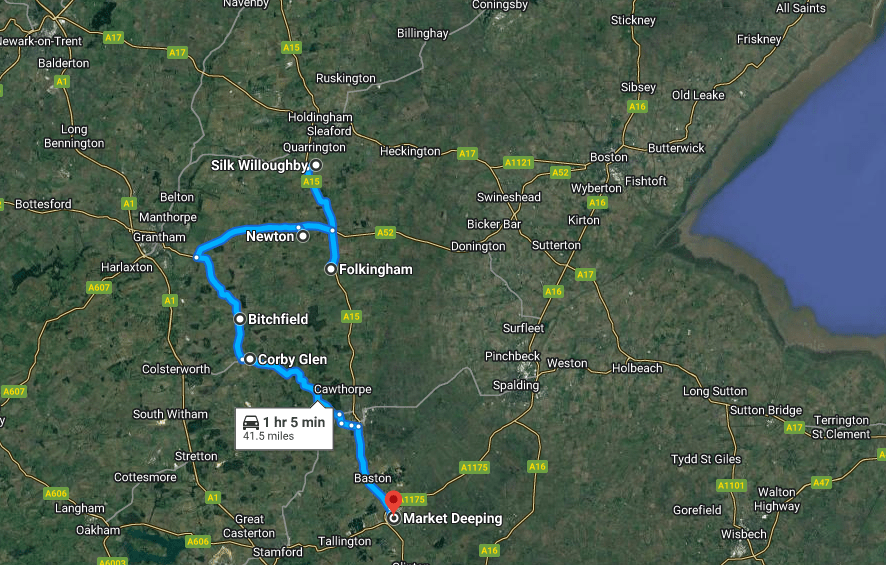
Francis Tuson was born in 1672 in Lincolnshire, England (possibly in Corby Glen) and baptized 31 August 1672 in Market Deeping, Lincolnshire. His father was Henery Tuson (1646-1681), whose known wife was named Anne.
On 16 May 1704 he married Susannah Franks in Newton by Folkingham. Her ancestry is unknown. If her age recorded at death (62 in 1751) was incorrect and she was older, possibly she was the Susannah who was baptized 5 December 1680 in Silk Willoughby, Lincolnshire to Will and Susanna Franks. There is a 1689 baptism of a Susannah Franks in Marsham, Norfolk but that’s 80 miles away.
After marriage they settled in Bitchfield. Their children included Edward (1705), Francis (1706), Sarah (1708), Anne (1710), Susannah (1711), William (1713-1715), Alice (1717-1720), Elizabeth (1718), and Jonathan (1723-1724).
Edward’s wife Susannah died in 1751 and was buried 13 March 1751 in Lincolnshire. Her age was recorded as 62, which would indicate a birth around 1689.
Francis died in 1755 and was buried 23 September 1755 in Bitchfield.
Edward Tuson (b. 1705)
Edward Tuson was born in 1705 and baptized 27 March 1705 in Bitchfield, Grantham, Lincolnshire, England. His parents were Francis Tuson (1672-1756) and Susannah Franks (1689-1751).
No records have been found for the first 42 years of his life. Quite likely he had at least one earlier marriage and possibly even children. Maybe there is even an intervening generation and a son Edward born about 1725-1730 matches the later records of this person.
Regardless, after his baptism, he does not appear again until his marriage to Jane Whitfield (born about 1727) in Bitchfield on 22 March 1747 in Stamford, Lincolnshire at Saint Michael. Her ancestry is unknown.
Their children were Francis (1749), Susanna (1752), William (1755), Edward (1756), and Joshua (1759).
Other than his birth, marriage, and the baptisms of his children, there are no records of Edward’s life, or death.
Edward Tewson (1756-1835)
Edward Tewson was born 3 October 1756 and baptized 8 October in Bitchfield, Grantham, Lincolnshire, England. His parents were most likely* Edward Tuson (1705-1795) and Jane Whitfield (1727-1795).
(* There’s a male Tewson (given name unknown) baptized 1 Jun 1755 in Great Gonerby, Lincolnshire to John and Mary Tewson. There is nothing that confirms this Edward Tewson is the one born in Bitchfield except proximity, so there is some chance his parents are misidentified here. However, a lack of a given name at baptism often suggests a child that died shortly after birth, and no other Tewson births of the right period have been found.)
In July 1783 he married Ann Grant. Ann was born 24 May 1760 in Empingham, Rutland, Lincolnshire and was the daughter of John Grant (1722-1810) and Hannah Parker (1723-1798).
Their children were John (1789), Edward (1792), Anne (1795), Francis (1798), Hannah (1801), and Joshua (1804).
Edward died 24 May 1835 in Empingham. His obituary states that he was a farmer.
His will of May 6, 1831 mentions only two children: Hannah, the wife of John Walker, and Edward. The two were granted equal shares to his estate after the trustees Robert Bunning and Richard Royce had disposed of the estate. (The old-style handwriting is hard to read, but this is my rough takeaway of the terms and individuals involved.)
However, records indicate the Edward and his wife had other children: John (1789), Anne (1795), Francis (1798), and Joshua (1804). It’s possible there was another Edward and Ann Tewson in Empingham of the same age that are being conflated, but possibly Edward simply did not leave an inheritance for all of his children (he might have given them something earlier, or wanted to preserve his estate for favored children, or perhaps there wasn’t much of an estate expected and so he chose the children who needed it the most).
John Tewson (1789-1846)
John Tewson was baptized 3 January 1790 in Empingham, Rutland, England, though he was apparently born the previous year. His parents were Edward and Anne Tewson. Possibly they are the same as Edward Tewson (1755-1835) and Anne Grant (1760-1825) of Empingham, Rutland, England.
In 1812 he married Sarah Caborn in Wragby, Lincolnshire. Sarah was born about 20 May 1788 in Irby in the Marsh, Lincolnshire, the daughter of William Caborn (b. c. 1750) and his wife Mary (Neal or Edwards?) (1754-1818). John and Sarah Tewson had a son Edward born in 1813, but it’s unclear if they had any more children.
Very little is known about John Tewson’s life. He seems to have been a broker, a similar profession to his son and at least three grandsons (who were land agents, furniture brokers, and/or auctioneers). But beyond a reference in the 1841 census, no records of this business remain.
Possibly he was the Mr. Tewson who was operating in London in 1814 and employed an apprentice who accidentally started a fire that destroyed 16 houses and several warehouses along the Thames (two accounts with somewhat different details follow):
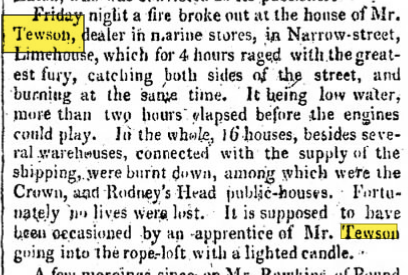
19 Nov 1814, Sat · Page 4
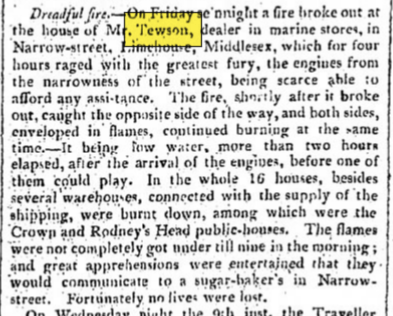
29 Nov 1814, Tue · Page 4
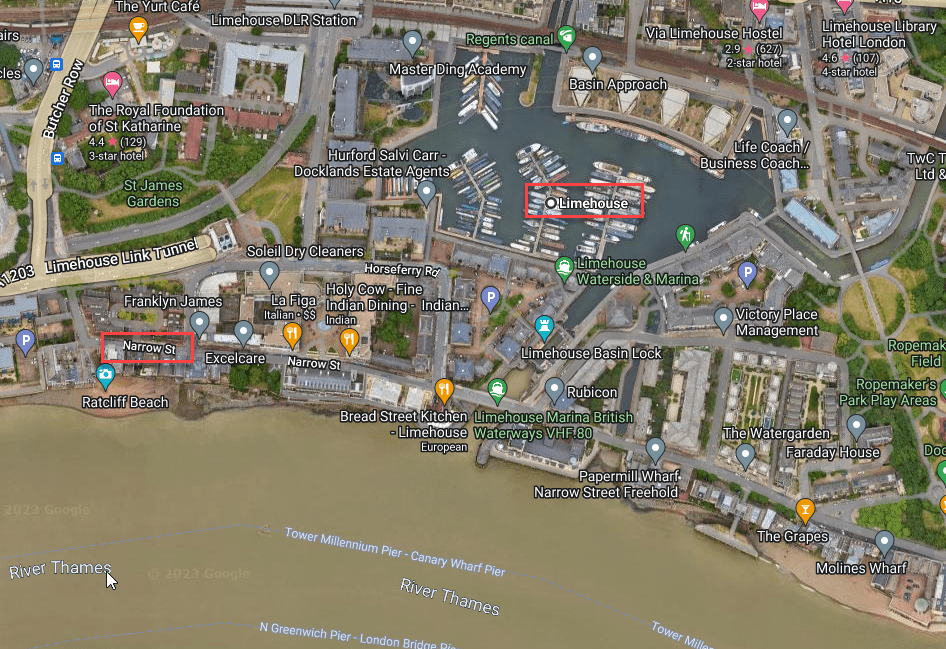
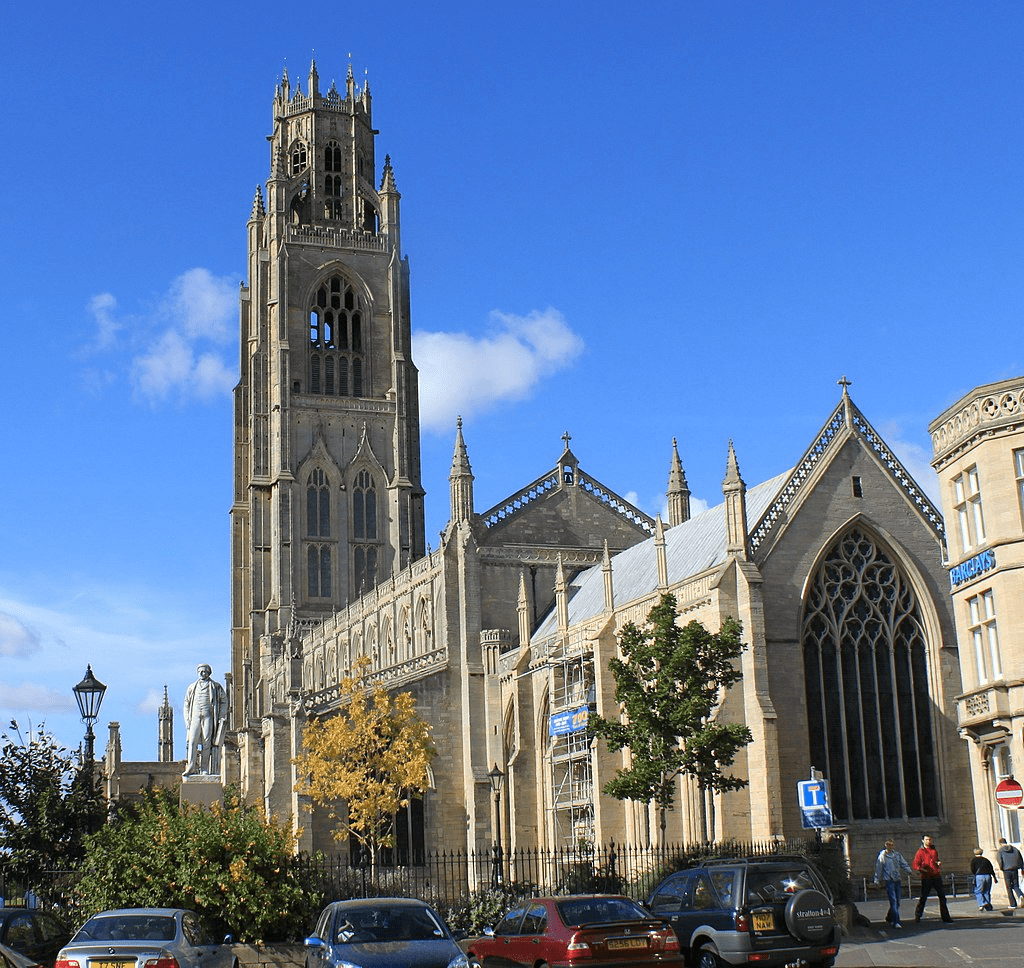
John seems to have been estranged from his wife later in life. In the 1841 census (the first undertaken in England), John Tewson (listed as age 50, though he would have been 52) is found in Boston, Lincolnshire living without any of his family members as a boarder in a household in Caroline Court, working as a “broker.” Meanwhile, his wife Sarah was living with her son Edward elsewhere in Boston.
The current area where John lived seems quite modest (although it’s unclear what it was like in 1841):
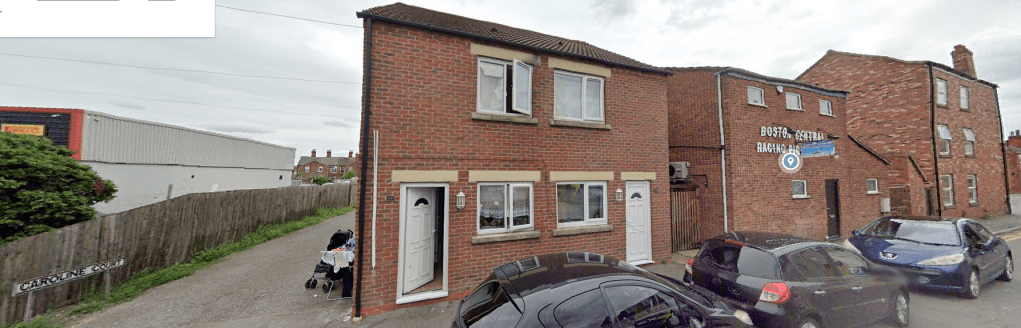
John died 3 April 1846 in Boston.
By 1851, 5 years after her husband’s death, John’s wife Sarah was living in her own home in Stamford St John with a 16-year old lodger Joseph Britton (who was working as a cabinet maker). Interestingly, her profession is listed as “Broker and furniture dealer” indicating she had picked up something of her husband and son’s business (or possibly been a part of the family business behind the scenes the whole time). She was back living with her son Edward by 1861, and died in 1871.
Edward Tewson (1813-1874)
Edward Tewson was born 2 March 1813 in Burgh Le Marsh, Lincolnshire, England. He was the son of John Tewson (1789-1846) and Sarah Caborn (1788-1871).
He married Susannah Carrott on 2 April 1832 in Sibsey, Lincolnshire, just north of Boston. Susannah, born 13 March 1814 in Sibsey, was the daughter of James Carrott and Elizabeth Kelk.
Their children were James Edward (1833-1833), Edward (1834), Frederick William (1835), Joshua (1838), John (1840), Elizabeth (1843), Susanna (1845), Frances (1847), Benjamin (1851), James (1854), and Emma (1856).
Edward’s father John was a broker of furniture and other items, and he undertook a similar career as an auctioneer. He is listed as an auctioneer in the 1841 census, at which time he was living on Strait Bargate in Boston, Linconshire with his wife, his four eldest sons, and his mother Sarah. He appears to have done business out of Strait Bargate.
An 1842 directory in Boston listed Edward as a furniture broker.
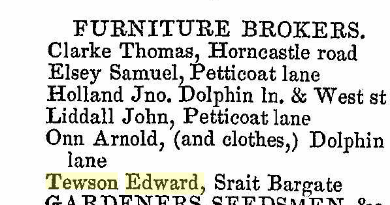
In 1845, Edward might (if he’s the same person highlighted below) have invested in a company to provide water to the city of Boston. That Edward Tewson was also apparently a councillor of the borough of Boston.
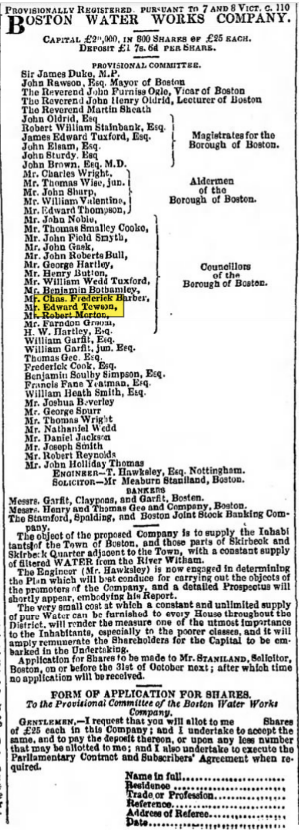
19 Sep 1845, Fri · Page 10 newspapers.com
Also in 1845, a Mr. Tewson of Boston seems to have invested in a railroad line between Boston and Birmingham:
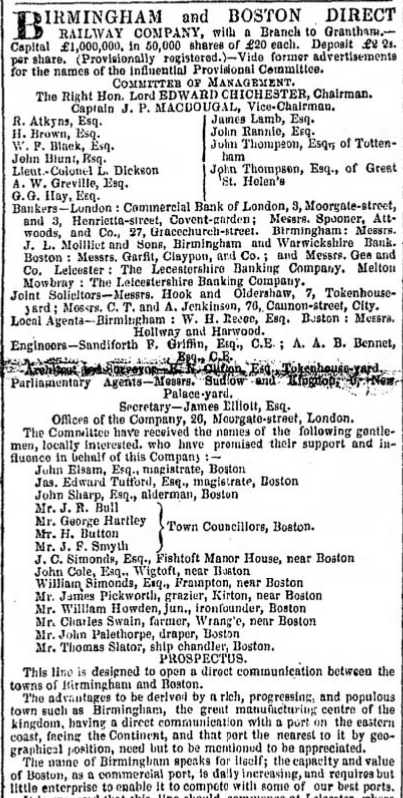

28 Oct 1845, Tue · Page 1
The same Mr. Tewson invested in a similar scheme the next month for the Louth and Gainsborough Direct Railway, to provide a connection through Lincolnshire ultimately to Sheffield, Manchester, and Liverpool.
It’s unclear if either scheme was successful. The current British railway system (PDF) has only a local line going to Boston, with the main east coast line going through Grantham, with a regional line connecting from there to Derby on the main route to Birmingham. There is also a local line from Gainsborough to Sheffield that has regional line connections to Manchester and Liverpool. Possibly the lines were built but the dreams of revitalizing Boston’s maritime economy simply did not come to pass. It does seem that Edward used the railways that were built to travel between his Boston operations to business storefronts in other cities.
Edward Tewson of Bargate is the subject of this little blurb in the “Our Carpet Bag” section of miscellaneous “news” of The Era (distributed in Greater London):

14 May 1848, Sun · Page 10
This same blurb was published in several other newspapers.
The following newspaper article announces a sale of “choice old bottle Wines” by Edward Tewson in 1848.
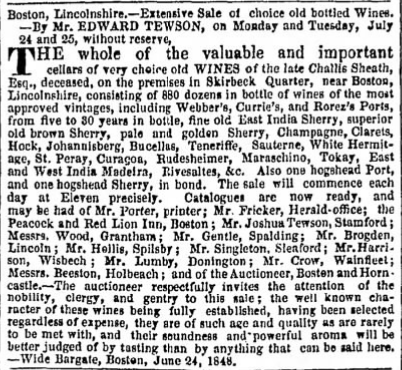
20 Jul 1848, Thu · Page 8 – Edward Tewson auctioning wine
Edward also sold real estate at auction, as in the following example.
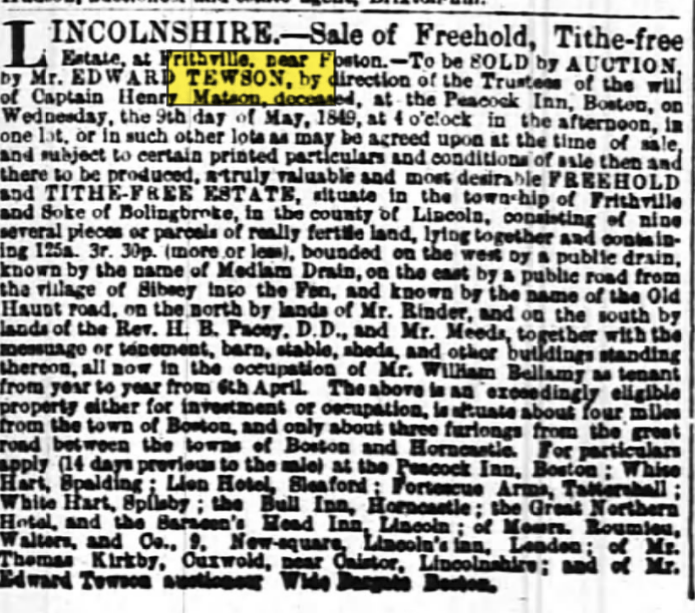
Other Edward Tewson auctions:
- https://www.newspapers.com/image/390807486/?terms=edward%20tewson&match=2
- https://www.newspapers.com/image/784912306/?terms=edward%20tewson&match=3
- https://www.newspapers.com/image/390386375/?terms=edward%20tewson&match=1
- https://www.newspapers.com/image/390139331/?terms=edward%20tewson&match=2
- https://www.newspapers.com/image/390344449/?terms=edward%20tewson&match=2
- https://www.newspapers.com/image/785356927/?terms=edward%20tewson&match=2
- https://www.newspapers.com/image/785572203/?terms=edward%20tewson&match=1, etc.
In September 1853, Edward is mentioned as attending the Architectural Society of the Diocese of Lincoln:
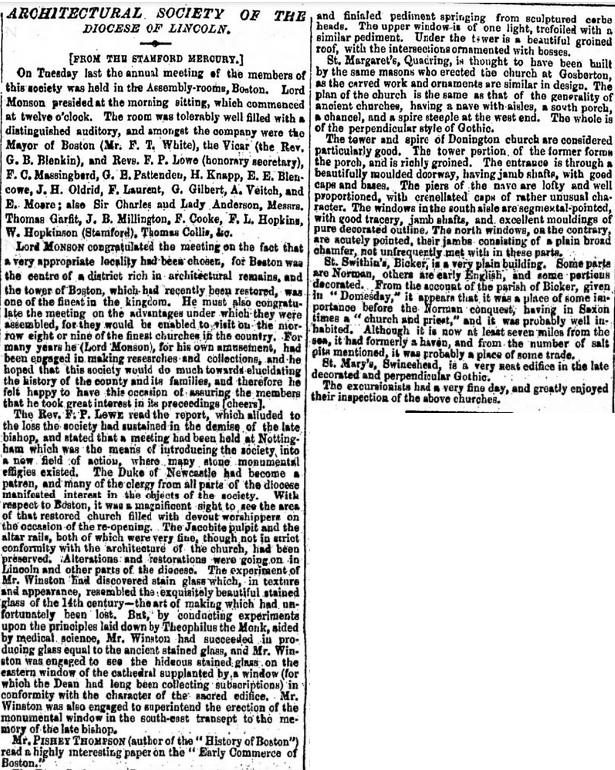

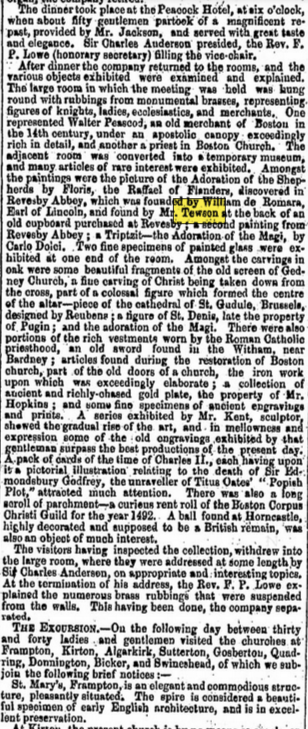
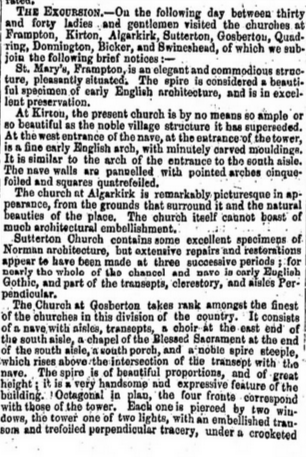
17 Sep 1853, Sat · Page 3
By 1857, Edward appears to have been working along with his son Edward, who followed him into his profession as an auctioneer:
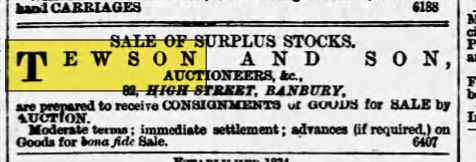
The Birmingham Journal
07 Feb 1857, Sat · Page 1
They seem to have been operating at least part time out of Banbury, southeast of Birmingham, but advertising in Birmingham and other places around the country. They also seem to have been looking for someone to come and assist the younger Edward Tewson as the elder Edward was getting old and in ill health:
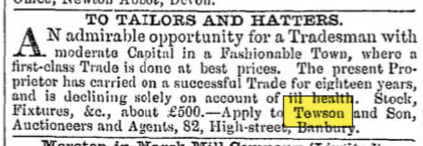
07 Mar 1857, Sat · Page 1
His son Edward left Banbury in September 1857 after an auction of his goods there. Edward appears to also have left Banbury at that time:
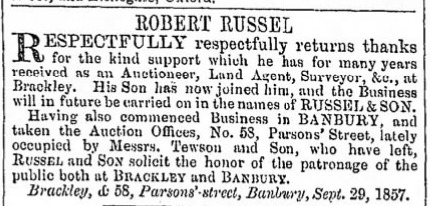
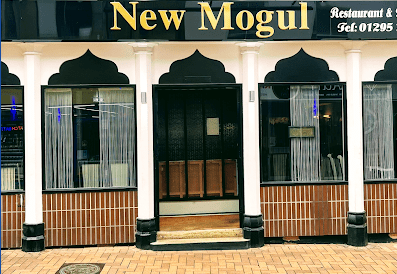
The current-day location of 58 Parson’s Street in Banbury hosts the New Mogul Indian restaurant.
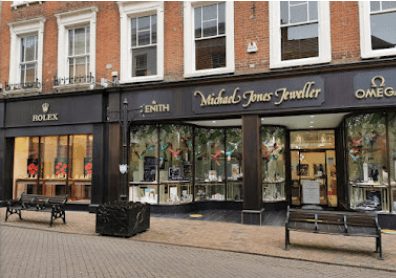
The storefront closest to 82 High Street (which appears to be above or in back) is 78-80 High Street, now a shop selling fine watches:
In addition to the business in Banbury, Edward seems to have let go of part of his business in Boston, while his son Edward moved to Hackney in Greater London. (The elder Edward does seem to have continued land auctions.)
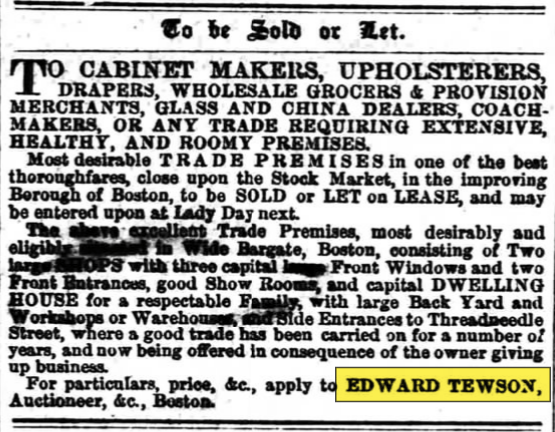
04 Feb 1858, Thu · Page 1
Edward seems likely to be the Mr. Tewson who was a “furniture dealer and broker in extensive business in Stamford” who sued a client over a contract dispute involving a piano:
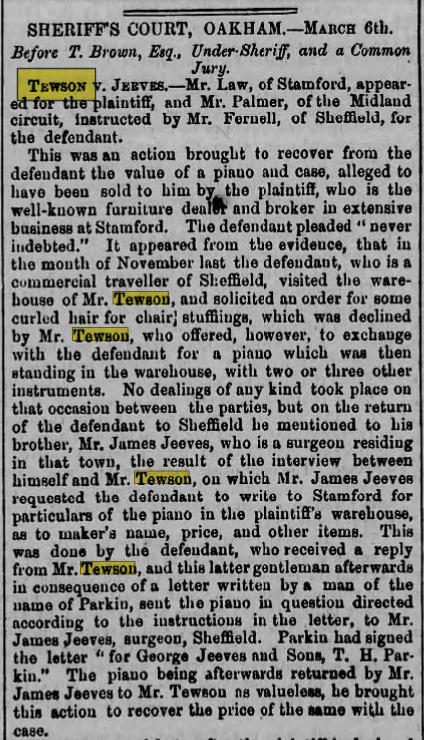
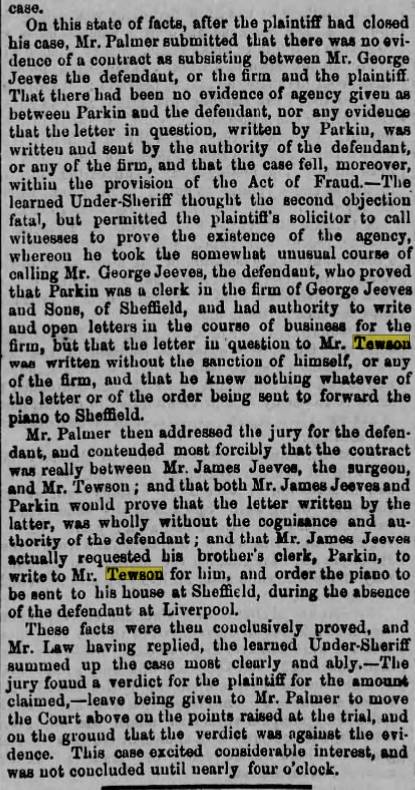
13 Mar 1858, Sat · Page 8
The defendant’s lawyers later moved for a new trial before a judge of assize (believing the defendant could not get a fair trial because Mr. Tewson was so well-known in Stamford). The new trial was granted, but not the judge of assize.
Legal issues aside, this shows that the Tewson business, in addition to Boston and Banbury, was also active in Stamford (which is located nearly mid-distance on the main route between those other cities), and well-enough known that it was an issue at trial.
His son Edward joined Mr. Debenham in forming the auctioneer form “Debenham and Tewson” in 1860. It also appears that his son Joshua began a career as an auctioneer about this same time, appearing in numerous auction announcements in newspapers. The elder Edward Tewson seems to have begun receding into retirement, possibly assisting his sons in the background.
In the 1861 census, Edward was still living in Boston, working as an “Alderman, Auctioneer, & Sheriff’s Officer.” He lived with his wife Susanna; his mother Sarah (age 72); his son Joshua (age 23, working as an auctioneer); his other children Elizabeth, Susanna, Frances, Benjamin, James, and Emma; and one servant.
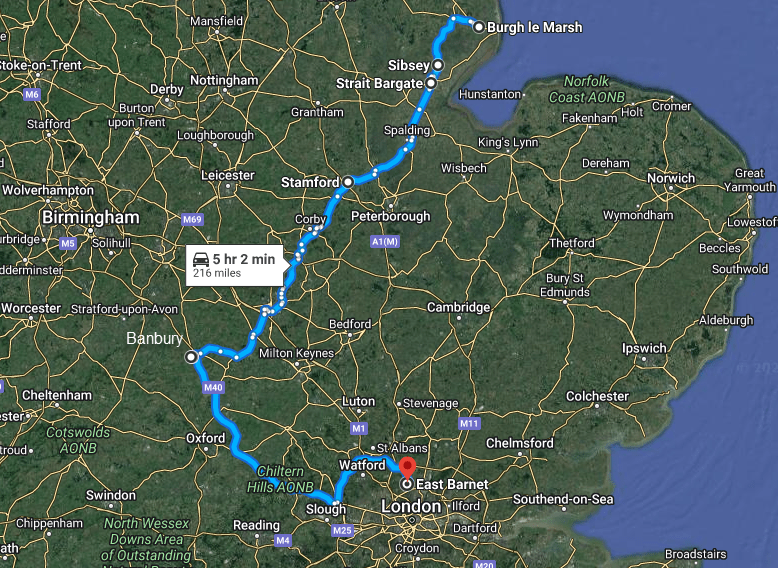
Edward’s 1871 census record has not been found. (His son Joshua had moved out and was living with a wife and children in Hull, Yorkshire.) Edward seems to have moved closer to London near the end of his life, as he died in East Barnet, Hertfordshire on 29 December 1874. His sons Edward Tewson and James Grant Tewson (also an auctioneer) were his executors. The will summary indicates it is for “effects under £450” (current equivalent about £63,000) so either he had lost much fortune later in life or (more likely) passed it on to his sons prior to death.
Edward Tewson (1834-1909)
Edward Tewson was born 9 September 1834 in Lincolnshire, England and baptized 12 September 1834 in Boston at St. Botolph’s. His parents were Edward Tewson (1813-1874) and Susanna Carrott (1814-1882).
In the 1841 census, Edward was living in Boston with his parents (with his father Edward working as an auctioneer), three brothers (Frederick, Joshua, and John), and his paternal grandmother Sarah.
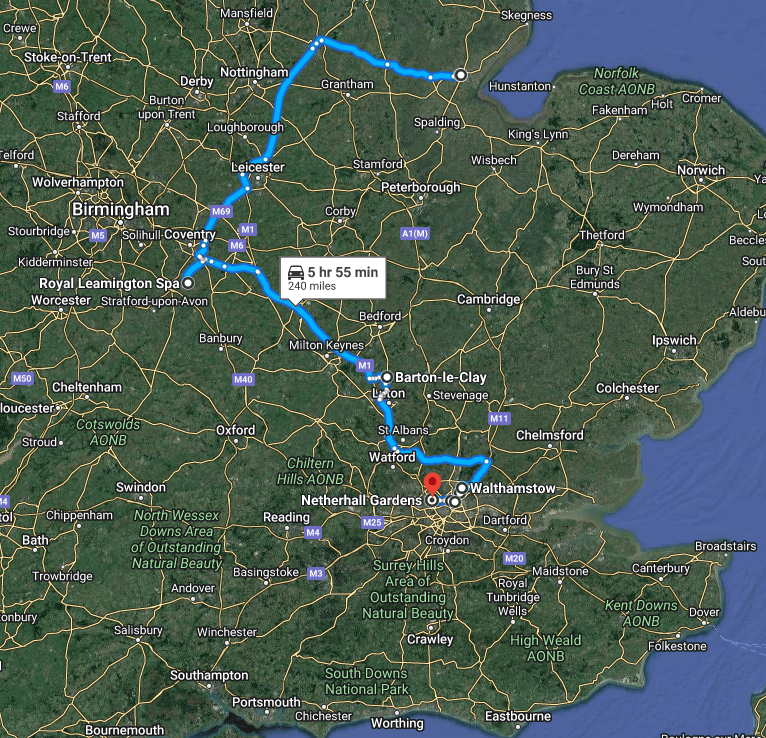
On 9 February 1856, Edward married Emma Wheal (b. 1834), the daughter of Richard Wheal and Sarah Hurd of Leamington Spa. They lived in Leamington Spa when their first son Edward was born.
Newspaper articles in 1857 suggest that Edward was operating an auctioneering company (Tewson and Son) with his father about 20 miles southwest of Leamington in Banbury. He or his father were also selling insurance in Banbury.
It appears that Edward and his father left Banbury in September 1857 and had an auction of their wares before departing:
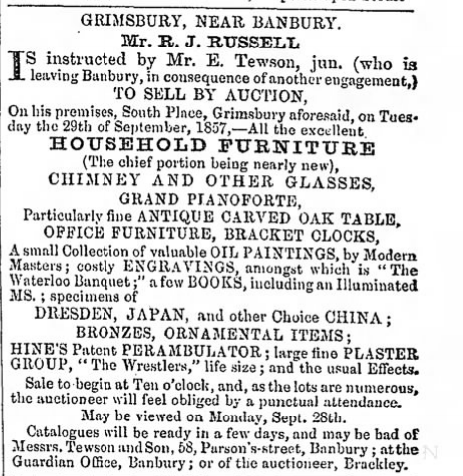
19 Sep 1857, Sat · Page 1
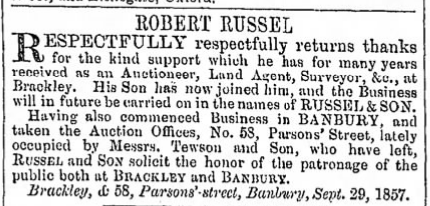
03 Oct 1857, Sat · Page 4
By 1858 or so, when their daughter Emma was born, Edward and Emma had moved to Hackney, Middlesex (in Dalston parish in London).
In June 1860, Edward Tewson became a partner in an auction firm with Mr. Debenham.

02 Jun 1860, Sat · Page 29
Cheapside is located just east of St Paul’s Cathedral in London.
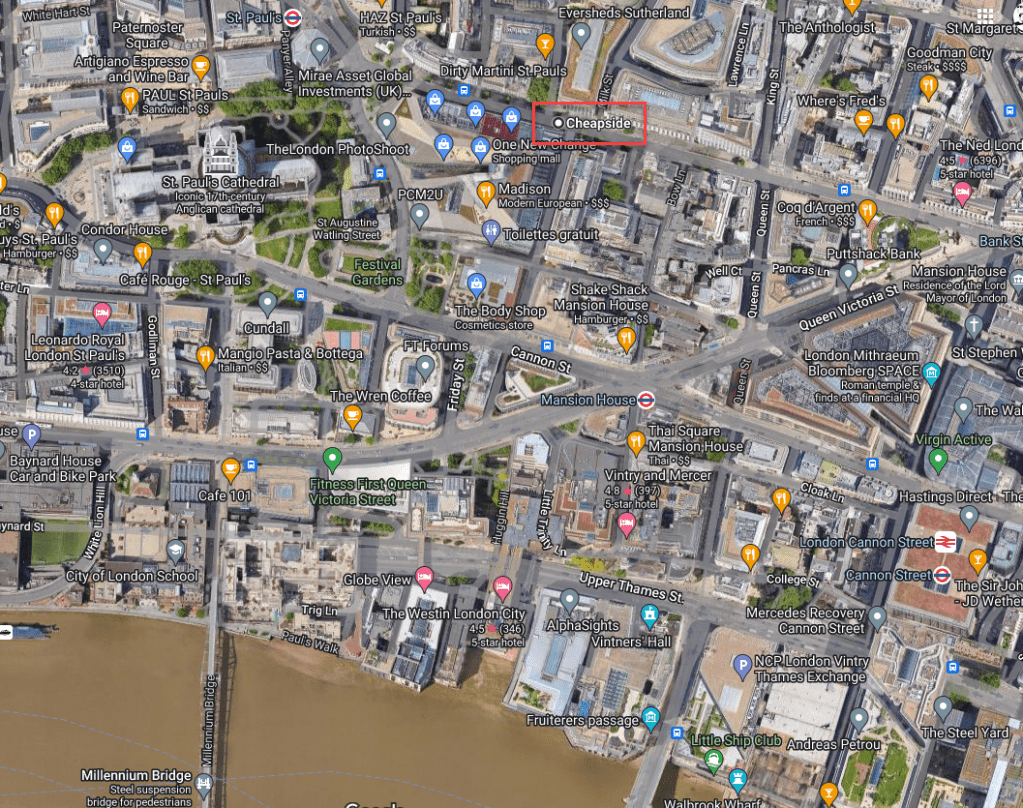
The location of the firm at 80 Cheapside as it exists today is a newer building (the neighborhood was heavily damaged during the Blitz and rebuilt over time; this particular building is quite new in historical terms, having been built in 1994).

From auction announcements in newspapers around London, Debenham and Tewson seem to have largely sold land and buildings, with an occasional auction of goods (often via estate sale) like furniture or imported trade goods from India and so on. But by modern standards they were mostly real estate investors. They added a third partner (Edmund Farmer) in 1865, and another (Bentley James Bridgewater) in 1973.
In the 1861 census Edward and Emma were living in Hackney with three children Edward Arthur (1856), Emma Hurd (1858), and Sellie (1860) and two servants (a housemaid and a nurse). Edward is listed as an auctioneer.
Edward and Emma’s later children were Frank Richard (1863), Walter Frederic (1865), Harry Theodore (1867), Mary (1869), Percy (1870), Florence (1871), Leonard (1872) Ada Constance (1874), Roland (1875), and Janet Sarah (1878). A newspaper article also mention a daughter born 11 Mar 1873 but she must have died young because she is not mentioned elsewhere.
The 1871 census record for the family has not been found. They seem to have moved from Hackney/Dalston after Harry was born to Walthamstow, where Mary and the other later children were born. Walthamstow was a quickly growing suburb at the time, so possibly they moved out but kept their ties to the church in Hackney.
The 1881 census has Edward and Emma; their children Emma, Florence, Ada, Roland, and Janet; and Emma’s younger sister Sarah Wheal living in Walthamstow on Grove Road. Edward was working as an auctioneer and house agent.
By 1891, Edward and Emma were living in Hampstead, London at “The Weald/Netherall Gardens” along with children Mary (who must have been in boarding school in 1881), Harry Theodore (a solicitor), Florence and her husband Leonard Collinson (a manufacturer and chemist), Emma’s sister Sarah Wheal, and 7 servants.
In the 1901 census, Edward and Emma were living north of London on Rectory Farm in Barton-le-Clay, Bedfordshire, England along with three servants. His occupations are listed as “tenant farmer, auctioneer, surveyor, land agent at 80 Cheapside, London.”

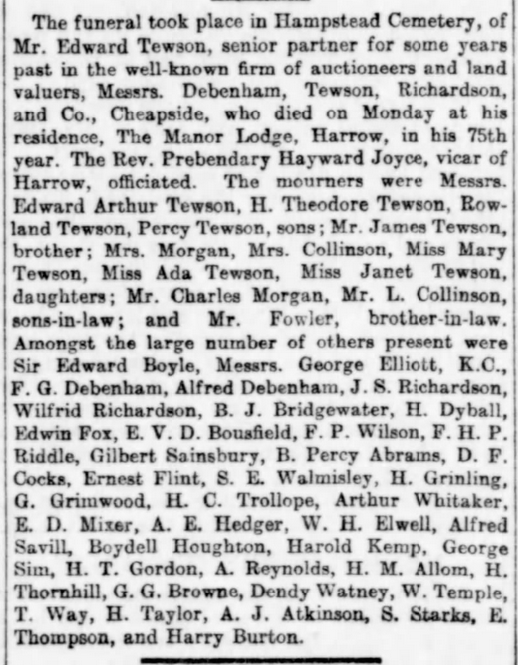
Edward died 7 June 1909 in Harrow on the Hill, London, England and was buried in Hampstead, London.
At the time of his death, per his obituary, Edward was a senior partner in a firm of “auctioneers and land valuers” Messrs. Debenham, Tewson, Richardson, and Co. of Cheapside.
He lived in the Manor Lodge in Harrow at the time of his death.
Edward Arthur Tewson (1856-1917)
Edward Arthur Tewson was born 18 July 1856 in Leamington Priors (aka Leamington Spa), Warwickshire, England. He was baptized 29 September 1856 at All Saints Church. His parents were Edward Tewson (1834-1909) and Emma Wheal.
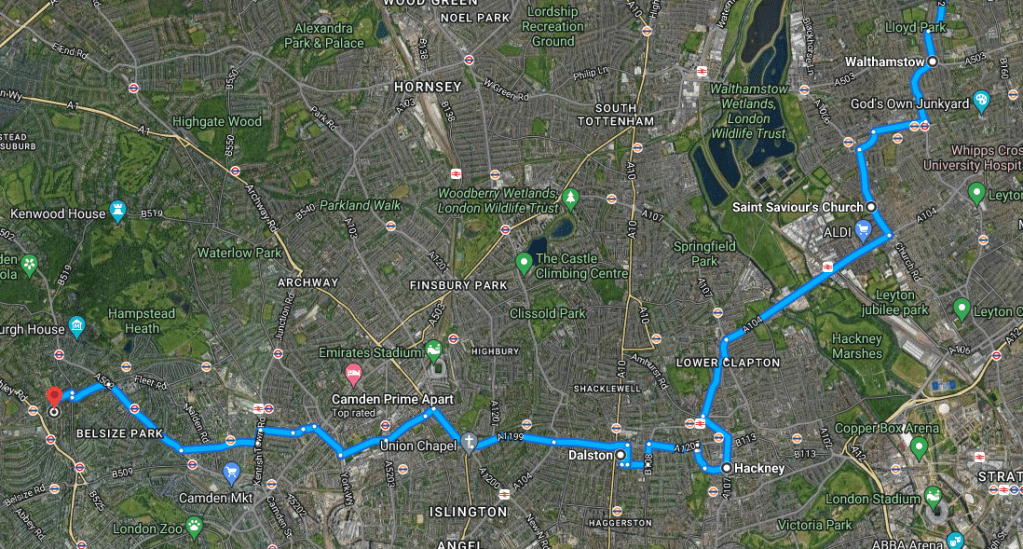
By 1858 (when his sister was born), as recorded in the 1861 census, his family had moved to Hackney, Middlesex in Greater London.
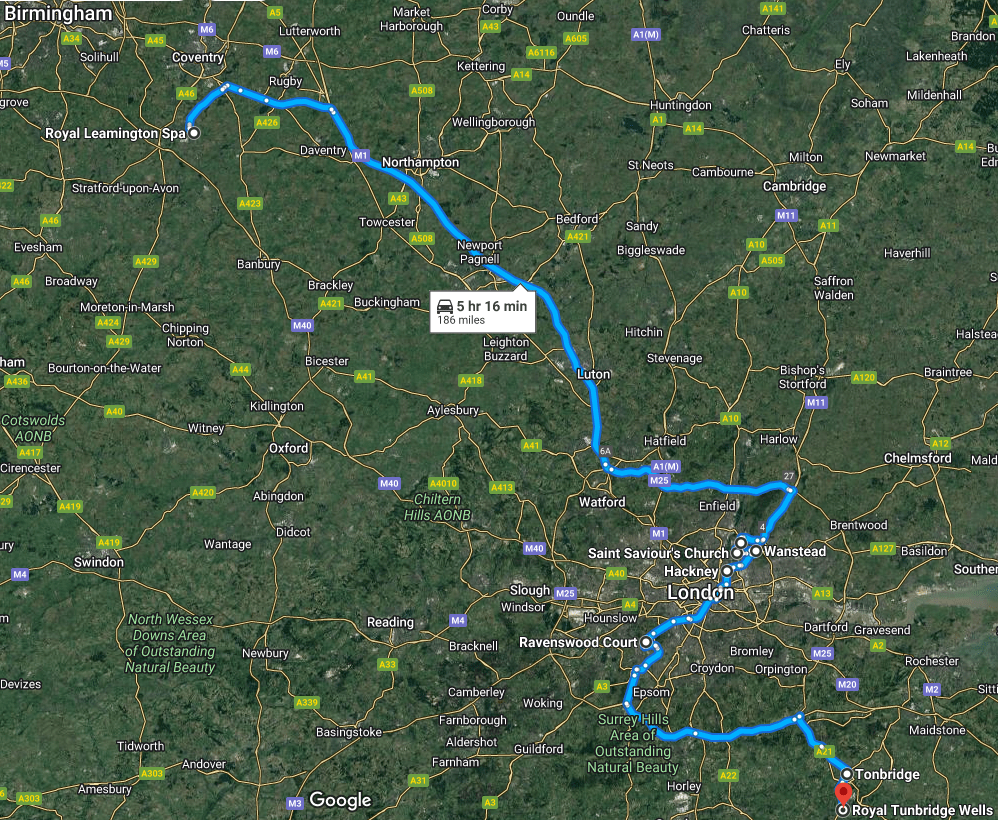
In 1871, Edward was living in Ravenswood House in Kingston on Thames, Surrey, England, an apparently small boarding school with half a dozen students (along with the headmaster and his wife, their daughter, a French teacher, and a servant). It’s unclear if any similar place exists today. There is a Ravenswood Court in Kingston (along Kingston Hill Road) which has a later building (PDF) constructed by Field Marshal Douglas Haig. Possibly Edward’s school was on the same site earlier.
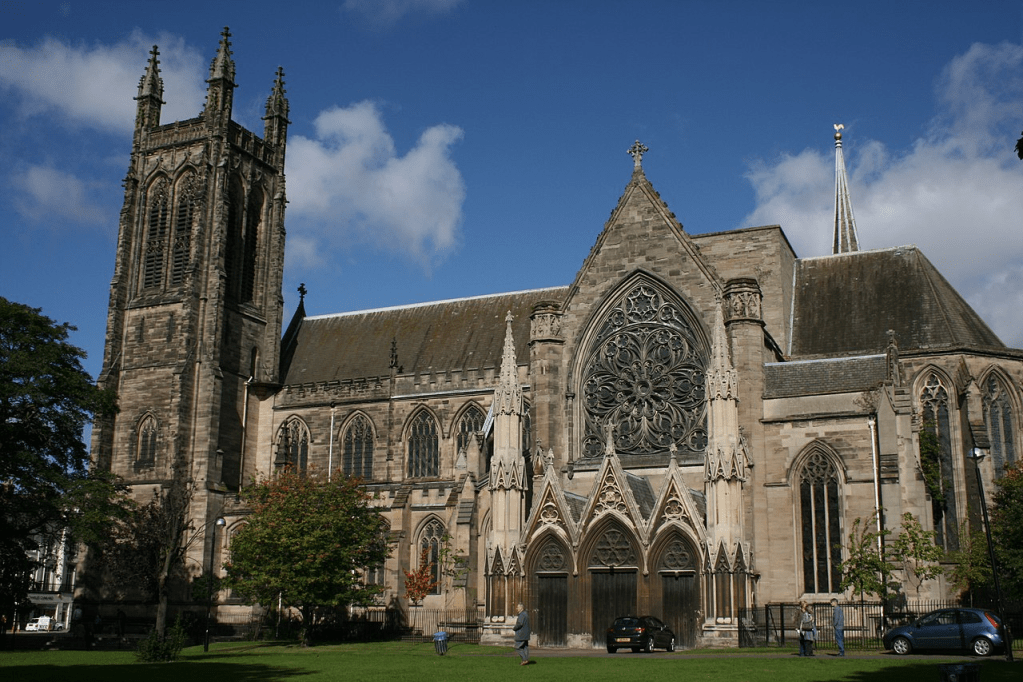
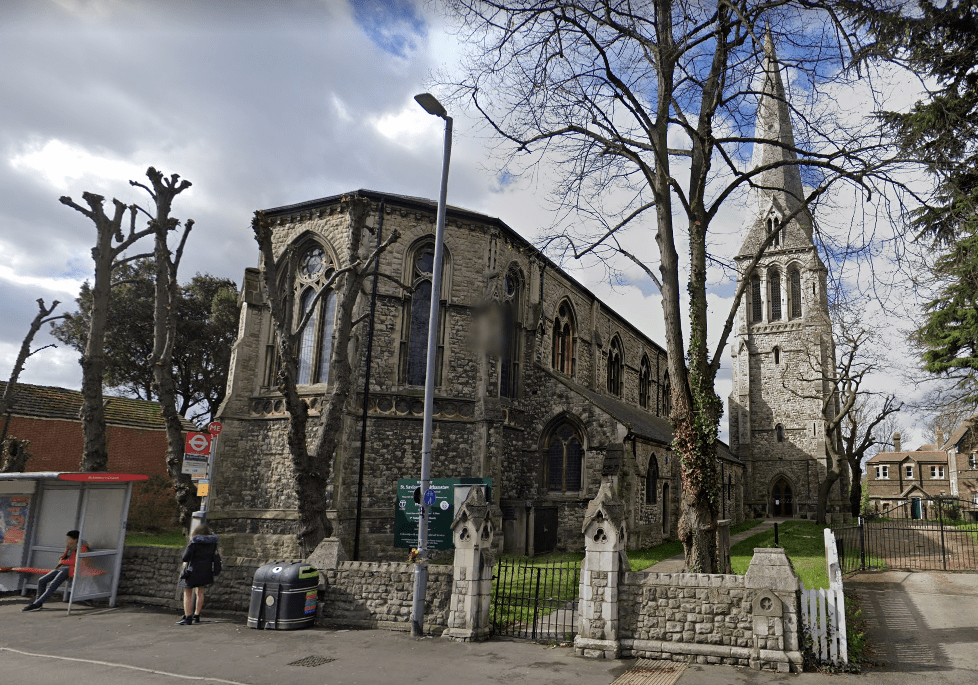
On 13 October 1880, Edward married Fides Grimwood in Walthamstow, Essex, England at St James (now St Saviour’s) Church on Markhouse Road.
Fides was the daughter of George Augustus Grimwood (1826–1883) and Betsy Maria Garrett (1835–1922).
In the 1881 census, Edward and Fides were living at Hollybank on Sylvan Road in Wanstead (no such current location can be found in Wanstead). Edward was working as an estate agent, and the couple had two servants (a cook and a parlour maid).
Their children were Fides Irene (1881), Edward George (1886), Phyllis (1890), and Lynette (1893).
By 1891 they were living at Delamere in Walthamstow. Edward is listed as an estate agent and surveyor.
The 1901 census record for Edward’s family has not been found.
Edward and Fides’ daughter Fides married in 1907 in Tonbridge, suggesting that Edward and his wife might have moved to Kent by this year. Edward and Fides are listed in the 1911 census at 14 Molyneux Park in Tunbridge Wells. Their son Edward (age 24) is listed as an engineer, and both daughters (21 and 18) were still living at home.
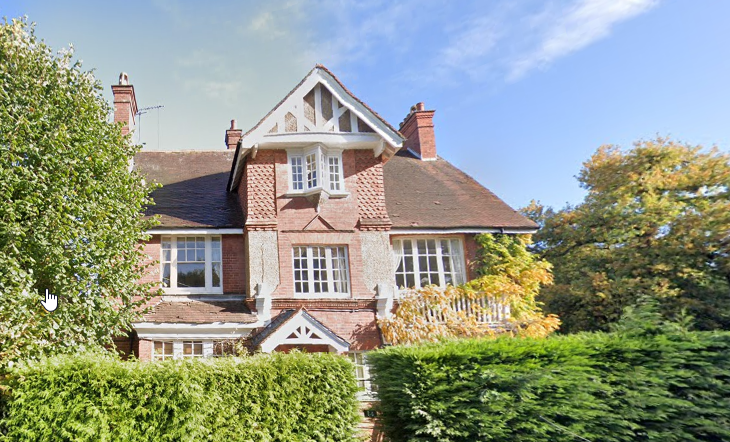
Edward died 16 July 1917 in Tunbridge Wells just two days short of his 61st birthday. His wife Fides would continue to live there until her death in 1949.
Edward George Tewson (1886-1980)
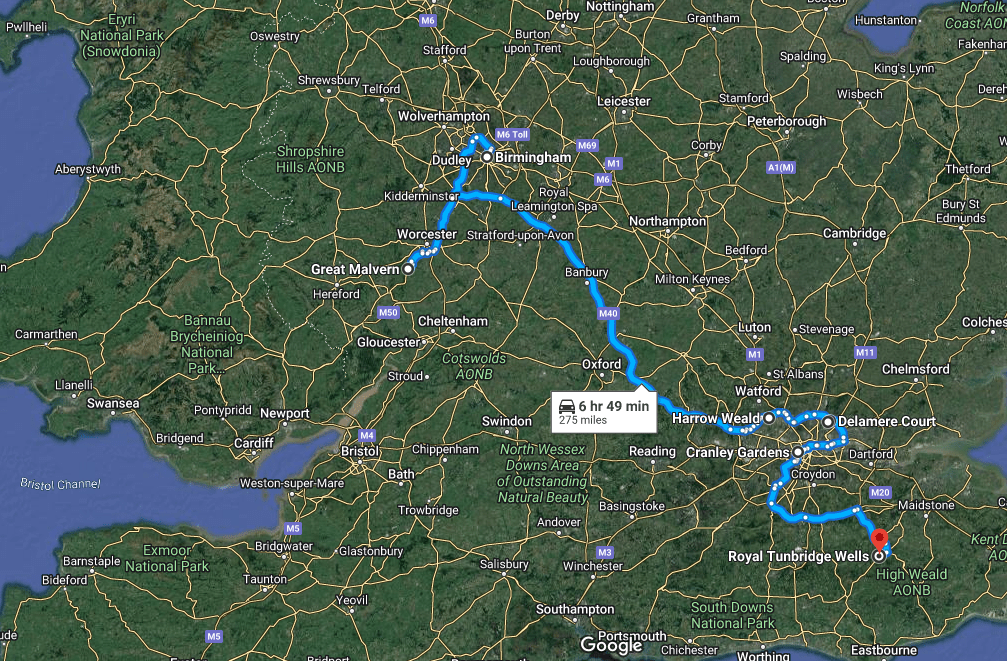
Edward George Tewson was born 17 April 1886 in Walthamstow, Essex (on the northeast outskirts of Greater London) and was baptized 31 May 1886 at All Saints’ parish church in Harrow Weald, Middlesex (on the northwest outskirts of Greater London, about 18 miles from Walthamstow).

His parents were Edward Arthur Tewson (1856-1917), listed as a surveyor on his baptism record, and Fides Grimwood (1858-1949).
He and his family (parents and siblings) are listed in the 1891 census living in Walthamstow with three servants at a place or street called Delamere (there’s a current-day Delamere Court in about the right place, but the current buildings are more recent).
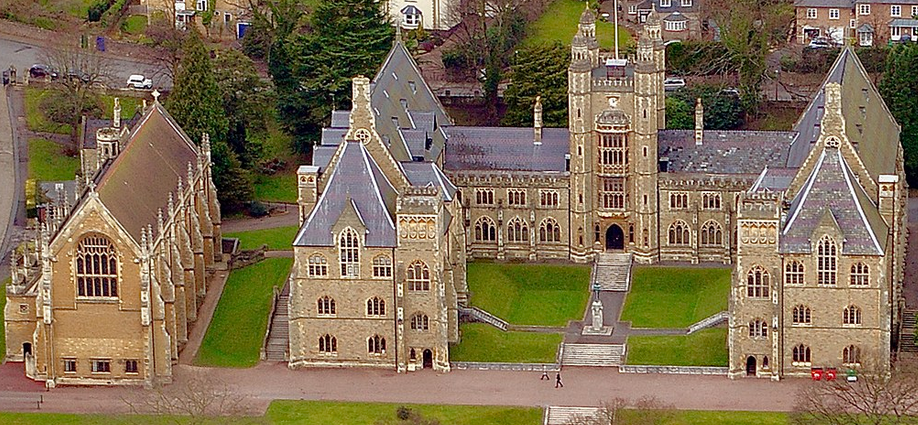
By 1901, Edward was attending a boarding school in Malvern, Worcestershire. This might be Malvern College, an English public school for (originally) boys 13-19 founded in 1865 and still operating today. Other students who attended this school over the years include C. S. Lewis, multiple Nobel laureates, two heads of state or government (in Rhodesia and Malaysia), and Aleister Crowley.
By 1911, he was living with his parents, 2 sisters, and 2 servants (a parlor maid and a cook) at 14 Molyneux Park, Tunbridge Wells. His father is listed as a retired surveyor, and he is listed as an engineer.
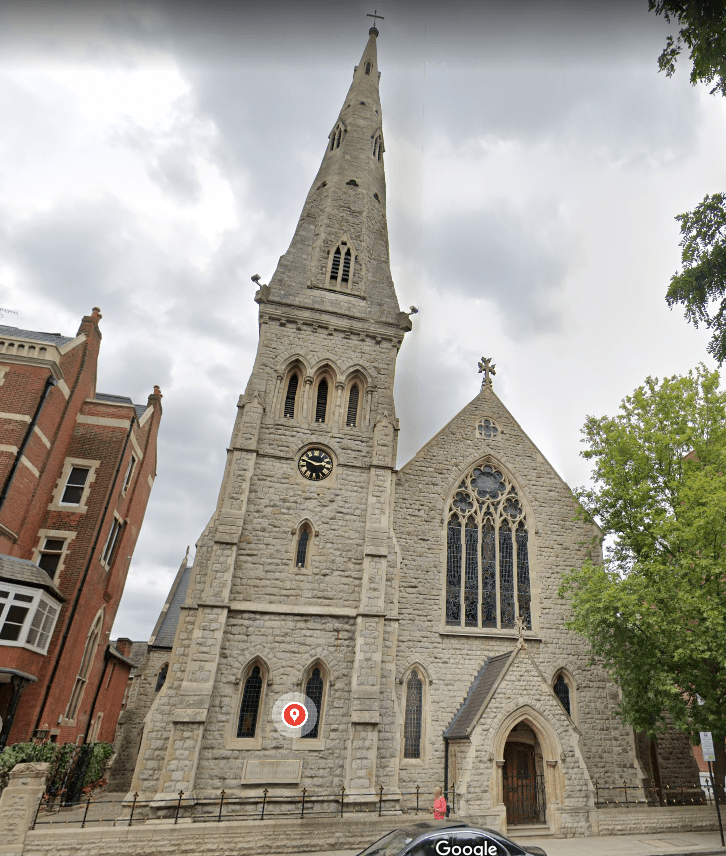
Edward apparently met his wife while he was in Tunbridge Wells. On 20 April 1911, Edward married Dorothy Gladys Cayley (1886-1936) at St. Peter’s Anglican Church in Cranley Gardens in South Kensington, London.
Dorothy Gladys Cayley was a descendant of Sir William Cayley, 1st Baronet Cayley (1610-1681) and through a later ancestor (Elizabeth Smelt 1695-1750) a descendant of King Edward III. The Cayley family’s history goes back to the Norman invasion of 1066 and is covered in detail at https://web.archive.org/web/20190331021154/https://cayleyfamilyhistory.wordpress.com/ (Internet Achive; original site no longer available). I also trace the direct Dorothy Cayley line as a separate section later on this page.
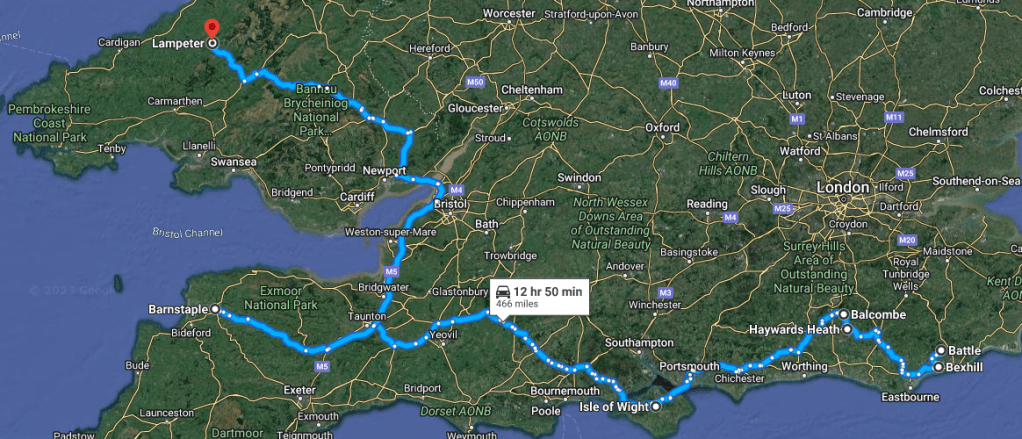
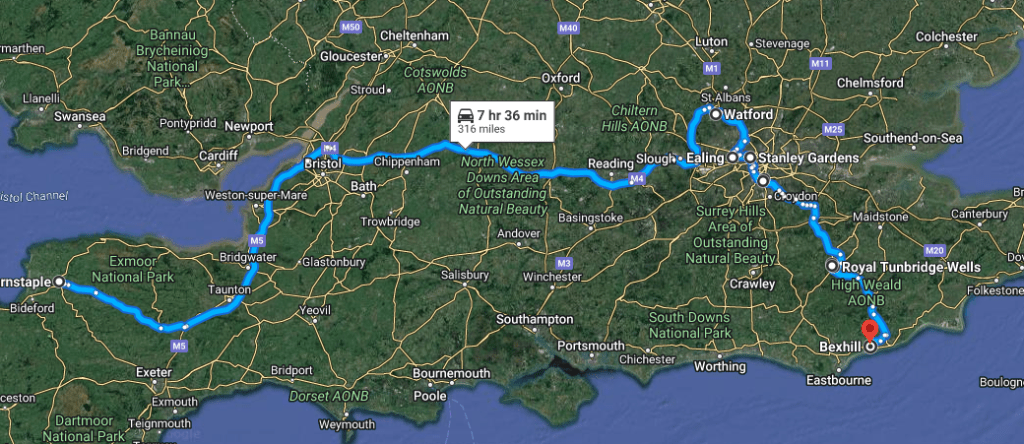
Edward and Dorothy’s children were Adela Fides (1912, born in Watford), Edward Timothy (1915, born in Barnstaple), and David George (1921, born in Barnstaple). From the birth locations of these children, it appears Edward and Dorothy moved to Watford after marriage before the birth of their first child, and had moved to Barnstaple in Devon a few years later.
In 1913, Edward was granted a patent for “Improvements in or relating to Windows, Doors and the like”–specifically “Hinges arranged to act alternatively at either side of a door etc.; hinges readily separable about hinge pin.-Doors, casements, &c. may be opened about either stile by means of hinges comprising pins c, carried by plates d, fixed at each side of the door or like frame, and plates a with slots b fitted to both stiles of the door &c., the edges of the door stiles and posts being so shaped that a slight opening of the door &c. at one side prevents disengagement of the pins c and slots b at the other side. The edges of the stiles e and the corresponding edges of the plates a are semicircular in plan, and a rim g is formed on the frame plate d to engage the plates a; and pins h on the plates d may be provided to engage curved slots i in the plates a. Instead of arranging the hinge members at the top and bottom of the door as shown, they may be mounted in recesses in the door stiles, between the top and bottom thereof.“
Edward served in the Great War in France from 1917 to the end of the war in the Royal Garrison Artillery, reaching the rank of second lieutenant. He was awarded the Victory Medal (a WWI service medal) after the war in 1921.
Starting in 1926 and through 1929, Edward appears in the electoral register in Bexhill-on-Sea in Sussex (Hollington is also named).
Edward and Dorothy were divorced in 1927. Edward married later that year Josephine Marie Cater in Birmingham. They had one son, Michael Beale Tewson (1928).
In 1939, Edward and Josephine were recorded living in Solihull not far from Birmingham.
Edward died 7 October 1980 in Birmingham.
David George Cayley Tewson (1921-1994)
David Tewson was born 23 September 1921 in Barnstaple, Devon, England. He was the second son and third child of Edward George Tewson (1886-1980) and Dorothy Gladys Cayley (1886-1936).
His early life is not well-recorded, but from records of his father one can infer he moved to Bexhill-on-Sea or thereabouts before 1926. His parents divorced in 1927 and his father remarried in 1927 in Birmingham and established a residence there while also being on the electoral rolls in Bexhill through 1929. So possibly his father maintained two residences for a couple years, which could indicate David and the other children might have remained living with their mother in Bexhill.
David could have gone to boarding school as early as 1928 or 1929, and would have continued through 1939 or 1940. Sure enough, he is listed in the 1939 England and Wales Register as living at Wycliffe College in Lampeter, Cardiganshire, Wales. Wycliffe College was founded in 1882 in Gloucestershire (and remains there to this day) but students were evacuated to Lampeter during the war. Wycliffe has a prep school that starts at age 7, so it’s possible David began attending as early as 1928.
David’s mother Dorothy died in Battle district (which included Bexhill) in 1936, supporting the idea that she remained in that area the rest of her life. David likely visited both his parents when not in school.
In the latter months of 1942, David married Barbara Mary Stocks on the Isle of Wight. Barbara’s ancestry is unknown, but she seems most likely to have been born October 1, 1922 in the Mansfield district, which at the time spanned parts of Derbyshire and Nottinghamshire (including the places Ault Hucknall, Blackwell, Pinxton, Pleasley, Scarcliffe, Shirebrook, Tibshelf, and Upper Langwith). Her mother’s maiden name was apparently Gibson.
David was in the Royal Navy during the Second World War, being temporarily promoted to sub-lieutenant in the Special Branch on 22 July 1943.
David and Barbara’s children were Penelope and Tim. In 1946, they apparently lived in Bexhill, in what was then the Battle district of East Sussex. Within a few years they would be in Balcombe in West Sussex (then in Cuckfield district; now in Haywards Heath).
His wife Barbara died in 13 November 1972 in Balcombe.
David married again to Alice Mary “Noel” Wilson in 1975.
He died 7 January 1994 in Haywards Heath.
Ancestors of Dorothy Gladys Cayley
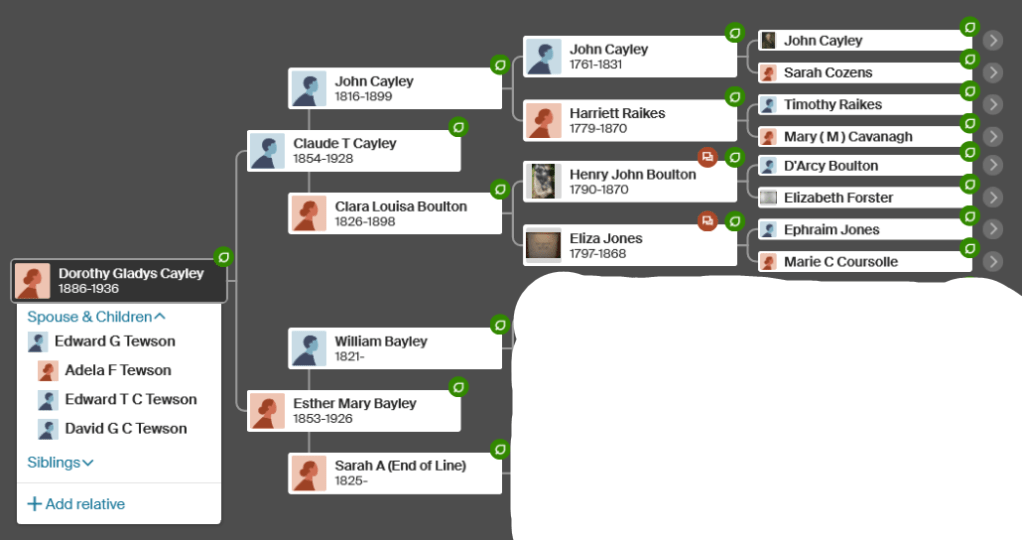
Dorothy Gladys Cayley was the first wife of Edward George Tewson and mother of most of his children.
She was a descendant of Sir William Cayley, 1st Baronet Cayley (1610-1681) and through a later ancestor (Elizabeth Smelt 1695-1750) a descendant of King Edward III. The Cayley family’s history goes back to the Norman invasion of 1066 and is covered in detail at https://web.archive.org/web/20190331021154/https://cayleyfamilyhistory.wordpress.com/ (Internet Archive; original site no longer available).
This section details the direct-line paternal ancestors of Dorothy Cayley.
Tree: Ancestors of Dorothy Gladys Cayley
Origins and Brief History
The Cayley family originated over a thousand years ago in France. About 1066, Osbern de Cailly made a donation to the Abby of St Ouen in Rouen.
Not long after the Norman Conquest, Osbern’s son Guillaume de Cailly was granted lands in East Anglia. This established the family in England, primarily in Norfolk. If later pedigrees are correct, his brother Humphrey, the ancestor of the Cayleys who would eventually become prominent in Yorkshire, might also have been a tenant. (See https://www.wikitree.com/wiki/Cailly-12 for a discussion of this topic.)
Later Cayley ancestors first gained land in Yorkshire in the late 13th century. They were well-established by the end of the 14th century.
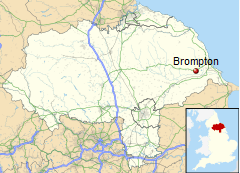
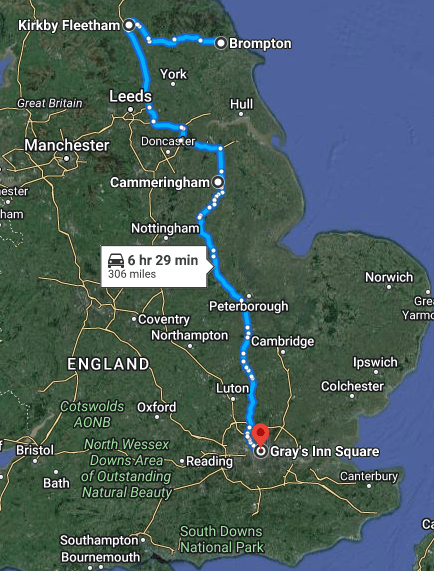
The family purchased an estate in Brompton (now a civil parish in the Scarborough district of North Yorkshire) in the late 16th century. William Cayley was born at Brompton in 1610, and was a Royalist during the English Civil War. For this service he was granted the Cayley baronetcy at Brompton in 1661.
Dorothy Gladys Cayley is a descendant of Sir William Cayley, First Baronet.
Cayleys in Norfolk
The initial landholdings of Guillaume (William) de Cailly per the 1086 Domesday Book were:
As tenant-in-chief:
- Sulham, Reading, Berkshire
As lord, paying taxes to tenant-in-chief William of Warenne:
- Cley, Bradenham, and Hilborough in South Greenhoe, Norfolk
- Denver, Clackclose, Norfolk
- Trumpington, Thriplow, Cambridge
By 1088, William de Cailly also had land in Heacham, Norfolk.
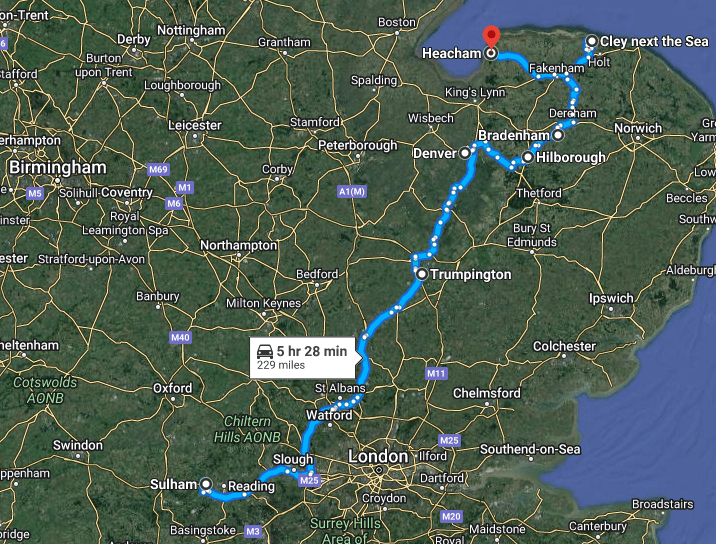
(Heacham, Cley, Bradenham, Hilborough, Denver, Trumpington, Sulham)
The land in Reading seems to have passed out of William’s control after 1086. The descendants of William’s son Phillip de Chailleway (later Callaway) eventually established themselves in County Devon.
The land in Norfolk was in part donated by William de Warenne, and at least some seems to have been inherited by a different branch of the family. Most pedigrees continue the line via Humphrey, William’s brother, rather than from William, although it’s unclear whether/how the land from William de Cailly was inherited and passed down.
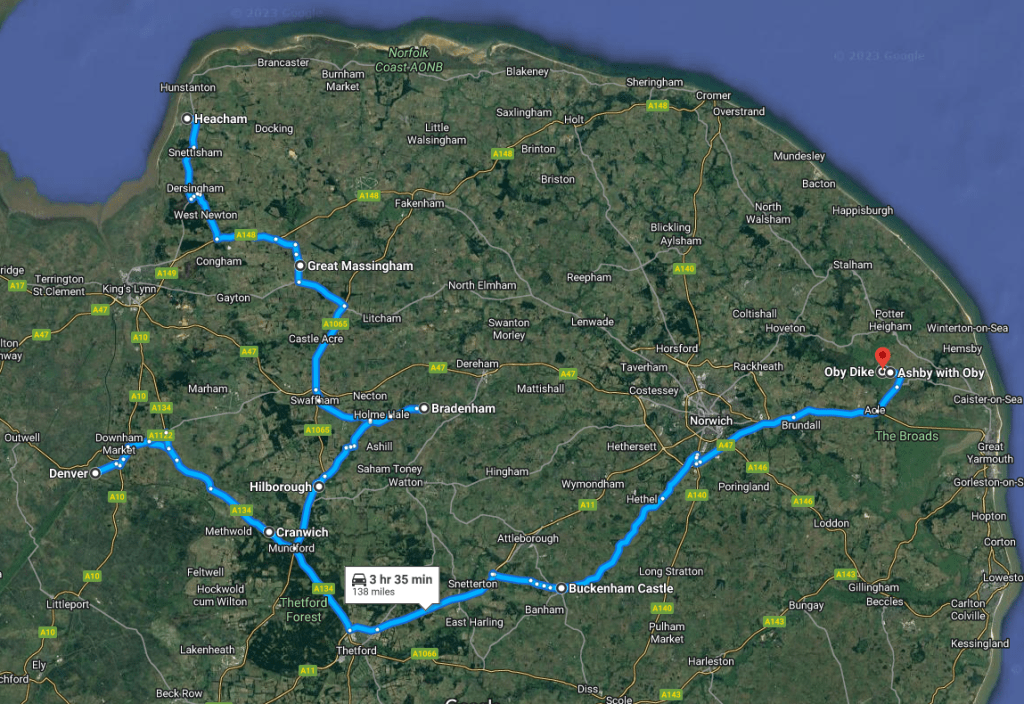
Most pedigrees have Humphrey as the father of Simon de Cailly (who married a woman named Alice). The couple was associated with Massingham, Cranwich, Brodercross, Hiburgh, and other properties in Norfolk, and there are several charters that mention Simon as a witness.
The line (starting with Humphrey, Simon’s father) descends as follows (with roughly estimated birth years):
(c. 1070) Humphrey de Cailly
|
(c. 1100) Simon de Cailly = Alice
|
(c. 1125) Roger de Cailly = Beatrice
|
(c. 1154) John de Cailly, lord of Cranwich, Massingham, Bradenham, Oxburgh, Denver, Hillington, Hecham, Hildeburgh, etc.
|
(c. 1180) John de Cailly = Margery, who also m. Michael Poynings
|
(c. 1200) Adam de Cailly = Mabel Giffard (d. 1255)
|
(c. 1229-c. 1287) Osbert de Cailly, lord of Bokenham, Bradenham, Oxburgh, Cranwich, Hilburgh = Emma, daughter of Robert de Tatteshall
|
(c. 1250-1285) Hugh de Cailly (aka Hugo de Cayly), Lord of Owby = Agnes Hempstead [Note: some pedigrees have him as Osbert’s brother, in which case he was born earlier.]
|
(c. 1280) William de Cailly (Cayley) of Owby = Catherine
|
(1310) John de Cailly (Cayley) of Owby, Sheriff of Norfolk (1334-1335)
|
(c. 1350) John Cayley, who moved from Owby (held by his elder brother William) to Normanton, Yorkshire.
Note that the current location of Owby seems to be “Oby” near Great Yarmouth. Wikipedia states that Oby Church was abandoned in the second half of the 16th century, and then demolished. John Cayley’s brother William had no sons to inherit his property, so maybe the larger family fortunes shifted elsewhere, coinciding with and perhaps contributing to a period of decline in the area.
Sources:
- A Genealogical History of the Dormant, Abeyant, Forfeited, and Extinct Peerages of the British Empire by Bernard Burke (https://books.google.com/books?id=1DEGAAAAQAAJ)
- A Genealogical and Heraldic Dictionary of the Peerage and Baronetage of the British Empire (https://books.google.com/books?id=h_U8AQAAIAAJ)
- The Baronetage of England: Or The History of the English Baronets …, Volume 2 By William Betham (https://books.google.com/books?id=QS8wAAAAYAAJ)
- Pedigrees of the county families of Yorkshire, vol 3 (1874), by Joseph Foster (https://archive.org/details/pedigreesofcount03fost/page/n55)
- The Norfolk de Cailly Family Tree, by Lesley Haigh (http://www.leshaigh.co.uk/kellawaymed/norfolktree.html)
Cayleys in Yorkshire
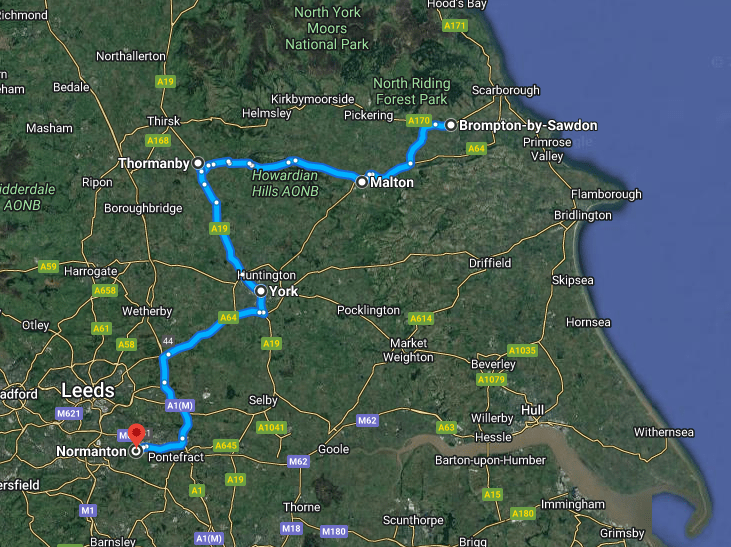
In the second half of the 14th century, a branch of the Cayley family moved from Norfolk to Yorkshire. Not much is known about this part of the family tree.
John Cayley (b. c. 1350), a son of John Cayley the Sheriff of Norfolk, settled in Normanton, Yorkshire. His line proceeded as follows (with rough estimates of birth years):
- (c. 1380) John Cayley was his third son (and only son to have children).
- William Cayley (possibly a brother and not son of John)
- (c. 1420) Edmund (or Edward) Cayley of the city of York
- (c. 1450) William Cayley, his eldest son
- (c. 1500) John Cayley Esq. of Malton, Yorkshire
- (c. 1530) Edward Cayley of Malton
- (c. 1550) William Cayley of Thormanby (d. 1586) married Joan, the daughter of Richard Gouldthorp Esq., of the city of York.
William’s son would move to Brompton, Yorkshire. Much more is known about the family after this point.
Edward Cayley (d. 1642)
Edward Cayley was the son of William Cayley (d. 1586) and Joan Goulthorp (d. 1618). His baptism has not been found, but some secondary sources say he was 70 years old when he died.
Edward purchased land in Brompton-by Sawdon in Yorkshire (before 1610, when his son William was baptized there).
Edward married Ann Walters, the daughter of William Walters. Their children were William (1610), Arthur, Thomas, Mary, Elizabeth, Catherine, and Anne. William and Arthur were knighted by Charles I in the lead-up to the English Civil War; Thomas died “in service of King Charles I” but apparently was not knighted. All daughters except Mary were married.
Edward died December 1642 and was buried at Brompton.
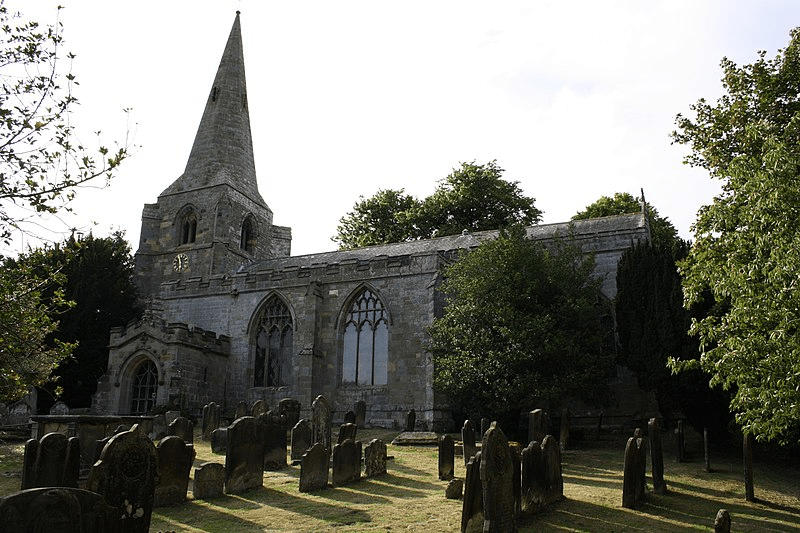
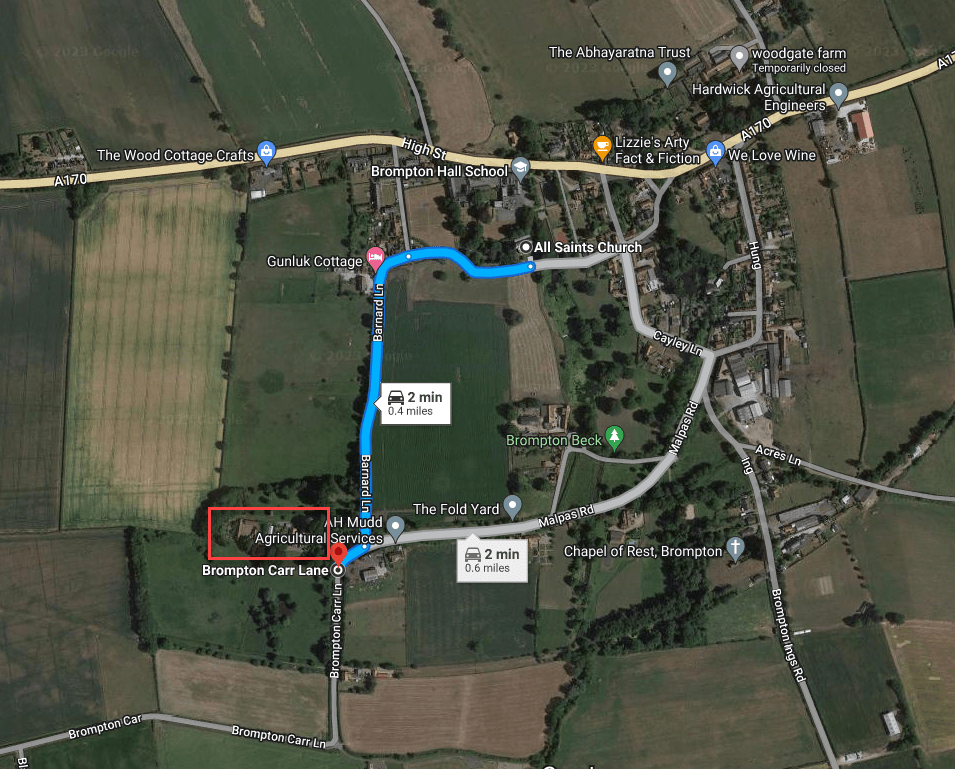
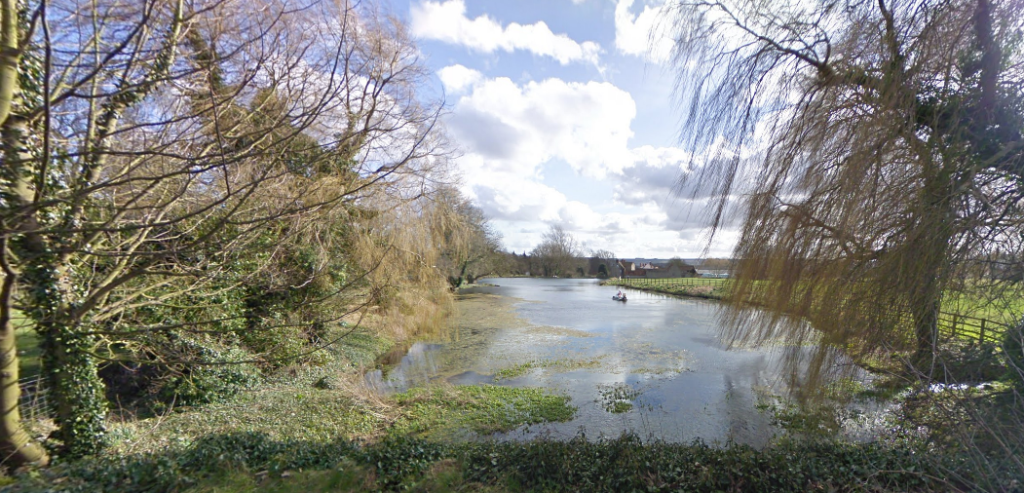
A 17th century manor house (quite possibly the Cayley residence) was recently sold in Brompton.
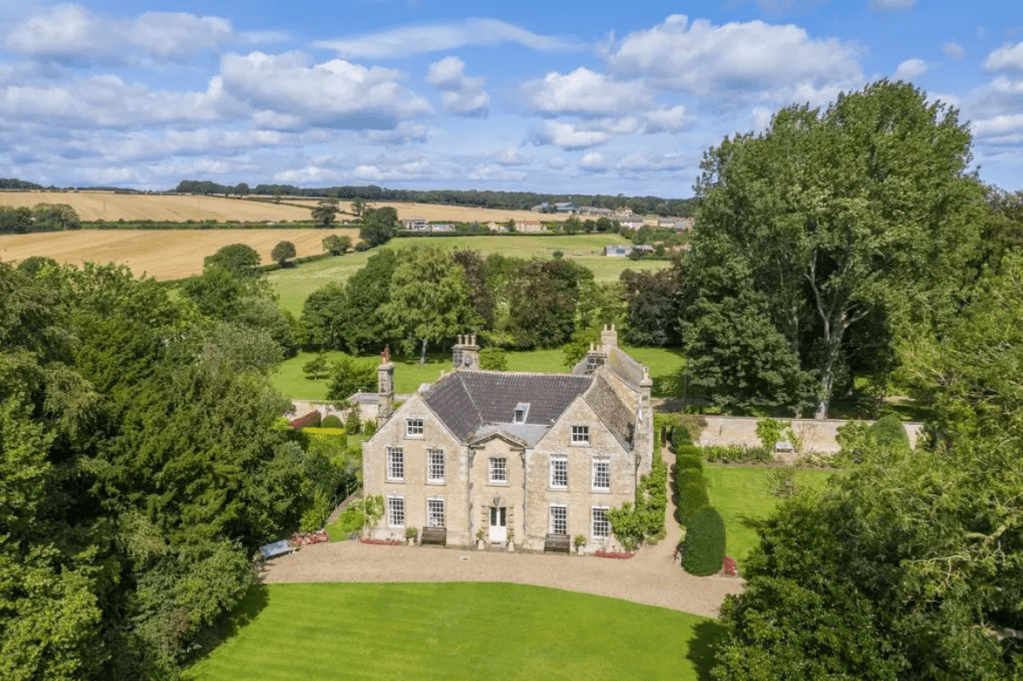
The listing states “Grade II Listed, Low Hall is a property of great historical and architectural interest, understood to have been the original Manor House to Brompton By Sawdon being 17th century in origin.”
William Cayley, 1st Baronet (1610-1681)
William Cayley was born 5 May 1610 and baptized 6 December 1610 in Brompton by Sawdon, Scarborough, Yorkshire, England. He was the son of Edward Cayley (1585-1642) and Anne Walters.
About 1633, William married Dorothy St. Quintin (b. 1613), the daughter of William St. Quintin (later 1st Baronet) (1579-1649) and Mary Lacy (1590-1649). Note that Dorothy was a descendant of King Edward I (14 generations back).
Their children were Edward (1633), William (1635), Mary (1636), Cornelius (1644), Anna (1648), Hugh (1649), and Arthur (1653).
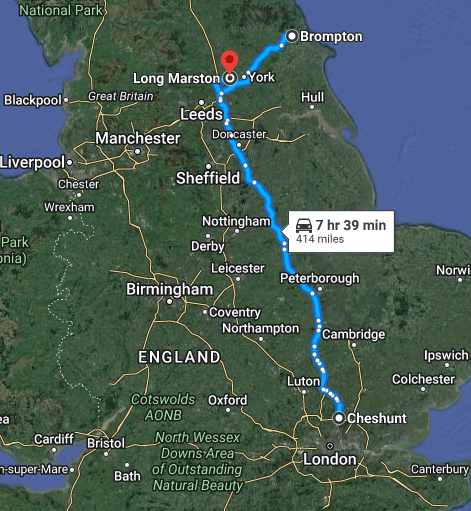
During the English Civil War, William was a royalist. In the run up to the first civil war, he was knighted on 2 March, 1641 at Theobald’s House in Cheshunt, Hertfordshire (residence of the late King James I, who died 1625). His father-in-law William St. Quintin was granted a baronetcy on 8 March, 1641. His brother Arthur was knighted 13 June 1660.
William fought at the Battle of Marston Moor on 2 July 1644. The royalists were defeated by Parliamentarian forces, and three of William’s cousins died.
For his services during the civil war (which occurred over three phases from 1642-1652), William was created 1st Baronet of Brompton on 20 April 1661. His baronetcy is still extant today, more than 380 years later.
In 1678 William committed Nicholas Postgate, a Catholic priest who had baptized a child into the Catholic church, to trial in York. (Father Postgate had been arrested in Redgates, Littlebeck by an exciseman named John Reeves, who then brought Postgate to Brompton.) Postgate was convicted in 1679 of high treason under the Elizabethan-era Jesuits etc. Act 1584 (which compelled all Catholic priests to leave England within 40 days of enactment) and he was hanged, disembowelled, and quartered.
William died 2 May 1681 in Brompton.
Cornelius Cayley (1644-1734)
Cornelius Cayley was born 10 August 1644 and baptized 14 August 1644 in Brompton by Sawdon, Yorkshire, England. His parents were William Cayley, First Baronet (1610-1681), and Dorothy St. Quintin (1613-1684).
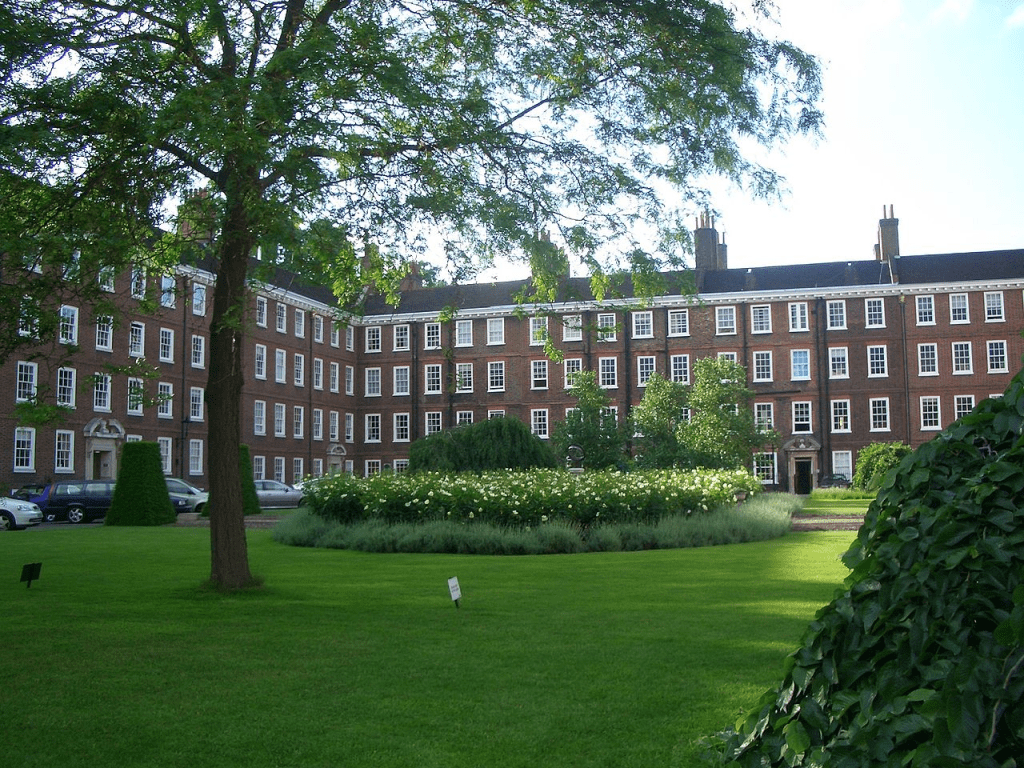
On 27 November 1663, Cornelius matriculated at Gray’s Inn (one of four Inns of Court in London for barristers in England and Wales). He was called to the bar 11 February 1669.
On 11 August 1681, in Cammeringham, Lincolnshire, Cornelius married Anne Tyrwhitt, the daughter of Cecil Tyrwhitt (1619-1694) and Anne Townsend (1626-1713) of Cammeringham.
Their children were John (1682), Tyrwhit (1683), his twin Hugh (1683-1694), William (1684-1691), Ann (1685-1687), Dorothy (1690), and Cornelius (1692).
His son John was killed by a Mrs. Macfarlane in 1716 in Edinburgh, Scotland, supposedly in self-defense fearing sexual assault. (For a full account, see here.)
Cornelius died in 1734 and was buried on 12 April 1734 in Kirkby-Fleetham, York, England.
Cornelius Cayley (1692-1779)
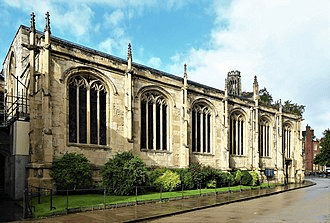
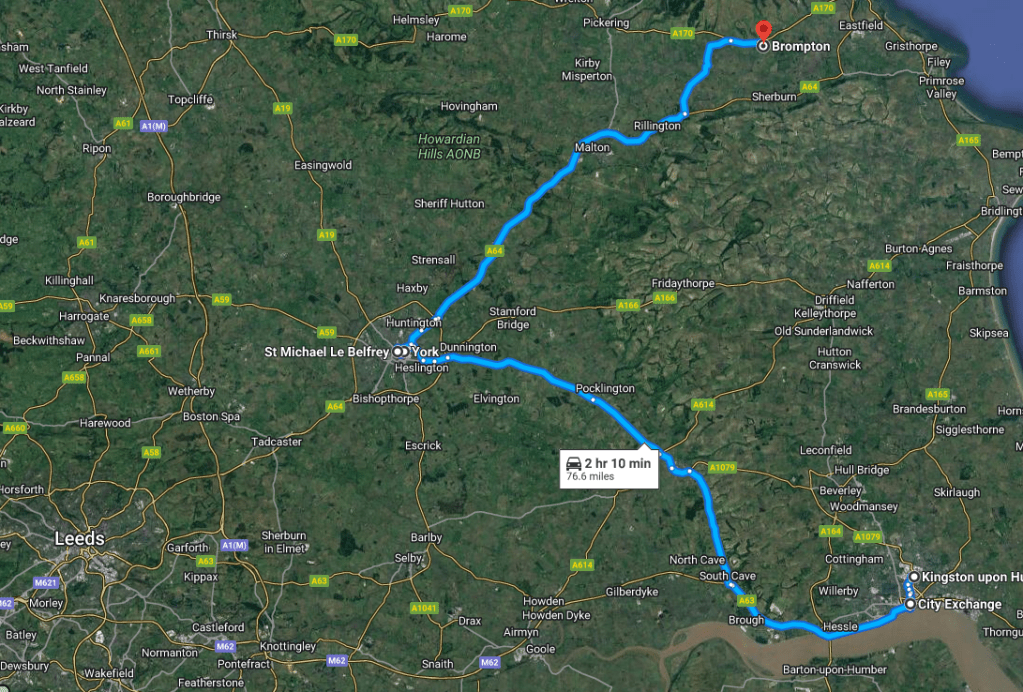
Cornelius Cayley was born 16 April 1692 in Yorkshire, England and baptized 24 April 1692 at St Michael le Belfrey church in York. He was the son of Cornelius Cayley (1644-1734) and Ann Tyrwhitt (d. 1716).
Cornelius was a barrister. He began his career prosecuting the rebels of the Jacobite rising of 1715.
In 15 June 1723, he was witness in a marriage settlement.
On 16 November, 1723, Cornelius married Elizabeth Smelt (b. 1695), the daughter of Leonard Smelt (1658-1710) and Grace (or Anne) Frankland (1658-1710).
Elizabeth Smelt was a descendant of King Edward III. For more information, see Royal descent of Elizabeth Smelt.
Their children were William (1724), Cornelius (1726-1727), Cornelius (1727), Leonard (1729), John (1730), Elizabeth (1731), Edward (1733), and George (1735). They were all baptized at St. Mary’s church in Hull, although it’s possible some of them were born in Brompton.
Cornelius was appointed Recorder of Hull in 1725 and served in the role until 1771. Per Wikipedia, the historical role of a recorder was as a “magistrate or judge having criminal and civil jurisdiction within the corporation of a city or borough. Such incorporated bodies were given the right by the Crown to appoint a recorder. He was a person with legal knowledge appointed by the mayor and aldermen of the corporation to ‘record’ the proceedings of their courts and the customs of the borough or city.[1] Such recordings were regarded as the highest evidence of fact.[2] Typically, the appointment would be given to a senior and distinguished practitioner at the Bar, and it was, therefore, usually executed part-time only, by a person whose usual practice was as a barrister. It carried a great deal of prestige and power of patronage. The recorder of a borough was often entrusted by the mayor and corporation to nominate its Members of Parliament.”
Apparently after being appointed to this position, Cornelius traveled to Holland, Flanders, and part of France and published an account of his tour in Leeds.
In 1741, Cornelius was recorded as a freeholder “who had voted for C. Turner, Esq.” that year in Hull, Yorkshire (the freehold being in a place called “Derham-Grainge” that does not appear to exist today). Cayley is also recorded in the 1774 electoral register in Hull.
His wife Elizabeth died in February 1750, and was buried 25 February 1750 at St. Mary’s in Hull.
Cornelius died 12 November 1779 in Hull.
John Cayley (1730-1795)
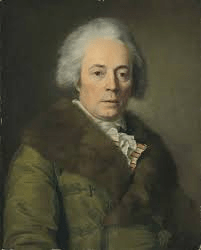
John Cayley was born 7 October 1730 in Kingston Upon Hull, England and baptized 24 October 1730 at St Mary’s in Hull. His parents were Cornelius Cayley (1692-1779), the Recorder of Hull, and Elizabeth Smelt (1695-1750), a descendant of King Edward III.
John was the grandfather of the famous mathematician Arthur Cayley, via his youngest son Henry Cayley.
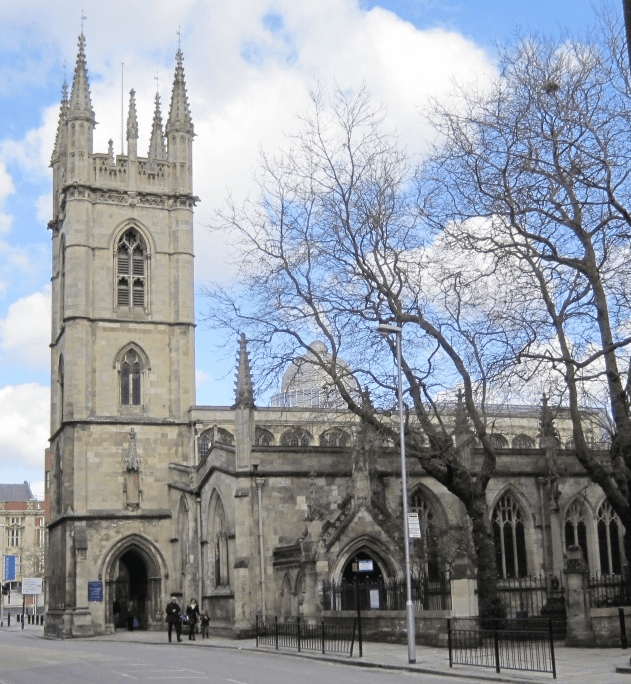
In 1754, John went to Russia to work as a merchant and ended up spending most of the rest of his life in Russia working with a close-knit group of other British merchants in Russia.
On 19 December 1756, he married Sarah Cozens (b. 1732), the daughter of Peter the Great’s British shipbuilder, Richard Cozens.
Their children were Elizabeth (1757), Sally (1759-1760), John (1761), Cornelius (1762), George (1763), Sally (1764), Ann (1765-1766), William (1766), and Henry (1768).
Late in life, John returned to England and died at his daughter Elizabeth’s house in Richmond, Surrey on 9 July 1795.
John Cayley (1761-1831)
John Cayley was born 11 April 1761 in St. Petersburg, Russia. He was the son of John Cayley (1730-1795), the British Consul in St. Petersburg, and Sarah Cozens (1732-1803), the daughter of Richard Cozens, a shipbuilder for Peter the Great.
John was the uncle of the famous mathematician Arthur Cayley.
On 20 October 1799, he married Harriet Raikes at the English Church in St. Petersburg.
Their first daughter Harriet (1800) was born in London, so the couple must have traveled back to England for at least a while. However, their children Lucy (1802-1803), Lucy (2) (1803), Edward (1805), William (1807), Francis Melville (1809), Charles (1811-1811), John (1812-1813), and Maria (1814) were all born in St. Petersburg.
Their youngest child John was born in 1816 in Bath, England, so it appears they moved to England about 1815.
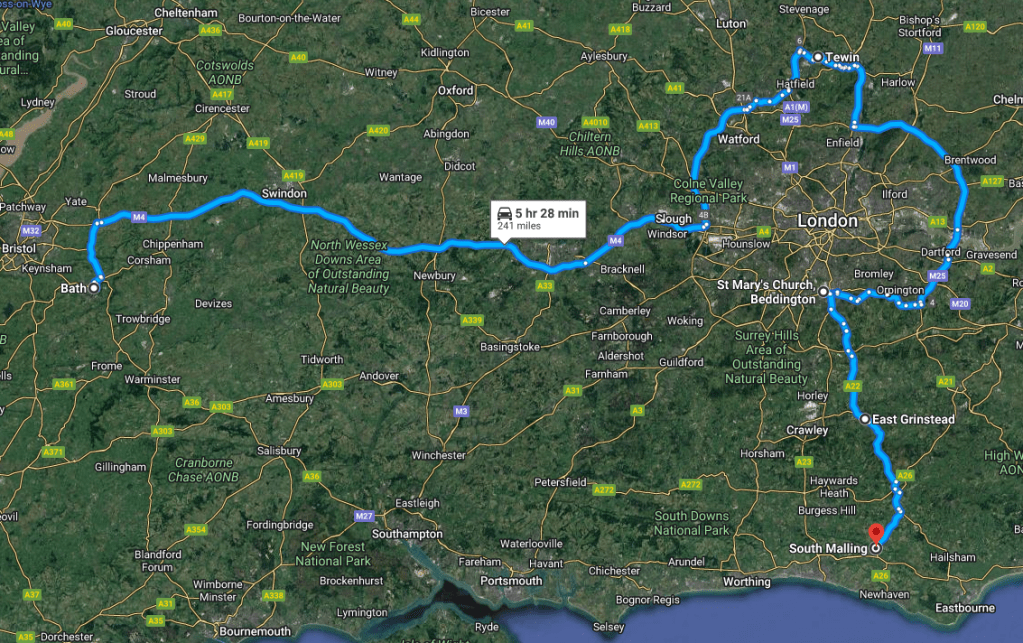
John died 30 March 1831 in Tewin, Hertfordshire, England and was buried at St Mary’s church in Beddington, Surrey, England.
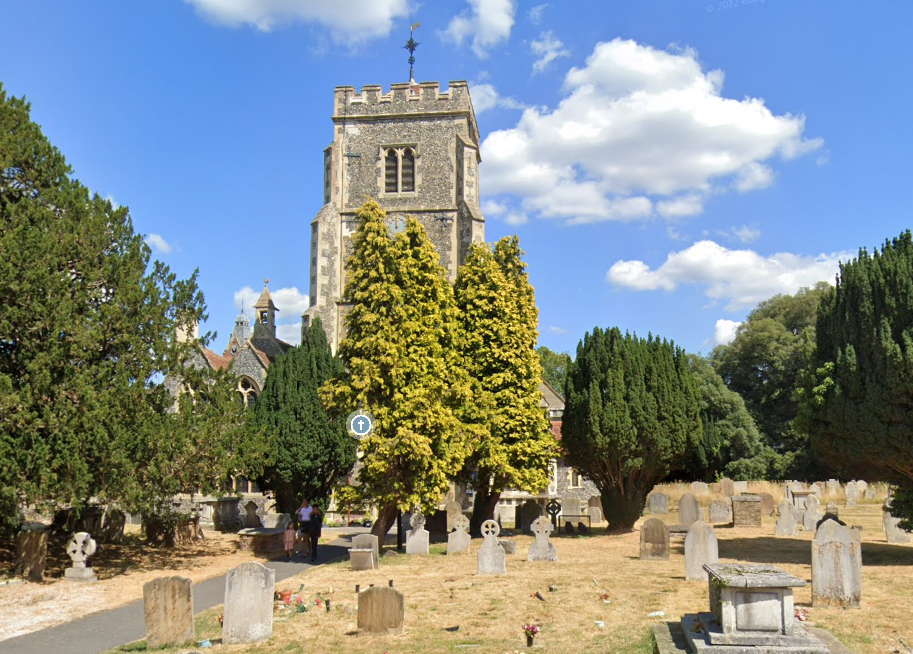
His wife Harriette lived in Malling, Lewes and East Grinstead after his death, and died in East Grinstead in 1870.
John Cayley (1816-1899)
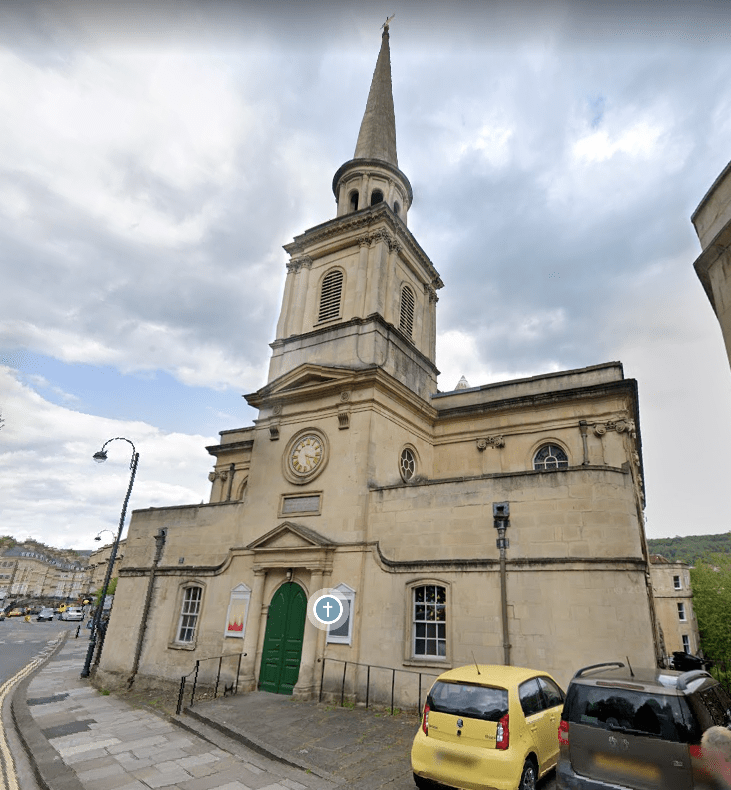
John Cayley was born 11 February 1816 in Bath, Somerset, England and baptized 8 March 1816 in St Swithin Church. He was the son of John Cayley (1761-1831) and Harriette Raikes (1779-1870), who were British citizens born abroad in Russia who moved back to England shortly before his birth.
Note that he was the first cousin of the famous mathematician Arthur Cayley.
His early life is not well-documented. He next appears in a marriage record on 4 August 1841, when he married Catherine Mary Main in St. Petersburg, Russia.
John and Catherine had a daughter, Harriet Catherine, born 1842 in St. Petersburg. They moved to Surrey, England. Harriet died in February 1844 and was buried in South Malling, Lewes, Sussex, England. John’s wife Catherine died the next year, and was buried 27 September 1845 at St Mary’s Church in Beddington, Surrey, England.
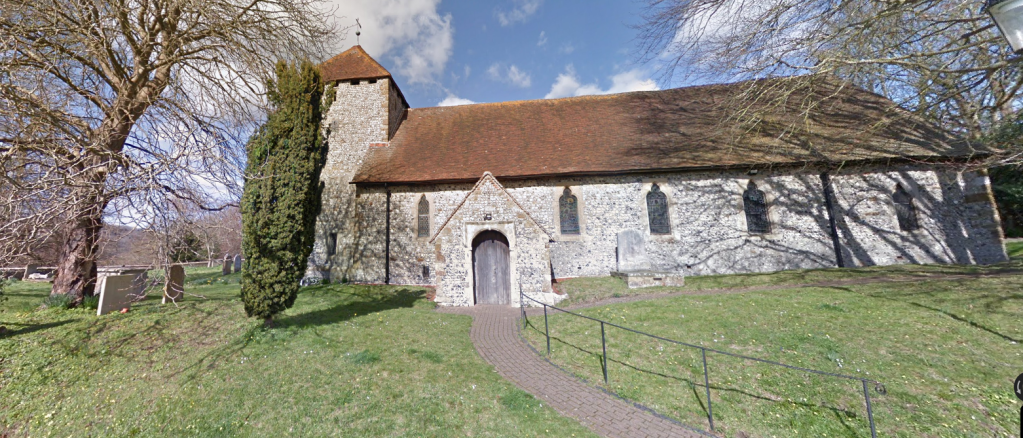
In the wake of losing his wife and only daughter, John eventually made his way to Toronto, Canada.
On 5 October 1847, he married Clara Louisa Boulton in Toronto. Clara was born about 1826 in Ontario. She was the daughter of Henry John Boulton (1790-1870) and Eliza Jones (1797-1868). Henry Boulton was a prominent Canadian attorney who at various times was Solicitor-General and Attorney-General of Upper Canada, Chief Justice of Newfoundland, and a member of parliament.
Their first two children, Clara Louisa (1850) and Adela Sidney (1851) were born in Ontario, but sometime before 1854 they returned to England at least briefly. Their son Claud Thornton (1854) was born in England. But by 1856 and the birth of their son Francis Osmund, they were back in Ontario.
The 1861 Canada census only lists John Cayley and “Mrs. Cayley” of the right birth years and birthplaces, but does not list their children. (Perhaps this is a different Cayley family, or perhaps their children were off at boarding schools.) The 1871 Canada census shows all four children (ages 14-20) and three servants. Son Claud Thornton Cayley was working as a clerk, like his father.
John and Clara’s daughter Adela married in 1873. Their son Claud returned to England by about 1880. In the 1881 Canada census, John and Clara are living with their daughter Clara and two servants in Toronto.
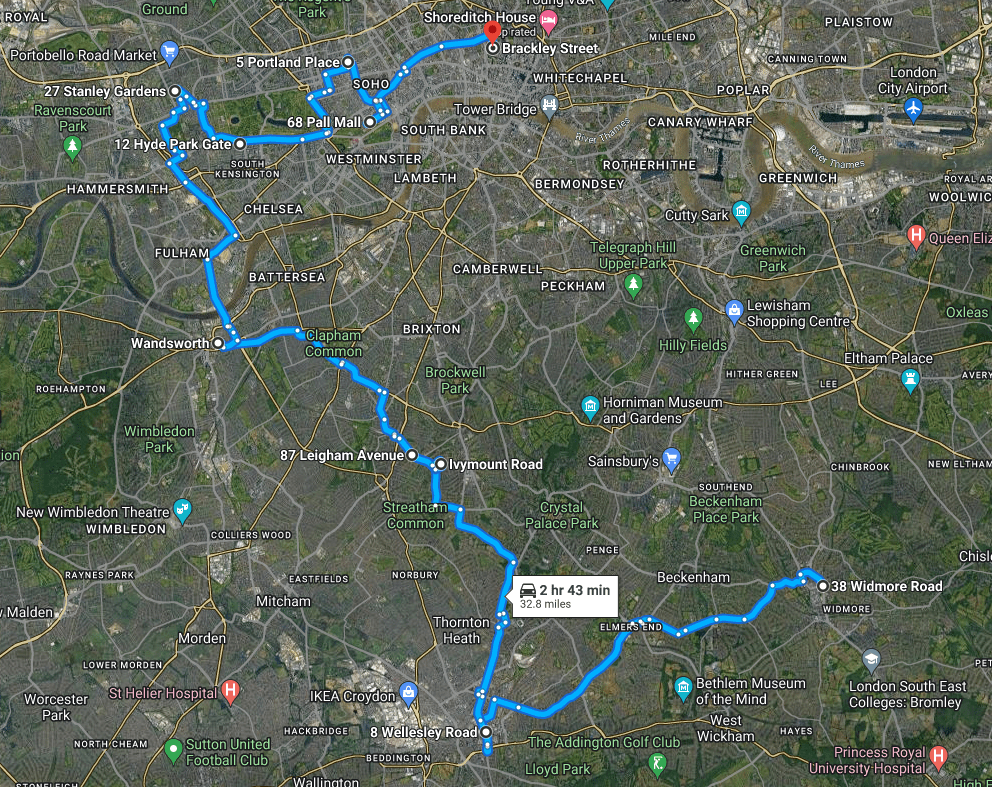
By 1891, John and Clara had returned to England, where they settled in Bromley, Kent (where their son Claud had lived before 1885, suggesting they might have moved there in the 1881-1885 time period before he moved into London). They lived with their daughter Clara and three servants in the Southlands Grove neighborhood, about a mile from son Claud’s house at 38 Widmore Road.
Clara Louisa (Boulton) Cayley died in 1898 in Bromley. John Cayley seems to have moved after her death to Bournemouth and died 19 November 1899 in Christchurch, Hamphsire (now in Dorset).
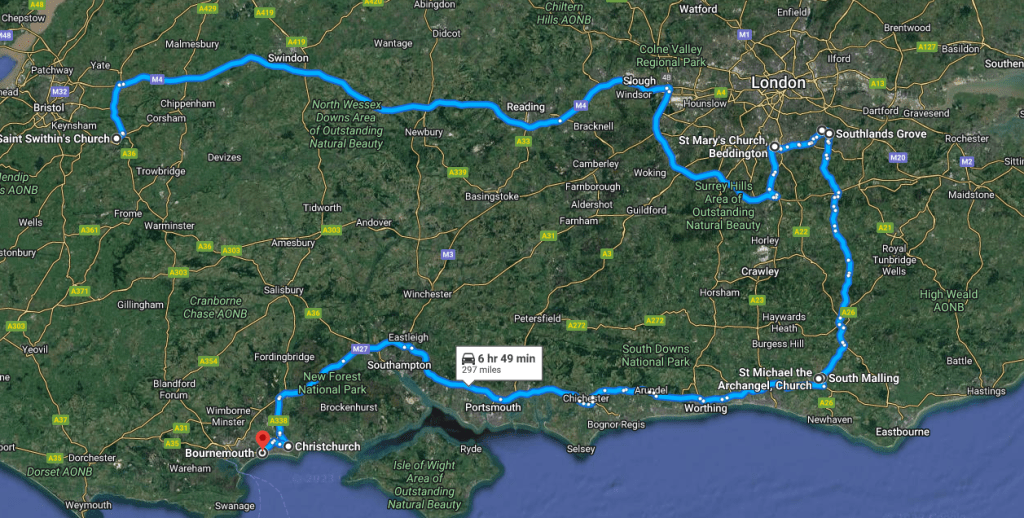
Claud Thornton Cayley (1854-1928)
Claud Thornton Cayley was born 9 June 1854 (according to one online account in Bickley, Kent) and baptized at Marylebone, London, England. His parents were John Cayley (1816-1899) and Clara Louisa Boulton (1826-1898). His mother was Canadian and his parents had moved back to his father’s native England sometime after the birth of his older sister Clara Louisa who was born about 1851 in Ontario.
The return to England was short-lived, because his younger brother Francis Osmund Cayley was born 30 September 1856 in Toronto.
Claud was recorded living with his family and two servants in York, Ontario (now part of Toronto) in 1871. He was working as a clerk (at age 16), as was his father.
He must have moved back to England again, because on 18 February 1878 he is shown arriving in New York City at Ellis Island from the ship Spain traveling from Liverpool, England and Queenstown, Ireland.
Whatever the purpose of his 1878 voyage, by the 1881 census Claud was living at 8 Wellesley Road in Croydon, Surrey, England (the current location has a newer building housing a restaurant). His occupation was listed as “merchant importer of American engineering machinery.”
On June 1, 1881 he married Esther Mary Bayley in Croydon.
In 1882, Claud was living at 38 Widmore Road in Bromley, Kent, about 7 miles east of his previous Croydon. Likely he moved there with Esther after their wedding. Their children Claud d’Arcy (1882) and Adela Mary (1883) were born while they lived in Bromley.
Note that Claud’s parents were living in Bromley by the 1891 census, having migrated after 1881 from Ontario, Canada. It’s possible they moved here while Claud was living here, which would be some time before 1885 or so.
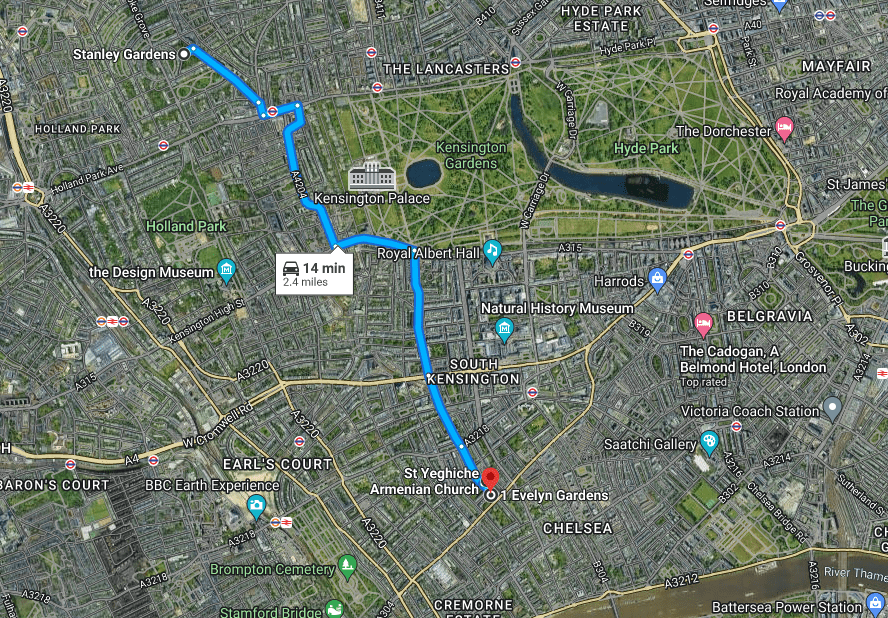
By 1885, Claud was living at 27 Stanley Gardens in Kensington, London.
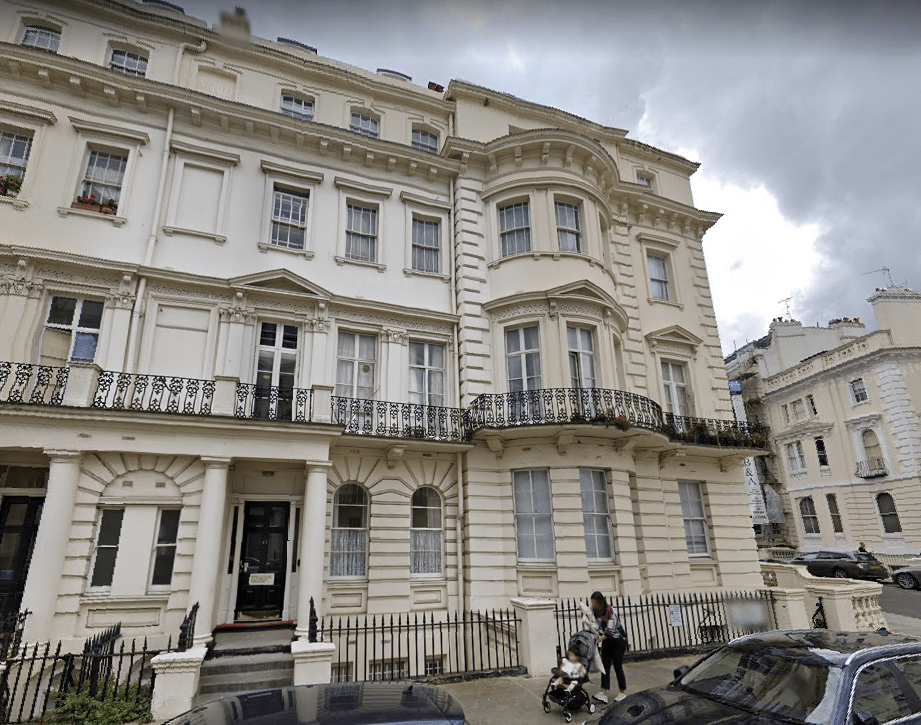
Their children Mabel (1884), Dorothy (1886), and Edward (1887) were born while they lived at 27 Stanley Gardens.
While living in 27 Stanley Gardens, Claud worked at Brackley Street, Golden Lane, near Aldersgate Street (not far from the current Barbican tube stop). He was a “saw mill engineer,” “wood-cutting machine maker,” and “sole agent” for both J. A. Fay & Co‘s American wood-working machinery company, and E. W. Bliss‘ American sheet-metal working machinery company. (E. W. Bliss would later be an arms manufacturer at least as early as the Spanish-American War.)
On 3 April 1887 he arrived in New York aboard the Britannic departing from Liverpool, England and Queenstown, Ireland. On the ship manifest his profession is listed as “engineer.”
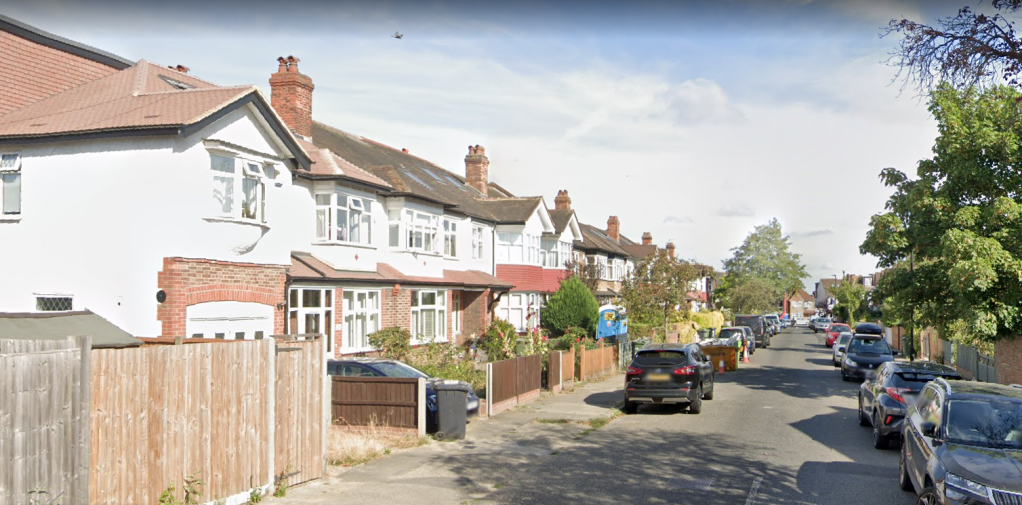
About 1889, prior to the birth of his youngest son Charles Knightley, Claud and his family moved to Streatham, London to a place called “Ivy Mount” off Leigham Court Road (where they would live until about 1900). The exact current location of that place is unknown, but it is probably along Ivymount Road.
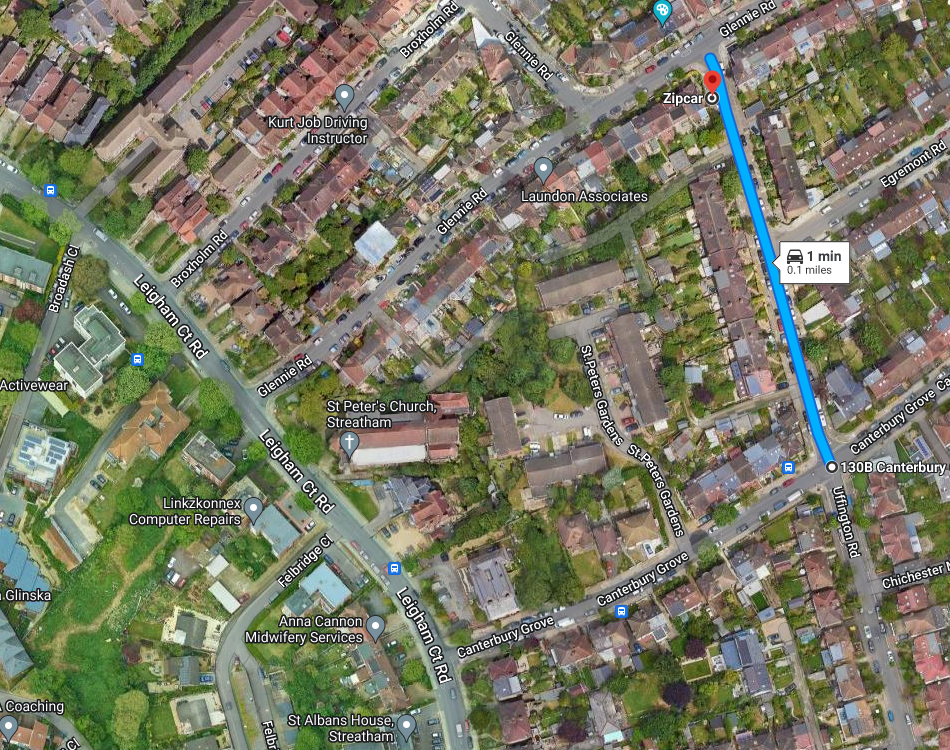
Claud took another cross-ocean voyage to New York, arriving 17 November 1890 on the Umbria. His profession is listed as “engineer.”
That same year (1890), the Post Office London Directory lists him as “Managing director, The Projectile Co Limited, engineers & sole agents for E.W. Bliss, american sheetmetal working machinery, Acre st. New rd. Wandsworth Rd SW.”
The Projectile Co Limited acquired the rights for the Whitehead torpedo (the first self-propelled torpedo) in 1892 and began manufacturing it for the US Navy in that year. (This torpedo was invented in 1866 for the Austrian Imperial Navy; the Royal Navy acquired rights in 1871, and it was quickly adopted by navies around the world thereafter.) The company (or the parent Bliss company, which acquired Projectile’s capital stock in 1902) also manufactured special presses for sheet-metal work, power stamping machines, shrapnel and armor-piercing shells, automobile parts, and even for a brief time, complete automobiles. In 1904, it began manufacturing the Bliss-Leavitt torpedo, also for the US Navy.
Claud was granted two patents for his work with Projectile.
- 8 August 1893: Improved Stop-mechanism for Stamping Presses and other Machines
- 14 December 1895: An Improved Manufacture of End Connecting Boxes for Tubular Boilers
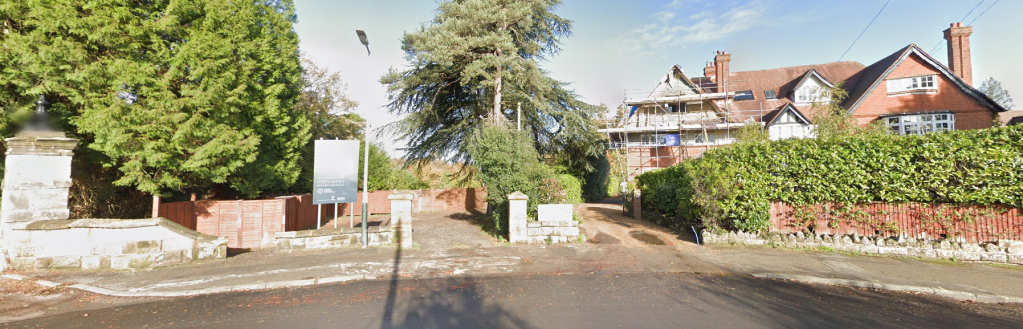
In 1900 or 1901, Claud moved his family from London to Tunbridge Wells, Kent. They lived at “The Huntleys.” Known today as the “Huntleys Cottages” it is next to the location of the Victorian estate known as “Culverden Castle” (then-residence of Eliza Phillips, the co-founder of the Royal Society for the Protection of Birds) that was torn down in 1959. The Cayleys lived in the main building but the property seems to have had subsidiary buildings known as “The Lodge,” “The Cottage,” “The Gardener’s Cottage,” and “The Swiss Cottage.”
On the day of the 1901 census, the family was hosting the widow Elizabeth Bowker from Toronto, Canada. In addition to that guest, his wife Esther, and his three daughters, (his three sons all being off at boarding school), Claud was living with 10 servants. His profession is listed as “mechanical engineer.”
Curiously, Claud’s wife Esther was not living with the rest of the family. While still married, the couple were apparently estranged, with Esther living at 32 Marina, St Leonards-on-Sea, Hastings, East Sussex (St Mary Magdalene civil parish) with a lady’s companion (Annie Campbell, age 38, from Scotland) and a lady’s maid. (Note that the usual practice for a lady’s companion in Victorian and Georgian England was as a chaperone and social companion for wealthy middle-age women, usually widows or women who had never married. It was unusual for a woman still married to live with a lady’s companion, although for women of means or station it would be expected to have a companion rather than be truly alone or only with servants.)
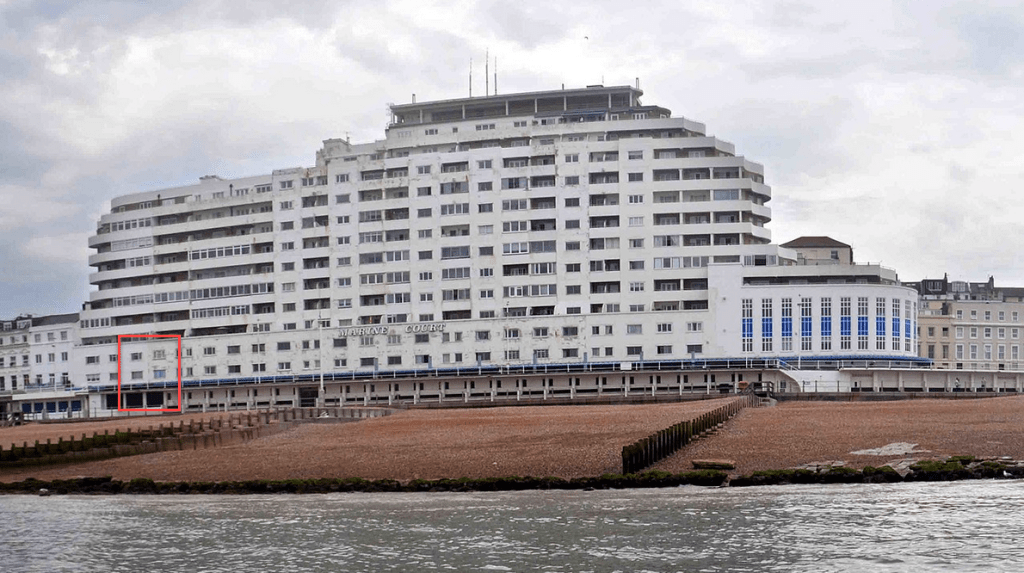
Her home at 32 Marina was directly across from the beach in the seaside resort town. The building no longer exists, as the Marine Court development of the 1930s (at 14 stories high the tallest residential building in Britain at the time, and designed to look like the Queen Mary) replaced it.
In 1904, Claud took another trip from England to New York City.
Claud’s eldest daughter Mabel married in 1907 and moved in with her husband.
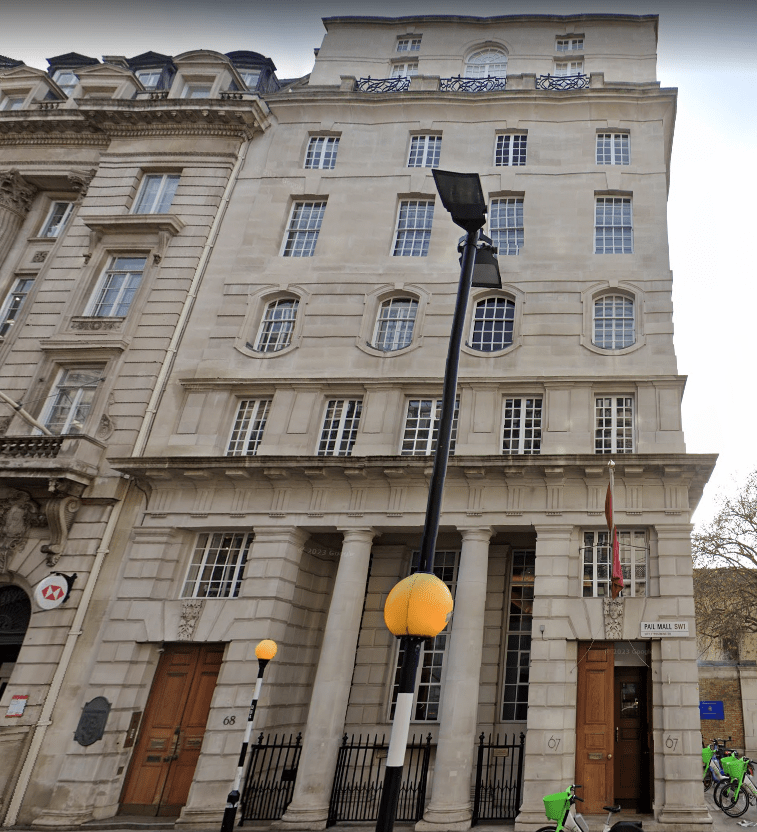
From 1908-1911, Claud lived at 68 Pall Mall and worked out of nearby 63 Pall Mall in London. (Likely with only two daughters at home he did not need the space of the larger house outside of London.)

In the 1911 census, Claud was living in London at 1 Evelyn Gardens. He continued to live there until 1918.
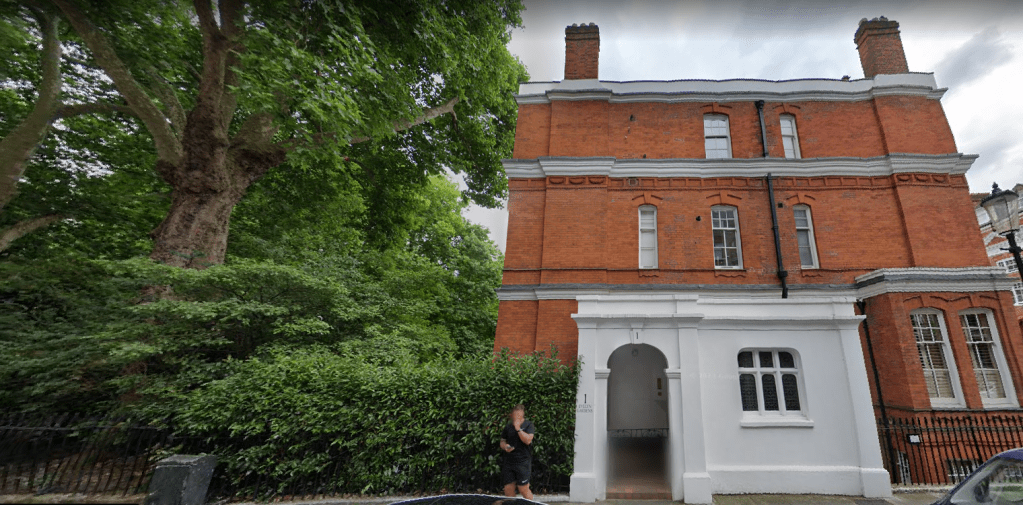
Claud’s household included his daughters Adela and Dorothy, their first cousin Adela Wolston (Secretary of the Festival Empire) from Toronto, a visitor Emmia Wilbraham-Taylor (Secretary of the Nurses Union, born in Bombay, India), and four servants (none of whom were at their other house ten years previously). Claud’s occupation is “mechanical engineer.”
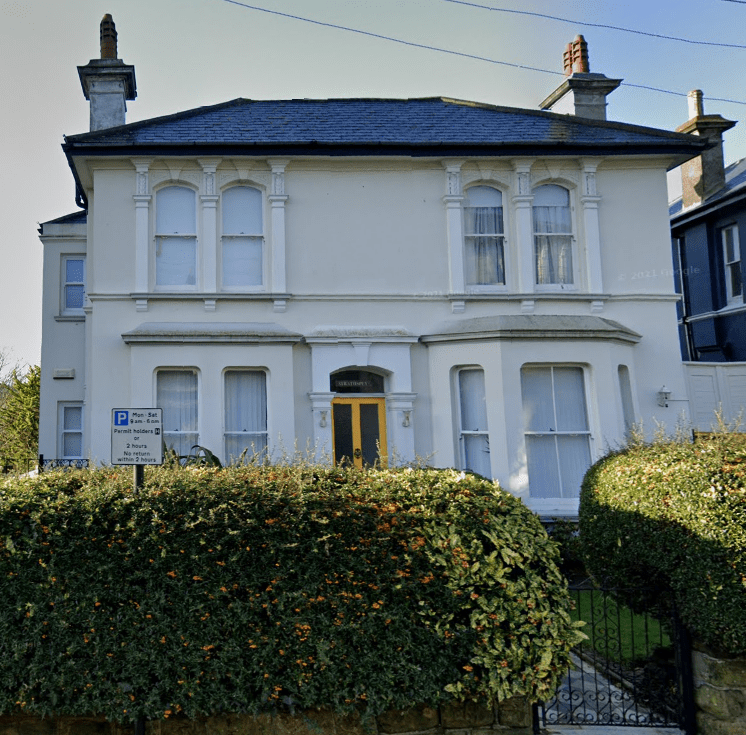
Esther had moved away from the waterfront at St Leonards 2 miles away to Strathspey at 43 Baldslow Road in Hastings, with a live-in cook and maid. She no longer had a lady’s companion.
In 1918, his daughters Dorothy and Adela having married and moved out respectively in 1911 and 1915, and no children living at home, Claud moved to 5 Portland Place, Paddington and St Marylebone, London (flats 13 and 14).

On 30 April 1923, Claud arrived on the Cedric in New York City with his son Edward.
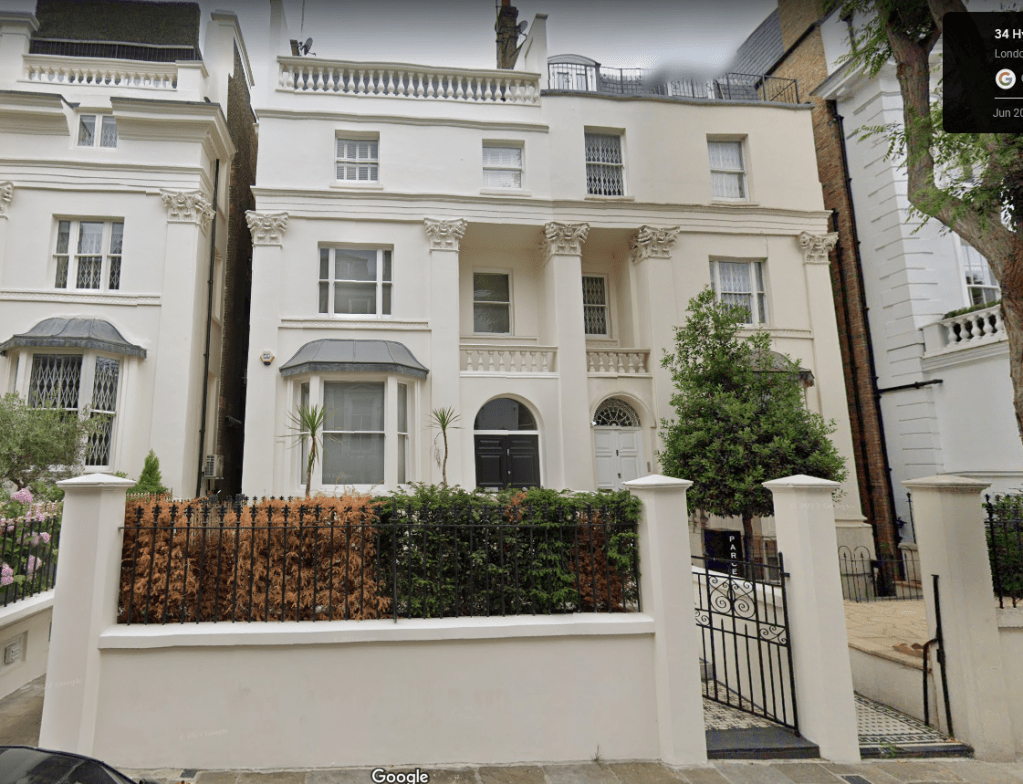
By 1925, Claud was living at 12 Hyde Park Gate in London, which would remain his home for the rest of his life.
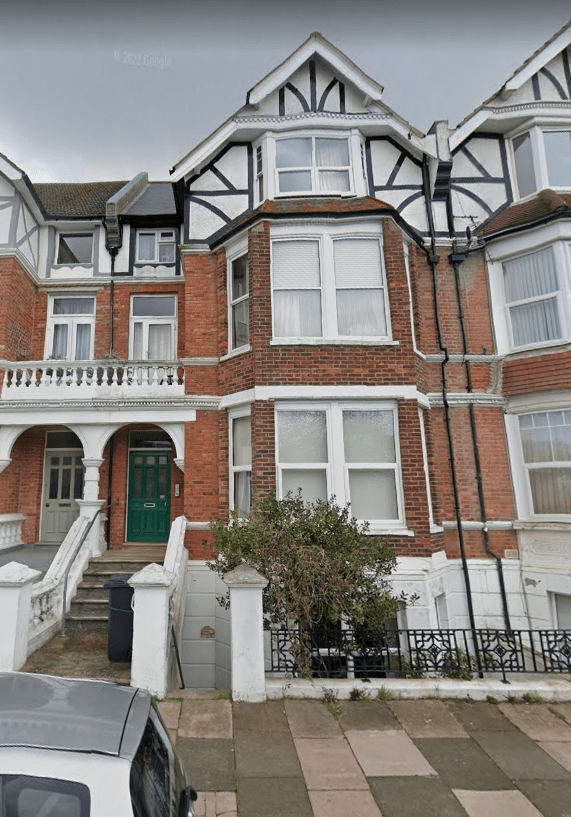
On 21 December 1926, his wife Esther died at 30 Marina, St Leonards on Sea (next door to her old residence at 32 Marina; her home was at 11 Park Road at Bexhill-on-Sea). She left £1102 1s in effects.
After Esther’s death, Claud remarried to Blanche Graham Ford in May 1927. Claud and Blanche took a trip together, departing England 13 January 1928 on the Mooltan bound for Sri Lanka. They returned to London on 7 April 1928 on the Cathay sailing from Sydney, Australia.
Less than four months later, Claud died at his home at 12 Hyde Park Gate on 31 July, 1928. He was 74.

Dorothy Gladys Cayley (1886-1936)
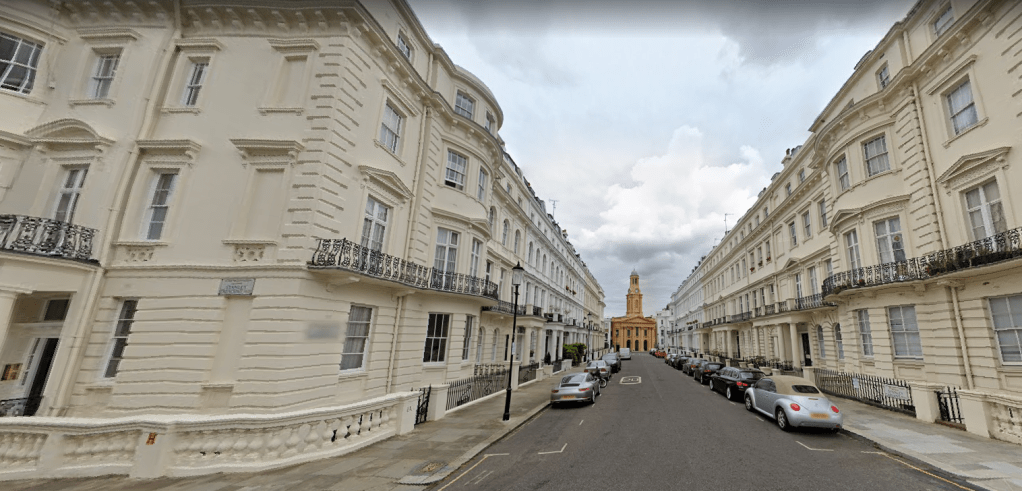
Dorothy Gladys Cayley was born in Stanley Gardens, London in February 1886. She was the daughter of Claud Thornton Cayley and Esther Mary Bayley.
In the 1891 census, her family was living off Leigham Court Road (or Ivy Mount) in Streatham, London (the exact current location is unclear).
By 1901, her family had moved to Tunbridge Wells, Kent in “The Hunsleys” which appears to be the same as what today is “Huntleys Cottages” which is next to the location of the Victorian estate known as “Culverden Castle” (then-residence of Eliza Phillips, the co-founder of the Royal Society for the Protection of Birds) that was torn down in 1959. The Cayleys lived in the main building but the property seems to have had subsidiary buildings known as “The Lodge,” “The Cottage,” “The Gardener’s Cottage,” and “The Swiss Cottage.”
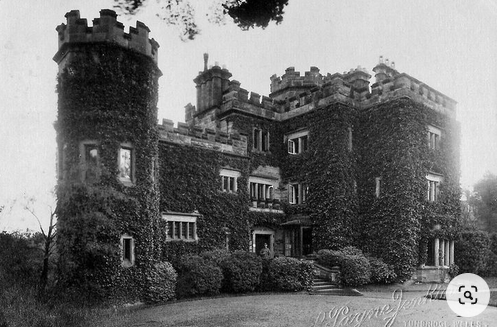
On the day of the census, the family was hosting the widow Elizabeth Bowker from Toronto, Canada. In addition to that guest, her father, and two older sisters, Dorothy was living with 10 servants. (Her mother was living separately in St Leonards-on-Sea.)
Dorothy likely met her husband Edward George Tewson in Tunbridge Wells, as he lived just over half a mile away.
The 1911 census shortly before her marriage to Edward has the family living at 1 Evelyn Gardens in Kensington, London. Dorothy was living with her father, her older sister Adela, her first cousin Adela Wolston (Secretary of the Festival Empire) from Toronto, a visitor Emmia Wilbraham-Taylor (Secretary of the Nurses Union, born in Bombay, India), and four servants (none of whom were at their other house ten years previously).
On 20 April 1911, Dorothy married Edward George Tewson at St. Peter’s Anglican Church in Cranley Gardens in South Kensington, London (less than a block from the Cayley home).
Their children were Adela Fides (1912, born in Watford), Edward Timothy (1915, born in Barnstaple), and David George (1921, born in Barnstaple). From the birth locations of these children, it appears Dorothy and Edward moved to Watford after marriage before the birth of their first child, and then moved to Barnstaple in Devon a few years later.
Her husband Edward served in the Great War in 1917 and 1918.
By 1926, the family seems to have been living in Bexhill-on-Sea in Sussex (where Dorothy’s mother had lived until her death that year). In 1927, Dorothy and Edward were divorced. Dorothy remained in Bexhill; Edward remarried that same year and moved with his new wife to near Birmingham, although he remained on the electoral rolls in Bexhill for a couple of years. It appears their sons began boarding school around this time.
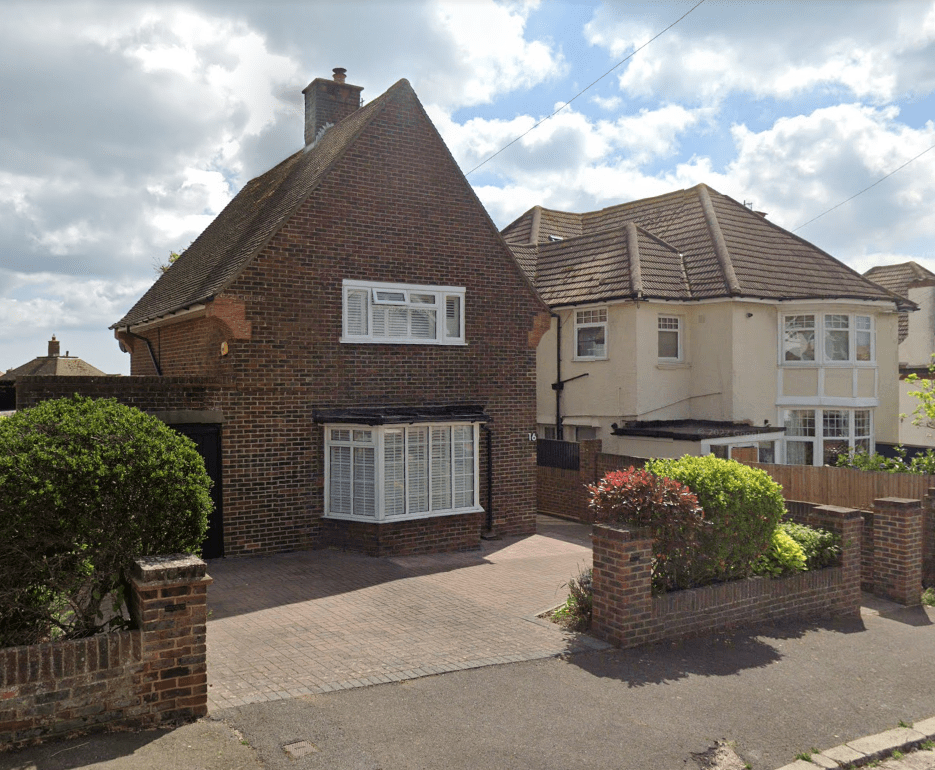
Dorothy died 4 July 1936 in or near Bexhill, in Battle district. She lived at 16 Rotherfield Avenue in Bexhill-on-Sea at the time of her death.

Two (or more) Dorothy Cayleys
In researching this family, it is easy to confuse this Dorothy Cayley with her contemporary and distant cousin Dorothy Frances Cayley (14 May 1888-27 Feb 1955) who married John de Bathe Crossley 1918 and divorced him in 1930.
Both women were born in London and lived at the same time. They were 6th cousins twice removed via the 1st Baronet (their most recent common ancestor). There was also a third contemporary Dorothy Cayley (the mycologist Dorothy Mary Cayley, 1874-1854). Dorothy Mary Cayley was Dorothy Gladys Cayley’s 2nd cousin once removed, with their common ancestors being Cornelius Cayley (1692-1779) and Elizabeth Smelt (1695-1750).
Note that Dorothy Frances Cayley was the second great-granddaughter of famed aviation pioneer Sir George Cayley, 6th Baronet.
 A Place to Call My Own