This page details the history of the Martin family and related families through a detailed ancestry of Fernald Devere Martin (1904–1986), Blanche May Evans Martin (1905–1996), Rossiter Jacob Anken (1920–1992) and Margaret Virginia Thomas Anken (1922–1955).
Ancestors of Fernald Devere Martin
Richard Martin (b. 1708)
m. Christian Leggoe
|
Richard Martin (b. 1734) François Turcotte (1710-1789)
m. Grace Uren (b. 1739) m. Catherine Marie Doiron (1709-1784)
| |
Christopher Martins (1764-1824) Francis Turcot (1749-1835)
m. Mary Johns (1766-1841) m. Mary Gee (1763-1855)
| |
James Martin (1795–1838) Francis Tarket (1786-1871)
m. Grace Odgers (1795-1856) m. Kesiah Skinner Wells (1788-1849)
| |
James Martin (1820-1894) Francis Tarket (1824-1885)
m. Elizabeth Moyle (1830-1910) m. Sarah McDowell (1834-1906)
| |
William Leverne Martin (1861-1945) |
m. Ida Blanche Tarkett (1865-1944) <————————
|
Fernald Devere Martin (1904-1986)
m. Blanche May Evans (1905–1996)
Martin family origins and main descent
The Martin family originated in Cornwall, England. They can be traced for several generations back in Cornwall. The immigrant ancestor was James Martin (1820-1894), who married Elizabeth Moyle in South Carolina about 1850.
The Moyle family also came from Cornwall but the exact family line back from Elizabeth is unclear. Both the Martins and Moyles were from copper and tin mining families in Cornwall.
William Leverne Martin (1861-1945) married Ida Blanche Tarkett. The Tarketts originated in France via Canada (as Turcotte) and the first American immigrant fought in the Revolutionary War and changed his surname.
Fernald Devere Martin married into the Evans family, which originated in Wales. That family is described later on this page.
Richard Martin (b. 1708)
Richard Martin was baptized 22 September 1708 in Towednack, Cornwall, England. His father was John Martin.
On 30 December 1732 he married Christian Leggoe in Madron, Cornwall.
One of their children was Richard Martin (b. 1734).
Richard Martin (b. 1734)
Richard Martin was baptized 28 April 1734 in Towednack, Cornwall, England. His parents were Richard Martin (1708-1742) and Christian Leggoe (1706-1778).
Richard married Grace Uren (possibly on 2 April 1761 in Towednack, if Ancestry trees without sources can be believed). Grace was baptized 14 Feb 1738/39 in Saint Ives, Cornwall. Her parents were Arthur Uren (1715-1778) and his wife Grace (1722-1792).
Their children included Christopher Martin (b. 1764). Sources for the death dates for Richard and his wife Grace have not been found.
Christopher Martin (1764-1824)
Christopher Martin was born in 1764 and baptized 13 May 1764 in Zennor, Cornwall, England. He was the son of Richard Martin (1734-1800) and Grace Uren (1739-1816).
He married Mary Johns on 18 September 1790 in Ludvgan, Cornwall. Mary was born 30 July 1766 in Ludvgan, Cornwall. She was the daughter of Thomas Johns (1730–1820) and Mary Martins (1727–1790).
Their children included Christopher (1791), Mary (1793), and James (1795).
In 1809, Christopher (or possibly his son Christopher) was recorded as a “substitute” in the 4th Royal Cornwall Local Militia. It’s unclear if he was ever called to serve for the militia.
Christopher died 3 May 1824 in Ludvgan. His wife Mary seems to have been recorded in the June 1841 census in Ludvgan at age 77, though other sources say she died in January of that same year.
James Martin (1795–1838)
James Martin was born 3 January 1795 and baptized 5 January 1795 in Towednack, Cornwall. His parents were Christopher Martins (1764-1824) and Mary Johns (1766-1841).
He married Grace Odgers on 18 November 1815 at St. Stithians Church. Grace was born 27 January 1795 in Stithians, the daughter of Bennet Ogdens (1769-1833) and Grace Beard (1770-1801).
The children of James and Grace were William (1819), James (1820), Bennet (1823), Elizabeth (1824), Ann (1826), John (1828), Thomas (1830), Joseph (1831), Edward (1832), Mary (1834), Charles (1836), and Susanna (1838).
James died 27 September 1838 in Menherion, Cornwall. His wife Grace lived until 1856, when she died in Redruth.
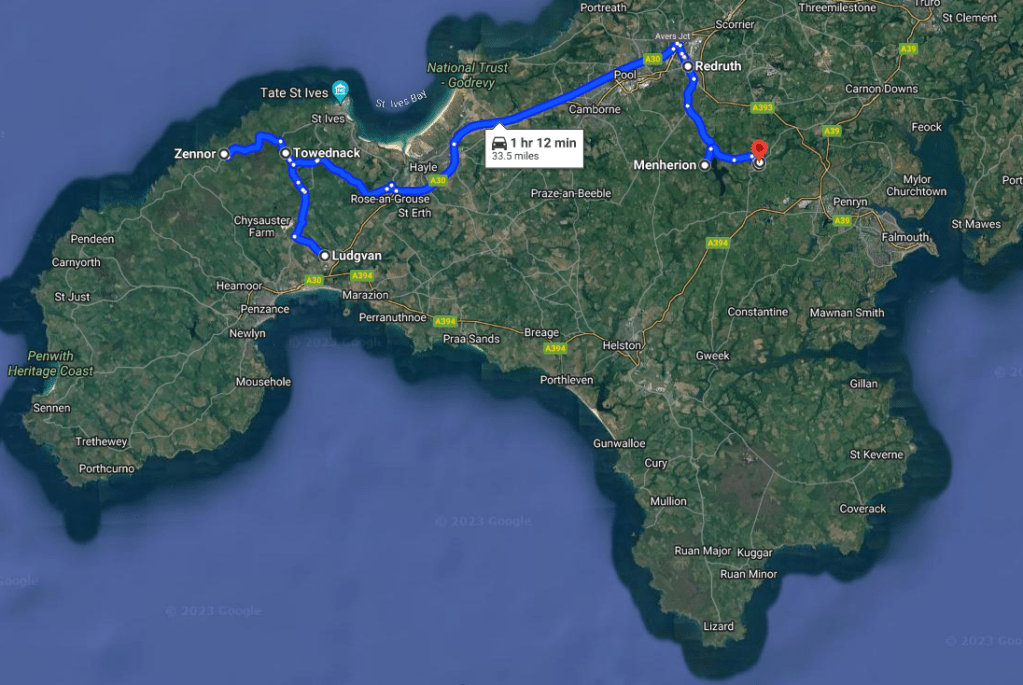
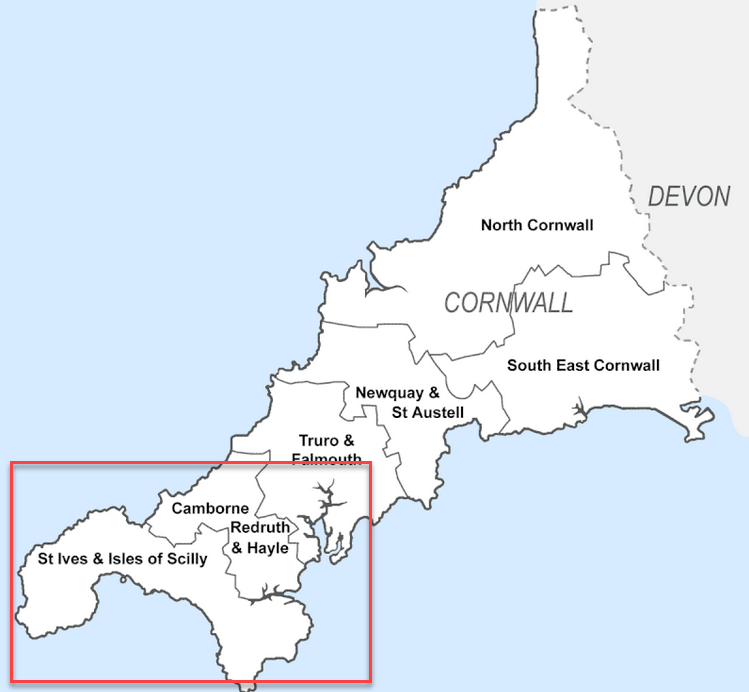
After James died, his family dispersed over several years, with his eldest sons William and James emigrating to the United States and settling first in mines in South Carolina and then on farms near the border of Illinois and Wisconsin; his sons John, Joseph, and Henry emigrating to mining country in California; and his children Charles and Elizabeth ending up in Australia. Five children remained in Cornwall.
James Martin (1820-1894)
James Martin was born in Redruth, Cornwall, England on 29 December 1820 and baptized 14 January 1821 in nearby Stithians. His parents were James Martin (1795–1838) and Grace Odgers (1795–1860).
James appeared in the 6 June 1841 UK census living in Wendron, Cornwall with his mother Grace (a widow and housekeeper) and his siblings William (age 20, actually 21), Bennet (age 15), Elizabeth and Ann (also 15), John (12), Thomas (10), Joseph (9), Edward (8), Mary (7), Charles (5), and Susanna (2). The six children 10 and older were all working as copper miners, although the family also kept a farm. His brother John was interviewed about the work in the mines in 1841, only three months before the census:

Within seven years, James had left this life to find another. There is a record of James Martin, age 27 arriving 29 May 1848 in New York on the Roger Sherman departing from Falmouth, Jamaica that could be him (arriving, unmarried, with Wm. Martin, 29). That seems very likely to be this James and his brother. (His brothers John (interviewed above), Joseph, and Edward ended up mining in California by 1860. Another brother Charles and a sister Elizabeth ended up in Australia.) By 1849, his brother William was married in Wisconsin. It’s quite possible James was in Wisconsin at the same time. William and his wife Aseneth were in East Fork, Jo Daviess County, Illinois by the 1850 census.
Although the marriage record has not been found, the obituaries for James and his wife have the date of their marriage as either 12 December 1850 or 1849 in either North or South Carolina. There is a 20 December 1850 census record in South Carolina that shows a James Martin living with a Moyle family as a boarder next door to another Moyle family with a young woman of about the right age named Elizabeth, but that census took place eight days after the couple was supposedly married. It could be them if they had married on 12 December and had not yet moved out to separate residences, or if they had married later and simply reported an earlier marriage date later in their lives. The 1850 census did not record marital status.
From that census, we have hints about the family of Elizabeth Moyle. She lived in the household of a Mark Moyle (age 35), a miner from England. His age makes it unlikely he was her father. He could have been an older brother or cousin. Also in the household was another Elizabeth (age 25) who might have been Mark Moyle’s wife, Mathew (17) and Catharine (16) who could have been siblings or cousins, and John (5), Stephen (3), and Mary (1) who might have been the children of Mark and Elizabeth. Next door living with James Martin was the household of Samuel Moyle (30), Joanna (30), Jane (12), Samuel (10), Catharine (8), John (6), and Mathew (5). It is plausible that Samuel was Mark’s brother (and also perhaps the brother of Elizabeth and the older Mathew and Catharine). Research has failed to resolve this issue, except that there is an 1838 marriage in Cornwall of Samuel Moyle and Joanna Kessell, and the 1841 census in Kenwyn, Cornwall shows one household with Joanna Moyle and two elder children of the right names and ages (but not her husband Samuel), and a separate household with a Samuel and a 60-year old woman Marcy Robinson who he might have been visiting at the time of the census. The only Mark Moyle found in the right area of Cornwall in the 1841 census married a woman named Maria and stayed in England to be listed in various later records. It’s possible this Mark Moyle left England before 1841. Elizabeth Moyle’s ancestry remains unclear.
James and Elizabeth had two children while they were in South Carolina: Elizabeth Ann (1851) and James (1853). Elizabeth Ann was born 12 September 1851.
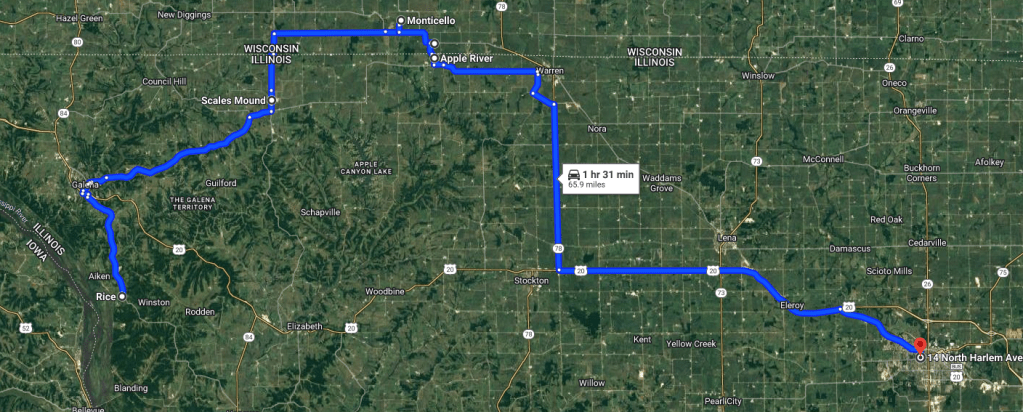
On 19 November 1855 (per his obituary) James and his family moved to Scales Mound, Jo Daviess County, Illinois. It’s a bit odd that such a specific date would be remembered years later. There are records of his later children being born in Illinois, including Suzanna (1856), Grace (1857), Catharine (Kate) (1859), William Leverne (1861), Edward James (1864), Joseph (1866), Thomas (1868), and John (1871).
His obituary mentions that James moved from Scales Mound to Apple River (also in Jo Daviess County) in 1859, where he lived for the rest of his life.
In the 1860 US census, he was listed as a farmer. He was still a farmer in 1870, with his eldest son James (age 17) working with him on the farm. By the 1880 census, he was still a farmer, and his three eldest children (Elizabeth, James, and Suzanna) had all moved away. His sons William, Joseph, and Thomas were helping out on the farm. His son Edward is not listed and it’s unclear if he had died or moved out (he would have been about age 16). The 1890 census record did not survive.
James wrote his will on 26 May 1892. The will named his wife Elizabeth and children James, Thomas, Elizabeth Sevier, Susan Price, William, Joseph, Grace Bourquin, Catharine Ryckman, and John. Edward is not listed, suggesting he had died after 1870 and before 1892 (and probably before 1880).
James died 21 June 1894 in Apple River, Illinois. His brother William had died in April in the same place.
William Leverne Martin (1861-1945)
William Leverne Martin was born 23 November, 1861 in Apple River, Jo Daviess County, Illinois (near the border with Wisconsin). He was the son of James Martin (1820-1894) and Elizabeth Moyle (1830-1910), immigrants from Cornwall, England.
He was listed in the 1870 census living with his parents James and Elizabeth and several siblings. He was still living there as of the 1880 census at age 18.
On 6 August 1885, William married Ida Blanche Tarkett in Jo Daviess County. Ida was born 19 June 1865 in Wurtsboro, Sullivan, New York. Her parents were Francis Tarket (1824-1885) and Sarah McDowell (1834-1906). Her family had moved to Rice, Illinois between 1875 and 1880.
Their children were Nellie Pearl (1887), Ethel (1891), Mary Blanche (1892), William Leverne (1897), and Fernald (1904).
In the 1900 census, William was living on a farm in Monticello, Lafayette County, Wisconsin with his wife Ida, 4 eldest children, and a farmhand. This Monticello was once known as Apple River, Wisconsin and is essentially the northern rural outskirts of the town in Illinois along the namesake river that is only a few miles away. They were still all living on the farm (joined by his youngest son Fernald, but with no hired help) in 1910. He was still on the farm in 1920, although his elder daughters Nellie and Ethel had married and moved away.
By 1930, William was living at 14 North Harlem Avenue in Freeport, Stephenson County, Illinois with his wife, daughter Blanche, son Fernald, and Fernald’s wife Blanche.

William and Ida were not working. Their daughter Blanche was working in sales at a dry goods store, and their son Fernald and his wife Blanche were working as a printer and stenographer at a medical company.
William and Ida were in the same house in 1940, with Fernald listed as head of household working as a presser at a printing company, and joined by a new grandson William (1938). Their daughter Blanche had moved out, and was not recorded again until her 1945 marriage.
William’s wife Ida died 2 November 1944 in Freeport. William died 15 January 1945 in Freeport, still at the same house. He was buried in Monticello (old Apple River), Lafayette County, Wisconsin.
Fernald Devere Martin (1904-1986)
Fernald Devere Martin was born 22 October 1904 in Monticello, Lafayette County, Wisconsin, on the border with Illinois. His parents were William Leverne Martin (1861-1945) and Ida Tarkett (1865-1944).
He was listed in the 1905 Wisconsin state census living on a farm in Monticello with his parents and four older siblings. He was living on the same farm in the 1910 and 1920 US censuses.
By 1929, he was living at 14 North Harlem Street in Freeport, Illinois with his parents and siblings.
On 20 July 1929, Fernald married Blanche May Evans. Blanche was born 5 May 1905 in Chicago, the daughter of Harry Lucian Claude Evans (1881–1969) and Lillian ( Lillie ) Clara Kuehl (1886–1951). Her family is detailed later on this page.
Their children were William Fernald (1938) and Vernon Evans (1945).
As of the census on 12 Apr 1930, Fernald and Blanche were living with Fernald’s parents, who were retired, and his sister Blanche. Fernald and his wife were a printer and stenographer at a medical company. By 1940, his sister Blanche had moved out and Fernald was the head of household, with his wife Blanche, son William, and parents William and Ida all living in the same house. Fernald was working as a presser at a printing company.
Fernald’s mother and father died in 1944 and 1945, respectively.
By the 5 April 1950 census, Fernald’s family had moved to Dunn in Dane County, Wisconsin (in the rural area southeast of Madison). Fernald was working as a printer at a printing company (“job shop”). He was listed in the Madison city directory as a “bindery worker” in nearby Stoughton in 1950, 1951 and 1952. He lived in Stoughton through at least 1967, when his residence was mentioned in a wedding announcement for his son Vernon.
Late in life, Fernald moved to Arizona. He died in Tucson on 8 February 1986.
Ancestors of Ida Blanche Tarkett
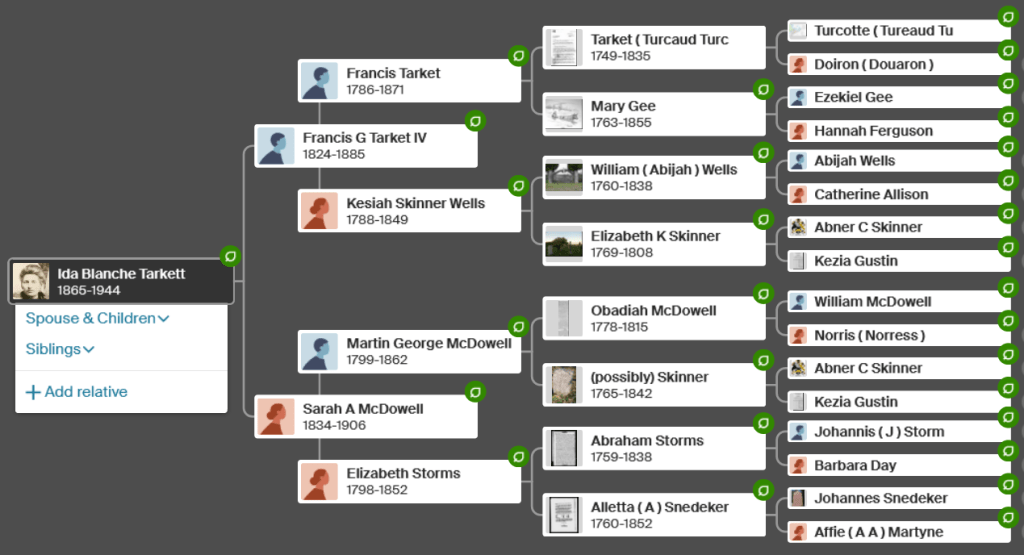
Ida Blanche Tarkett was the wife of William Leverne Martin (1861-1945). She was born 19 June 1865 in Wurtsboro, Sullivan County, New York. This is a description of her known paternal ancestors and the women who married into that family.
Note that much of the early family information comes from secondary sources copied and shared on Ancestry, but some of those do refer to original works which seem to have some reliability, many in French and not currently available. Some of those include:
- Pionniers vendéens au Canada aux 17e et 18e siècles : fleurs de lys et léopards / [abbé L. Auger] (aka Vendees au Canada, Auger, Léon)
- Le grand arrangement des Acadiens au Québec: notes de petite-histoire, généalogies, France-Acadie-Québec de 1625 à 1925 (aka Le Grande Arrangement des Acadiens by Adrien Bergeron)
- Au Pays des Colliberts Chroniques d’un village du Marais du sud de la Vendée : Doix, By Daniel Barreaud, Yvette Biré · 1993
- The Acadians of Prince Edward Island Joseph-Henri Blanchard, 1964
Name variations
This family’s surname is found in many versions including Turcot, Turcotte, Tercotte, Turquot, Tureaud, Turcaud, Tarket, and Tarkett. In addition, misspellings and mistrancriptions are also found in various records. American descendants generally settled on “Tarket.” Also, the men in this line known as “François” were often known as “Francis” in American or English-Canadian sources and contexts.
François Turcotte (d. 1789)
François Turcotte was born about 1710 likely in or near St Pierre de Doix, France. Doix is located in the Poiteven marshes, 8 kilometers south of Fontenay le Comte. It was former swampland that had been systematically drained by local monks to create meadows and enable farming in the 17th century. The land was divided by canals and ditches to create smaller plots of land for individual families.
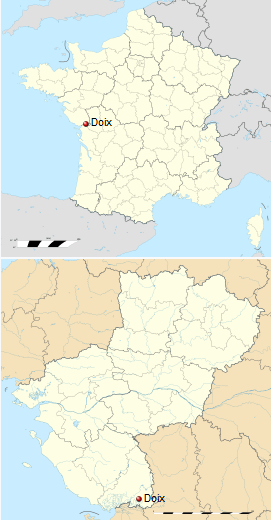
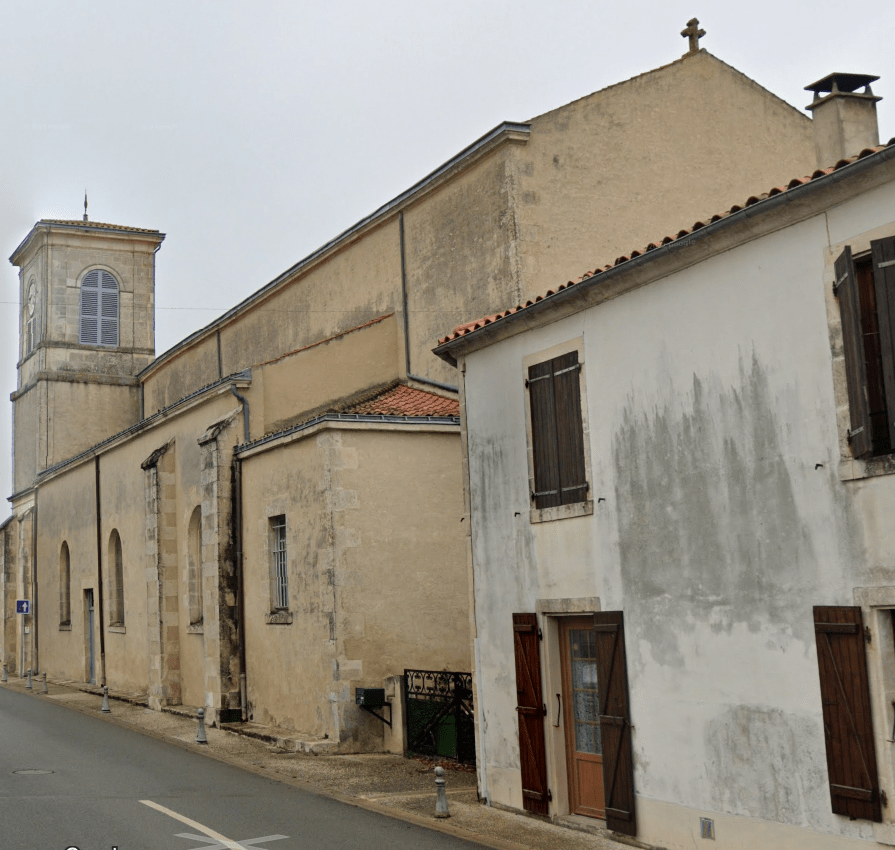
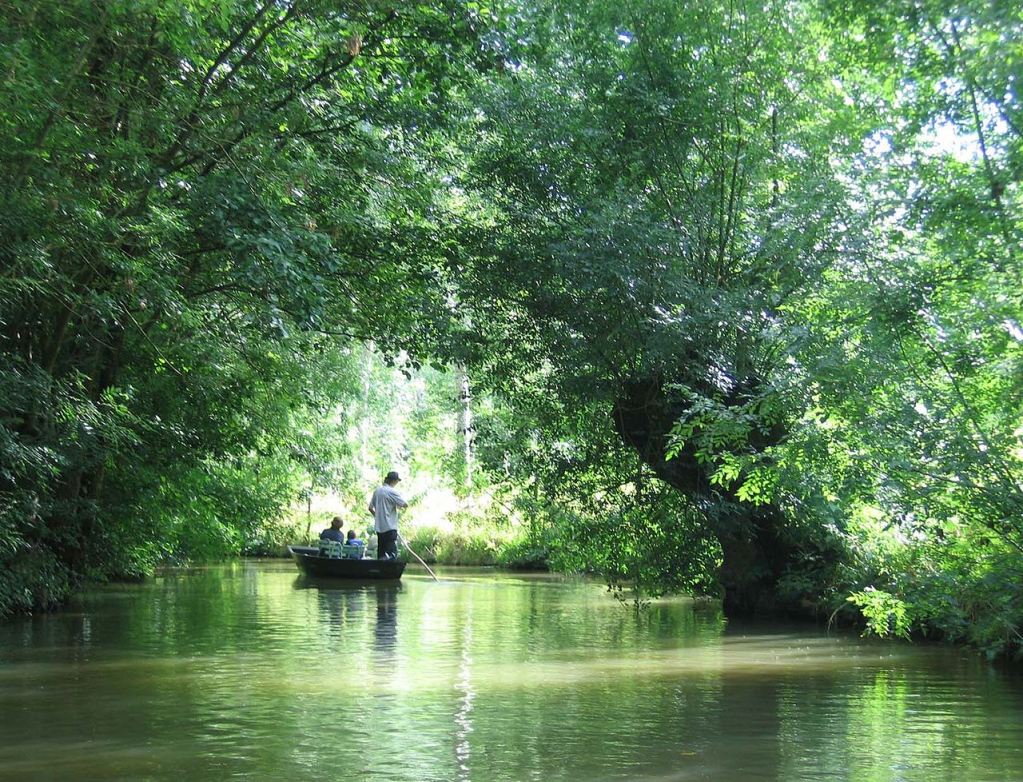
François’ birth date in 1710 is approximate and supported by some sources; other sources have him being born as late as 1718.
Some Ancestry trees have his parents as François Turcotte (c. 1690-1760) and Jeanne Bidet (1690-1765) but I have found no supporting records so any further ancestry for this family remains speculative.
About 1739, François emigrated from France to Acadia, settling in Port Toulouse on Île Royale (near current-day St. Peters). That year or the next, he married Catherine Marie Doiron. Catherine was born 15 May 1709 in Grand Pré on the Arcadian Peninsula. Her parents were Jean Doiron (1649-1735) (an immigrant from France who emigrated in 1671 with his first wife aboard L’Oranger) and his second wife Marie-Anne Trahan (1671-1710) (a native Acadian born in Port Royal). A Marguerite Doiron who might have been Catherine’s aunt (or a cousin of the previous generation) married René Guillot, one of the other Acadians (along with his brother Henri) who emigrated from Doix along with François.
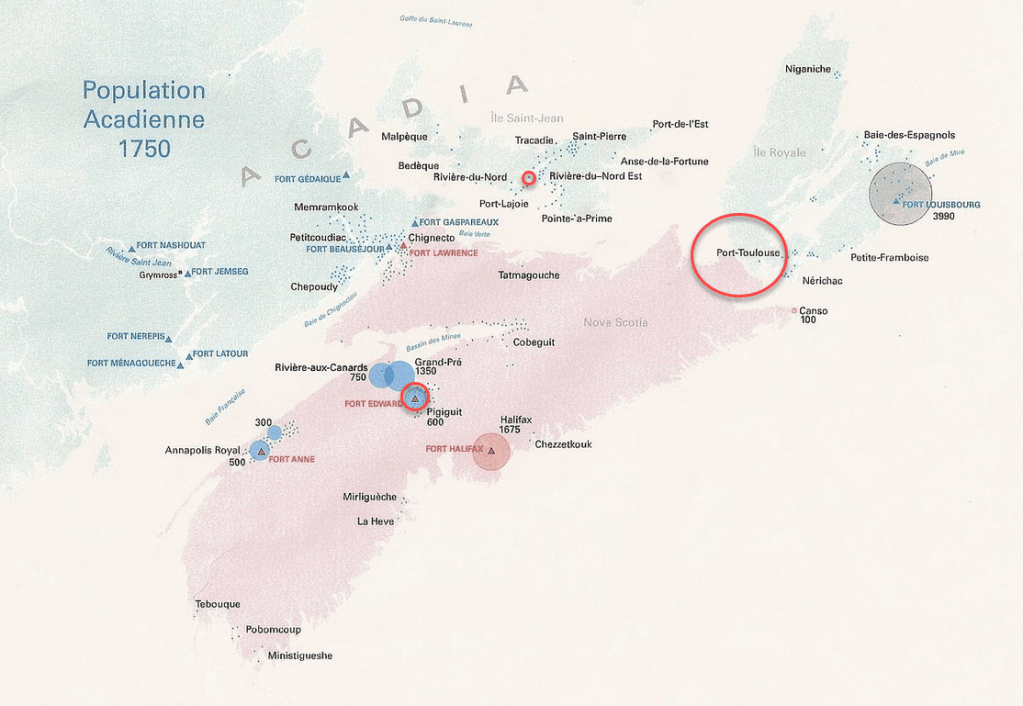
Acadia was a French colony founded in 1604. It was attacked by the British during Queen Anne’s War in 1710, and the Acadian Peninsula (all of modern Nova Scotia except Cape Breton Island) officially became British territory at the conclusion of the war in 1713 when Catherine Marie would have been only a few years old. (The British also claimed continental Arcadia north of the peninsula.) Some French settlements remained in the area around where the British established Fort Edward, about 2700 people total. Île Royale (now Cape Breton Island), along with Île Saint-Jean (now Prince Edward Island) remained firmly in French control.
François and Catherine Marie had three children who were all probably born in Port Toulouse: Marie Josèphe (1741), Anaclet (1743), and Jean Baptiste (1745).
In 1744, King George’s War broke out in North America between the French and British (as a theater of the broader War of the Austrian Succession). Île Royale was attacked by the British troops under Sir William Pepperell. The French post at Port Toulouse was destroyed by Pepperell’s troops in 1745, and the fortress at Louisbourg was captured. Likely the Turcotte family fled that year. France tried and failed to retake the territory in 1746, and eventually reestablished control in 1748. It’s possible that François’ family returned at that time.
The British redoubled efforts to assert control over their conquered territory on the Acadian peninsula with the founding of Halifax in 1749, and the accompanying settlement of large numbers of people. This set off Father Le Loutre’s War, which continued until 1755.
Starting in 1749 in response to these events, nearly half of the Acadian population in Nova Scotia relocated to French-controlled territories. François and his family were among them. In theory, they could have remained in Port Toulouse which was on Île Royale and still under French control (though very close to British territory), but they did not (or perhaps they never returned in 1748 and were in Pisiquit). They might have traveled through the Acadian Peninsula in 1749 amid this chaotic wave of migration, as some accounts seem to have their son François being born in the French enclave of Pisiquit (near where the British Ford Edward was located) rather than in their previous home in Port Toulouse.
By 1752, François had settled on nearby Île Saint-Jean at L’Anse au Sangliers (now Holland Cove on Prince Edward’s Island). It is likely he arrived early in the migration 2-3 years before, and might have experienced the swarms of mice that destroyed crops on Île Saint-Jean in 1749, the plague of locusts that came in 1750, and a severe drought that occurred in 1751. (Conditions were so bad for those that did not successfully make it to Île Saint-Jean and remained in refugee camps in Chignecto in Nova Scotia by 1753 that they started defecting back to British territory.)
The full English translation of the 1752 census information for his family:
François Tureaud, poor, nailer, not having the means of buying the requisites to work at his native trade, native of the parish of Saint Pierre du Doy, in Engou, aged 24 years, he has been two years in this country. Married to Catherine Douaron, native of l’Acadie, aged 35 years.
They have four children, three sons and one daughter:
– Annaclet, aged 9 years.
– Jean Baptiste, aged 7 years.
– François, aged 3 years.
– Marie Joseph, aged 11 years.
In live stock they have one pig and twelve fowls or chickens. They hold their land upon verbal permission of Monsieur de Bonnaventure. On it they have made a clearing for a large garden.
Father Le Loutre’s War was joined by the related French and Indian War (over French territories in Ohio Country) in 1754 (which was part of the global conflict called the Seven Years War).
The British won the Battle of Fort Beauséjour in June 1755, ending the war in Nova Scotia in their favor. Some Acadians escaped to Louisbourg on Île Royale. Most of the Acadians still remaining in Nova Scotia (about 7,000 people) were deported by British authorities to New England.
In the wake of the British victory, possibly seeing the writing on the wall and fearing deportation like the Acadians of Nova Scotia, François and his family left Île Saint-Jean for Quebec in the winter of 1755-1756. That choice would prove to be prescient, as the French and Indian War would begin in 1756, and the British would later renew their attacks on Île Royale in 1758 (forcing the French to abandon Port Toulouse and taking Louisbourg in July), conquer Île Saint-Jean (beginning in August with the first attack and deportations of French residents and continuing through November), and extend the fight to Quebec City by 1759.
François and his family arrived in Quebec (in the parish of St-Gervais de Bellechasse) in late 1755 with six other Acadian families, after what must have been an arduous journey of hundreds of kilometers through remote woods. The families were granted land by the governor of Quebec in April 1756, and also provided food through that first difficult winter. They built a home in the woods and subsisted for a few years while being exploited by the corrupt French leaders who had granted them the land (at least one of whom was convicted of crimes and confined to the Bastille in 1761). In March 1759, their land claim was legally confirmed and in April 1759 they sold the property, passing briefly through St. Charles to confirm with a local priest the authorization to sell their land.
The family disappeared from any records at this time for several years. They likely had to flee inland when English ships were spotted in the area in May 1759. François and his 16-year old son Anaclet probably were put to work building fortifications and serving as militiamen in Quebec. His son François and daughter Marie-Josèphe likely stayed with his wife away from the battle lines. Later English attacks likely would have sent the family to Trois-Rivières or Montreal. Quebec itself was taken by the English in September 1759.
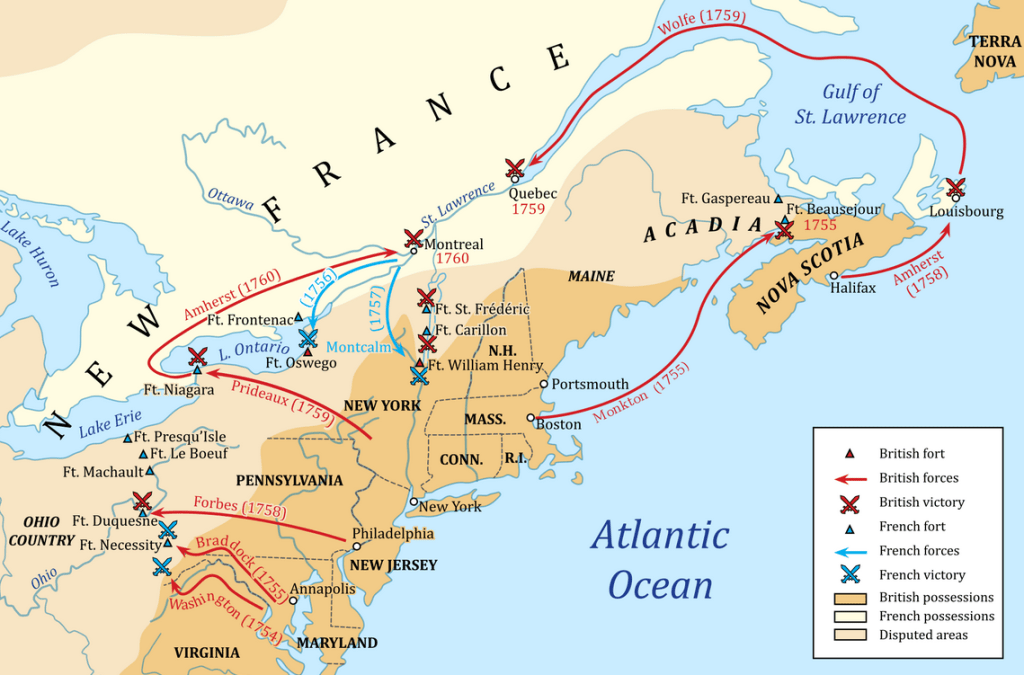
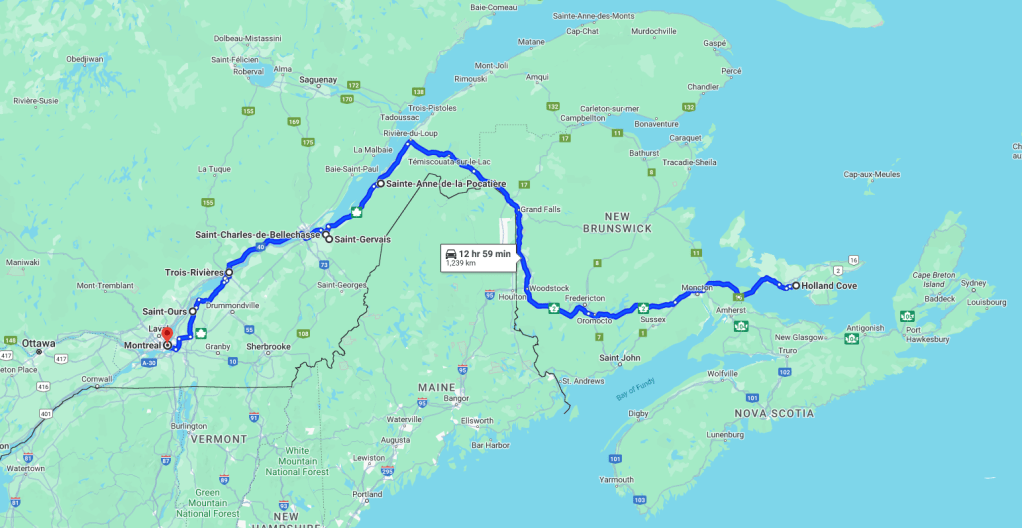
The family does not appear in records until the marriages of François and Catherine Marie’s children. Their son Anaclet was married in 1771 in Sainte-Anne-de-la-Pocatière, by some accounts their son François was married that same year in Montmagny, their daughter Marie Josèphe married in 1773 in St-Ours sur le Richelieu, and their son Jean-Baptise married in 1774 in Montmagny. François and Catherine-Marie apparently lived in Saint-Ours in 1773, because they are mentioned in the marriage record for their daughter there.
In 1775, the Continental Army of the thirteen colonies that would later become the United States invaded Quebec in an attempt to gain its support for the Revolutionary War. General Richard Montgomery brought his army very close to Saint-Ours. François and his family might very well have supported the American cause, given their history of running from the British authorities. His son François would enlist with the Continental Army by 1780, and possibly as early as 1775, and after the war would settle in New York as an American citizen.
François’ wife Catherine-Marie died on 14 December 1784 in Saint-Ours, Quebec. François himself died nearly five years later on 6 August 1789 in Saint-Ours.
Francis Turcot (c. 1750-1835)
François Turcot was born about 1750 in Acadia, most likely in Port Toulouse (current-day St. Peters on Cape Breton Island). Later census records suggest he was over 45 by 1800, so he was born before 1755. The 1752 Acadian census (English translation) lists him, age 3, as living with his parents and siblings in L’Anse au Sanglier on Île Saint-Jean, which is current-day Holland Cove on Prince Edward Island (suggesting he was born about 1749). A 1934 letter from a government records agency to descendants of Francis indicate that he was 67 years old on 3 April 1818 when granted his military pension. That would indicate a birth date of 1750 (if after 3 April) or 1751 (if before 3 April).
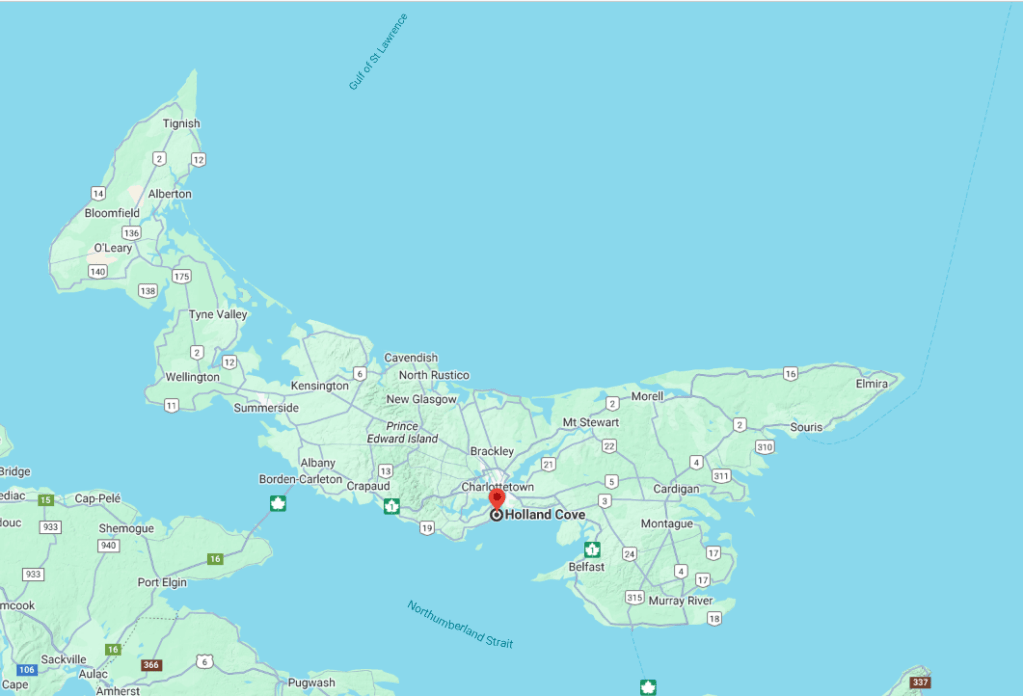
His parents were François Turcotte (c. 1710-1789), an immigrant from Doix, France and Catherine-Marie Doiron (c. 1709-1784), a native of Arcadia; both died in Saint-Ours, Quebec.
The French and Indian War (1754-1763) threatened French colonies in North America. During the winter of 1755/1756, when François was about 5 or six years old, his parents left Île Saint-Jean and arrived in Quebec along with six other Acadian families to avoid being deported by British authorities. His parents and these other families were granted land by the governor of Quebec in April 1756, and also provided food through that first difficult winter. After building a home in the woods and subsisting for a few years while being exploited by the corrupt French leaders who had granted them the land (at least one of whom was convicted of crimes and confined to the Bastille in 1761), his parents sold the property only a month after their ownership was legally confirmed in March 1759. They passed briefly through St. Charles in April 1759 to confirm with a local priest the authorization to sell their land.
The family likely had to flee inland when English ships were spotted in the area in May 1759. His father and older brother (Anaclet, about 16) probably were put to work building fortifications and serving as militiamen in Quebec City. He was young enough to have likely stayed with his mother and sister. Later English attacks likely would have sent the family to Trois-Rivières or Montreal. Quebec itself was taken by the English in September 1759.
His family does not appear in any records until 1771, when François was listed in a marriage record in Montmagny and his brother Anaclet was listed in a marriage record in Sainte-Anne-de-la-Pocatière. The name of his apparent first wife and what happened to their marriage is unknown.
In 1775, the Continental Army invaded Quebec. François was sympathetic to the American cause. In April 1780, he was listed as a fifer in the Continental Army under the Americanized name “Francis Tearcoot.” Francis (as he would be known from this time onward) was in the company led by Captain James Robichaux of the battalion commanded by Colonel Richard Livingston. Other officers in his company included Lieutenant Francis Monty and Ezekiel Cook, all commissioned in 1775 and 1776.
Although the only primary record of his service found so far is from 1780, Francis appears to have joined the cause in 1775. The history of Livingston’s unit, known more generally as the 1st Canadian Regiment, is well-known. Livingston organized some 200 men in Canada for the Revolutionary cause during the 1775 invasion, and it is quite likely that Francis joined with this group. It helped capture Fort Chambly in October 1775, fought in the Battle of Quebec that December (which was a defeat), and retreated to fight in the Sarasota campaign in 1777 in the Hudson Valley in New York, helping to relieve the siege of Fort Stanwix in August and fighting in the decisive victories in the Battles of Saratoga in September and October. It also fought in the Battle of Rhode Island in August 1778, after which it was assigned to garrison duty in New York and played a role in uncovering the treason of Benedict Arnold. The 1st Canadian Regiment was disbanded in 1781, with some of its members joining the 2nd Canadian Regiment which served for the duration of the war (until 1783).
A 1934 record from a government agency to his descendants fills in more details about his service. He joined in Montreal in 1775 under a French captain (possibly the same James Robichaux), and officially enlisted in Albany in 1776. He participated in the capture of General Burgoyne (who surrendered with his entire army of 5,800 men on 17 October 1777 at the end of the Battles of Saratoga, a major turning point in the war), apparently was in Captain Gosselin’s company in Colonel Hazen’s regiment in 1779, and was discharged in July 1783.
Stories on Ancestry state that while deployed in Rhode Island, Francis “froze” his feet and was unable to walk normally for the rest of his life. His pension in 1818 was based on this disability, which prevented him from doing any labor.
Shortly after the war, about 1785, Francis married Mary Gee in New York. Mary was born 3 August 1763 in Highlands, Dutchess County, New York. Her parents were Ezekiel Gee (1729-1803), who served in the Revolutionary War, and his wife Hannah (who was alive as of his will in 1800 and was the apparent mother of Ezekiel’s five children, but about which nothing else is known).
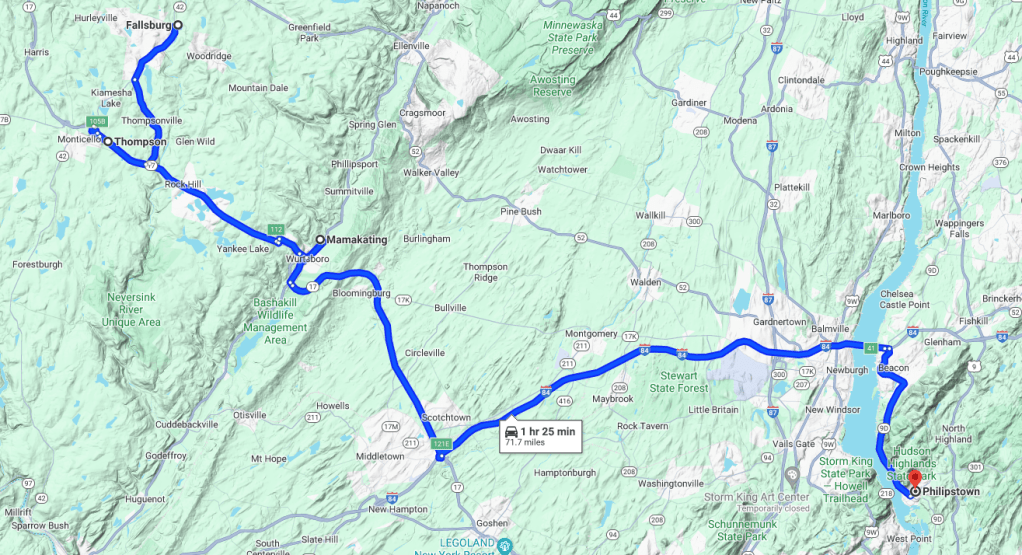
In 1790, Francis was recorded in the first US census living in Phillipstown, Dutchess County. He and his wife had three sons under age 16; only one of those has been identified (this tree’s ancestor Francis Tarket, born 1786).
Secondary sources have him settling in Thompson in Sullivan County, New York (incidentally, not far from the location of the 1969 Woodstock festival) shortly after 1790. The exact location of his property was apparently just east of an area then called “Edward’s Island” on the Neversink River. While they lived in that location, according to a family story, his wife Mary nearly drowned when she was caught in flood waters. She survived only by grabbing the tail of a nearby cow and whipping it until it dragged her to land. Accounts have Francis and Mary living on that site for 3-4 years and then selling the land and moving a mile north..
In 1798, “Francis Turcot” was listed as someone who “drew lots for grants of land in the Refugee Tracts in what are now Clinton County, New York, and Licking County, Ohio, 1798.” It’s unclear if he was granted land at that time.
Probably he wasn’t, as in 1800 he was living in Mamakating (then recorded in Ulster County but today in Sullivan County, New York), close and to the east of Thompson. He and his wife had three children at that time: two sons 10-15 (one of whom would be Francis) and one daughter under 10.
There is a 6 April 1808 record of a Francis Turcette in St. Clair County, Illinois contesting a land claim by French citizens in the region and asking for claims to be redivided. Possibly this might have been Francis attempting to make good on the land that might have been granted to him in 1800 in an area where French and American land claims were in conflict. If not him, the named man might have been his son Francis.
That record is backed up by secondary sources that have a Francois Turcotte in St. Clair County, Illinois being one of the commissioners in 1818 who platted land and named the town of Illinois City. Again, this could have been this Francis or his son.
By 1810, Francis was living in Thompson with his wife and a son 16-25, and a daughter age 10-15. His son Francis might have married and left home by 1810, so the remaining son is likely an unnamed brother. Note that there was a man named Isaac Tarket who is found living close to his son Francis in later census records, but whose birth date is estimated as 1795. It seems likely that Isaac is this other son born more like 1789-1790.
In 1819, per secondary sources in Ancestry, Francis swore an affidavit before a judge in which he stated he could neither read nor write.
The 1820 census listed Francis and his wife still living in Thompson with one son 16-25 and one daughter 16-25. The son is of the right age to be Isaac (with his later birth year of 1795). This seems to be corroborated by the 1830 census which does not list an elder Francis Tarket but does have an Isaac Tarket household in Fallsburg (where the rest of the extended family is also recorded) with three people living in it, all the right ages to be Isaac and his parents Francis and Mary. Isaac would marry in the next year or so and live the rest of his life in Fallsburg. His son Francis would also live most of the rest of his life in Fallsburg.
Francis himself seems to have died about 20 October 1835 in Fallsburg (per trees on Ancestry), although no supporting record has been found. His wife Mary was head of household in Fallsburg in 1840 (usually indicating a widow), and by 1850 was living with their son Francis in Fallsburg. She died about 1855.
Francis Tarket (1786-1871)
Francis Tarket was born 16 January 1786 in Phillipstown, Dutchess County, New York. His parents were Francis Tarket (c. 1750-1835), a French-Canadian immigrant from Nova Scotia who fought for the Patriot cause in the Revolutionary War, and Mary Gee (1763-1855), a native of Dutchess County.
After the Revolution, Francis’ father settled his family in New York. They are recorded in 1790 in Phillipstown in Dutchess County, in Mamataking in 1800, and in 1810 in Thompson in Sullivan County (on the Neversink River).
A “Francis Turcotte” was in Illinois Territory between 1808 and 1818 (and helped plat and name Illinois City), but it’s unclear if that was him, his father, or another man with a similar name. His sons James and Peter were both born in New York around the end of that period, but the records aren’t precise or sufficient to confirm or rule out whether he was in Illinois at that time. It’s worth noting that his father’s war injury makes it more likely that this Francis was the one who was in Illinois during this period.
Possibly about 1810, Francis married. Records are sparse and trees might have misidentified his wife, but it’s possible she was named Kesiah Skinner Wells. That woman was born 1788 in Mamakating about 15 miles from Thompson, but per her father’s will had a different husband as of 1838. More likely, Francis married a different woman named Kesiah.
Their known children (based on their inclusion in censuses after 1850) were James (1817), Francis (between 1820 and 1824), John (1825), Isaac (1828), Lucinda (1831), and Mary (1834). They probably had at least 2 or 3 children who were enumerated but not named in the 1820-1840 censuses.
The family was recorded in Thompson in the 1820 census with 4 children. Based on the listed ages, only one son from these children (James) is named in the censuses starting in 1850, with the two eldest sons and a daughter seemingly not yet identified.
By 1830 the family was living in Fallsburg, up the Neversink River from Thompson. A total of 8 children are enumerated, again with at least a couple seeming to not appear in later records. His brother Isaac was living nearby (and continued to live nearby until Isaac’s death in 1860).
In the 1840 census, Francis is recorded in a household of 10 including 7 children, his wife, and an elderly woman who was likely his mother Mary (Gee) Tarket. The ages of the children suggest two older sons from earlier censuses were not enumerated. An older daughter from earlier censuses is also not included.
In that same census, one of his sons, James, is enumerated separately in Fallsburg with his wife, and a daughter and son each under age 5.
The 1850 census indicates that the family had endured some difficult years. His wife apparently died about 1849, so that Francis was a recent widower. In addition to his children (Francis, John, Isaac, Lucinda, and Mary) and mother (Mary, age 88), his household included Dewitt, Levi, and Eliza Tarket. Those were the children of his son James. James died about 1848 and his wife died before 1850.
Next door to Francis in the 1850 census was a man named Peter Tarket (age 32) and his wife and son. No 1840 census record for Peter appears to exist in either Fallsburg or Thompson. The age is about right for Peter to be one of Francis’ sons from the earlier census records. That suggests that Francis had 10 children, with the identities of three unknown and no records of them found (at least so far) after 1830. The eldest unknown son per the 1820 and 1830 censuses was born between about 1805 and 1810, which suggests an earlier marriage than the birth dates of his known children.
Francis appeared in the 16 June 1855 New York state census in Fallsburg living with his daughter Mary and a 13-year old boarder named Mary Sears. His mother was not living with him. Although the record has not been found, Ancestry trees suggest Francis’ mother Mary died in 1855 in Fallsburg (although possibly after the census).
In the 1860 census, Francis was still living in Fallsburg with his daughter Mary and his granddaughter (via son James) Eliza. His son Francis lived in one nearby home, and his brother Isaac lived in another.
Francis did not appear in the 1870 census in Fallsburg. Nor has any other census record from that year been found for him. Some Ancestry trees claim that he died 1871 in Westbrookville, New York (a town now in Orange County but then part of Mamakating in Sullivan County) but the underlying sources have not been found. Others have different dates. Francis did not appear in the 1870 census in Mamakating. The only Tarkets in Mamakating in 1870 were his grandsons Dewitt (age 33) and Levi (age 27) and their families, and he was not living with either of them.
All we can conclude is that there are no records of Francis after 1860 (when he was 74 years old) and that he likely died relatively shortly thereafter.
Francis Tarket (1824-1885)
Francis Tarket was born in about 1824 (although possibly as early as 1820) in Fallsburg, Sullivan County, New York. His parents were Francis Tarket (b. 1786) and (possibly) Kesiah Wells (1788-1849).
His father’s family, presumably including him, was enumerated in the 1830 census in Fallsburg. They were also listed in the 1840 census still living in that town, and based on the ages of the children in the home, Francis was probably still living there.
His mother died about 1849. In the 1850 census, Francis was living with his father, his paternal grandmother Mary Gee Tarket, and his siblings on a farm in Fallsburg.
Before 1853 he married Sarah McDowell. Ancestry trees (sans sources) have the marriage taking place 25 December 1851 in Cuddebackville, Orange County, New York. Sarah was born 10 January 1834 in Westbrookville, Sullivan County, New York. Her parents were Martin George McDowell (1799-1862) and Elizabeth Storms (1798-1852).
Francis and Sarah’s children were George Wesley (1853), Ebenezer (1857), Huldah Jane (1858), Hester (1859), Mary Elizabeth (1862), Ida Blanche (1865), and Estella (1868).
Francis, Sarah, and their first son George were recorded in the 1855 New York State census in Fallsburg. Francis’ brother Isaac’s family lived next door, and his brother John’s family and his father Francis (and sister Mary) lived in other nearby homes.
In the 1860 US census, Francis and Sarah are listed with their four children who had been born by then. Francis Sr and Francis’ sister Mary lived in a nearby residence, as did his brother’s Isaac’s family.
By the 1865 New York state census, Francis had moved his family to Deerpark in Orange County, New York, about 30 miles from Fallsburg but less than 5 miles from Cuddebackville (where he and Sarah were married) and just about 8 miles from Sarah’s home town of Westbrookville.
In the 1875 New York state census, Francis and Sarah and all seven of their children were living in Mamakating in Sullivan County.
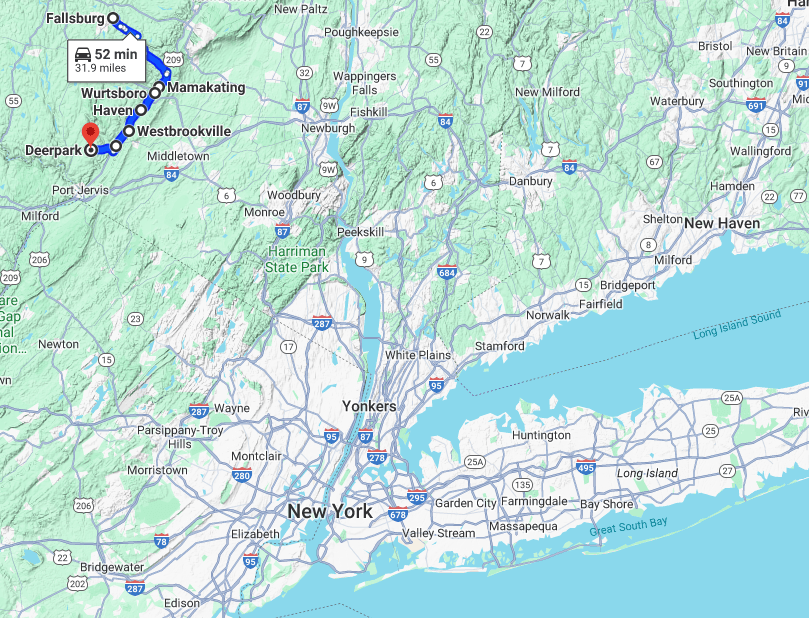
Before 1880, the family moved from New York to Illinois. They were recorded in the 1880 census living in Rice, Jo Daviess County, Illinois. Due to an apparent error by the census taker, the names of Francis (Frank) and his son George (G. W.) were swapped, but the other details make it clear that it’s the same family. Three of the children (Ebenezer, Huldah, and Hester) are not listed because they had moved away (Ebenezer and Huldah living nearby in Illinois, and Hester having married and stayed in Sullivan County, New York).
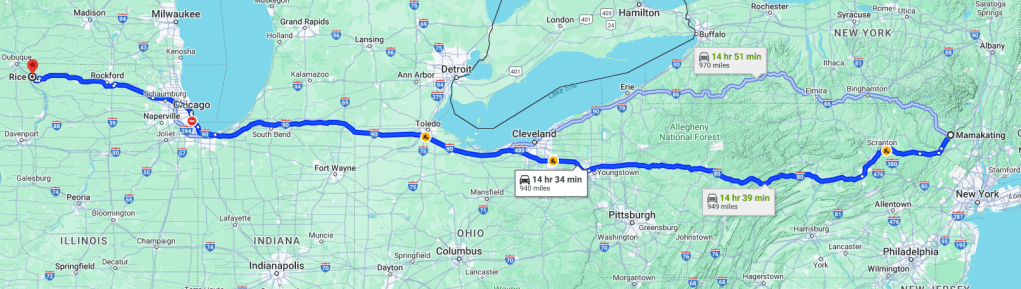
No more records for Francis have been found. Ancestry trees suggest he died 11 October 1885 in Irish Hollow, in Rice township, but the supporting record has not been found. It seems a plausible time and place for his death, however. His widow Sarah seems to have returned to New York after his death, and was recorded in the 1900 census living in Wallkill in Orange County, listed as the aunt of the head of household, George Corwin. She died 31 March 1906 in Wurtsboro or Haven, New York, both places in her native Sullivan County.
Ancestors of Blanche May Evans Martin
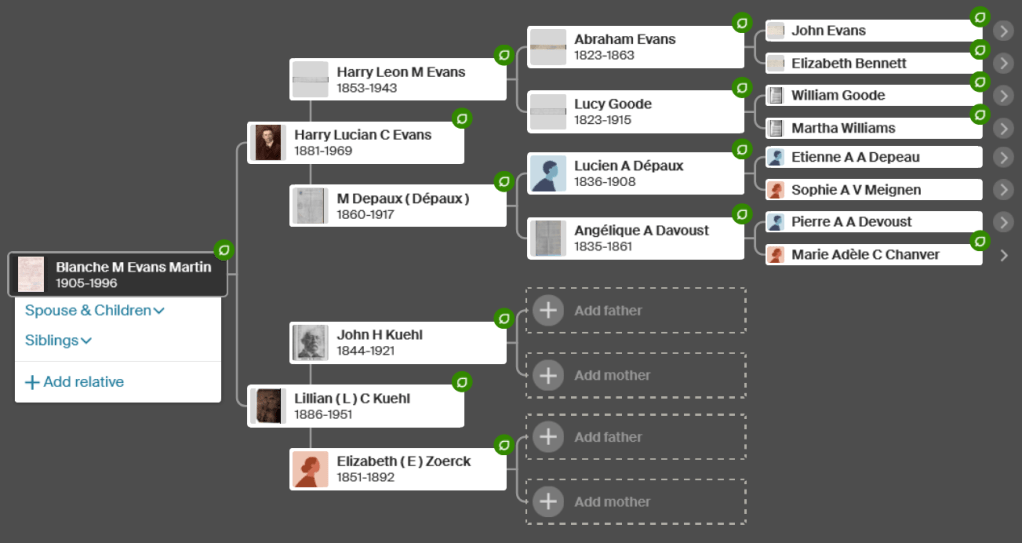
Blanche May Evans was born 5 May 1905 in Chicago, the daughter of Harry Lucian Claude Evans (1881–1969) and Lillian ( Lillie ) Clara Kuehl (1886–1951). Her family later moved to Freeport, Illinois. She married 14 July 1929 Fernald Devere Martin (1904–1986), whose biography and ancestry is detailed earlier on this page. They had two children.
The Evans family originates in Wales, possibly Northern Wales originally in Flintshire, with later descendants moving to Liverpool, Shropshire, Monmouthshire in South Wales, London, Toronto, and Chicago. Harry Lucian’s mother (who married his father in London) was French.
The following biographies trace the line of descent in the Evans family starting with the earliest known ancestors.
Christopher Evans (d. 1732)
Christopher Evans lived in Flintshire, Wales. He married Ales (aka Eleanor) by 1700 and they had at least two sons: Thomas (baptized 17 December 1700) and Christopher (baptized 10 March 1702), both in Northop, Flintshire, Wales.
Christopher was buried 11 December 1732 in Northop.

Thomas Evans (b. 1700)
Thomas Evans was born in in 1700 and baptized 17 December 1700 in Northrop, Flintshire, Wales. He was the son of Christopher Evans (d. 1732) and his wife Ales.
He married Maria Lloyd on 24 Februrary 1725 in Northop, Flintshire, Wales.
Thomas Evans (b. 1735)
Thomas Evans was born in 1735 and baptized 6 July 1735 in Northop, Flintshire, Wales. He was the son of Thomas Evans (b. 1700) and his wife Maria Lloyd.
He married Catherine Booley on 28 April 1757 in Flint, Flintshire, Wales.
John Evans (b. 1757)
John Evans was born about 1757 in Overton, Flintshire, Wales. He was possibly the son of Thomas Evans (b. 1735) and Catherine Booley, who married 28 April 1757 in Flint, Flintshire, Wales.
John married Sarah Taylor in Whitford, Flintshire, Wales on 4 May 1777.
John Evans (1777-1868)
John Evans married Grace Owens in St Peters Church in Liverpool on 8 October 1798. Those people were likely the parents of the John Evans born 31 August 1799 and baptized at St. Paul’s in Liverpool.
The connection between this John Evans and the ancestors back in Flintshire, Wales is speculative, as it the identification of their son John with the man who moved to Shropshire (in the next bio).
If the connection to Flintshire is correct, John Evans was born about 1777. Given his date of birth, he might have been the son of John Evans (b. 1757) who married Sarah Taylor in Whitford, Flintshire, Wales on 4 May 1777.
He married Grace Owens in 1798. They had at least one son, John, who moved south to Shropshire and married Elizabeth (Bennett) Perry in 1822 in Dawley Magna. If they had other children, none have yet been identified.
There is a burial record for John Evans on 4 July 1868 in Overton, Flintshire, Wales. Per that record, he was living in the Castle Church Stafford at the time of his death.
John Evans (1799-1878)
John Evans was born about 1800 in Lancashire. A baptism record (if it is his) has him born 31 August 1799 in Lancashire and baptized 5 January 1806 at St. Paul’s in Liverpool. His parents were John Evans (1777-1868), a cordwainer (i.e. shoemaker) and Grace Owens (b. 1776).
At some point, John made his way from Lancashire to Shropshire, as he is found in the latter with his birthplace listed as Lancashire.
On 25 August 1822 in Dawley Magna (aka Great Dawley), Shropshire, John married Elizabeth (nee Bennett) Perry, who had been married to William Perry and was presumably a widow. Elizabeth was born about 1794 in Broseley, Shropshire to John Morris Bennett (1766–1820) and Sarah Calcott (1768–1817) and married her first husband 27 July 1817 in Dawley Magna. It’s unknown if she and William Perry had any children.
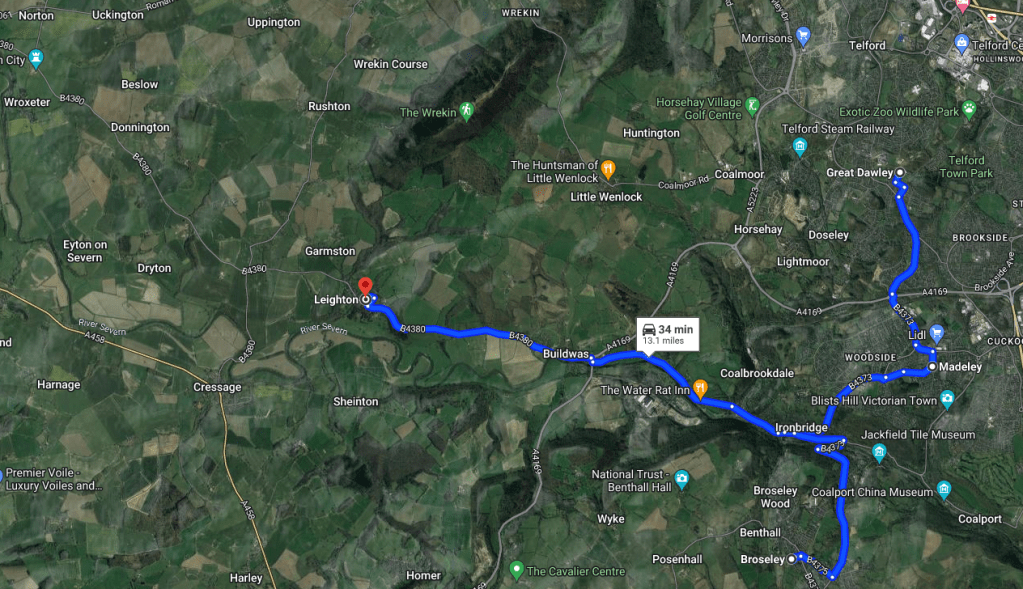
John and Elizabeth’s known children were Abraham (1823), Edwin (1825), and William (1840). Given the gap between Edwin and William’s birth years, they likely had more children, but probably not after William as Elizabeth would have been 45-46 years of age. (The 1841 for both of them and 1851 censuses for him would illuminate this question, but have not yet been found.)
The 1851 England census in Leighton lists John’s wife Elizabeth and his sons Edwin (26, a miller) and William (11). Their household also had two servants. John himself did not appear, but he must have been traveling on business that day, because he appeared in many later records through his death in 1878 and was still married and in good health in 1851. His eldest son Abraham had moved out to apprentice as a grocer by age 18 in 1841.
John appears in the 1861 England census in the civil parish of Leighton in Shropshire, listed as a miller born in an unknown parish in Lancashire, with his wife Elizabeth (age 63) and son William (age 21), listed as “miller’s son”. His wife’s birthplace was listed as Broseley, and his son’s birthplace was listed as Leighton. Also in their household were William Bate, a 50-year old millwright from Staffordshire; Maria Chant, a 17-year old servant born in Little Wenlock, Shropshire; and William Jones, a 15-year old servant born in Eaton Constantine, Shropshire.
In 1871 he was living in Leighton (the civil parish, with Wellington the ecclesiastical parish), listed as a miller employing two men, again born in an unknown parish of Lancashire. He lived with his wife Elizabeth, born in Broseley; his grand-daughter Emily (age 11, born in Oaken Gates); and a domestic servant Anne Harris, born in Broseley. The adjacent household was led by Edwin Evans (age 45), likely his son and also a miller; Edwin lived with his wife Jemmima and his son John, a 16-year old ironmonger born in Leighton.
John’s wife Elizabeth died 23 May 1876 in Leighton. John himself died 10 August 1878 in Leighton.
Abraham Evans (1823-1863)
Abraham Evans was born in 1823 in Broseley, Shropshire, England and baptized 2 November 1823. His parents were John Evans (1799-1878) and Elizabeth Bennett (1794-1876).
He appeared in the 1841 England Census in Madeley, Shropshire as an 18-yeard old apprentice under Henry Smith, a 38-year old grocer.
On 30 July 1850 in Matson, Gloucestershire, Abraham (by then living in Monmouth, Wales) married Lucy Goode. Lucy was born about December 1823 in Monmouth, the daughter of draper William Goode (1788-1851) and Martha Williams (1781-1848), and was baptized 25 January 1824 in Monmouth. She was listed in the 1841 census living in Monmouth with her parents William and Martha and two older brothers. Her mother died a couple of years before her marriage and her father died the next year.
Abraham and Lucy’s children included Ann Lucy (1852), Harry Montague (1853), John Arthur (1855), and Martha Decima (1857).
Abraham and Lucy settled in Monmouth, and were listed in the 1851 Wales Census living with a 17-year old servant Elkanah Aston, a “visitor” named John Evans, age 60, a miller (vaguely the right age to be his father John Evans, who was more like 52), and another visitor Daniel Evans (22), a draper’s assistant, who might have been a cousin. Both Abraham and his possible cousin Daniel are shown having been born in Madeley, Shropshire (which is the same basic area as Broseley). Abraham was listed as a grocer.
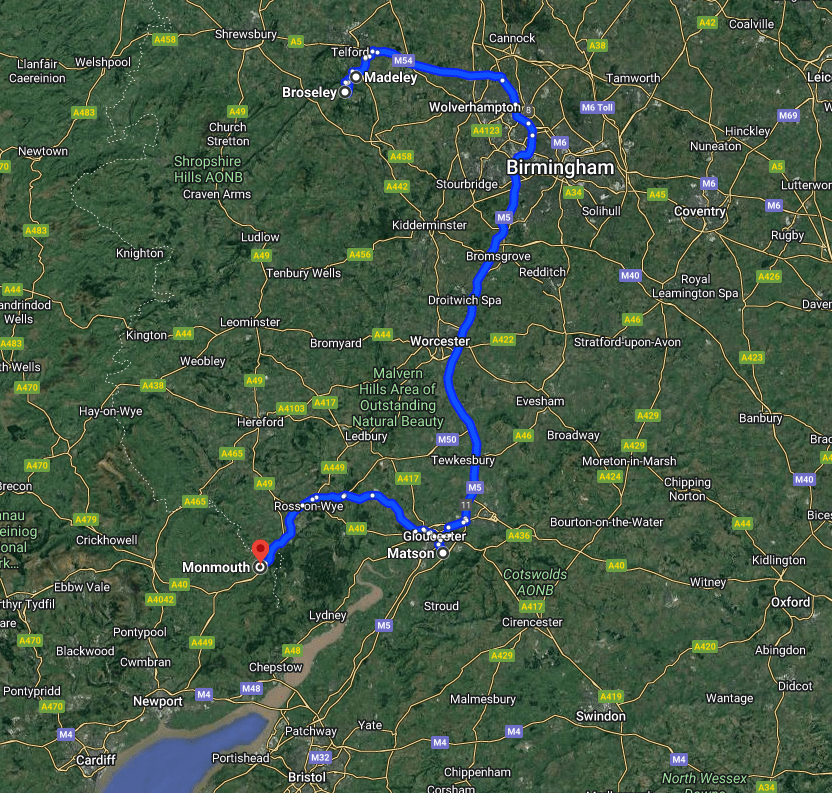
In 1854, Abraham was fined 5 pounds by an Inland Revenue supervisor for selling a mixture of chicory and coffee without properly labeling it as such.
In 1857, Abraham brought a suit against William Blakmore, the former band-master of the Monmouthshire Militia who had gone off to join the Radnorshire militia leaving 1 pound, 2s. 5d. worth of grocery bills unpaid. Several judgments had been laid against the defendant without him paying, and he claimed “complete destitution” to which Abraham replied to the judge that he was “at present getting good wages” and eventually won an order to be paid 5 shillings per month to pay off the debt. It’s unclear if the accounts were ever settled.
In 1858, Abraham advertised for an assistant at his grocery.
The 1861 census listed Abraham as a grocer, living with his wife Lucy and children Ann Lucy, Harry Montague, John Arthur, and Martha Decima. Also living with the family were two apprentices, two servants, and a porter.
Abraham died 21 February 1863. His estate was probated on 11 May 1863 at a value of no more than 1500 pounds. It listed his four surviving children who were all minors (in fact, all under 12 years of age).
His wife Lucy lived more than 50 years after his death, dying at age 91 (barely short of her 92nd birthday) of chronic bronchitis and cerebral edema on 19 December 1915. She was buried on 22 December 1915.
Harry Leon Montague Evans (1853-1943)
Harry Montague Evans was born between January and March 1853 in Monmouth, Wales. His birth was registered under that name for that quarter of 1853, and he was baptized 25 May 1853 as Henry Montague Evans, with his parents names both listed and his father’s profession listed as “grocer”.
He was listed as Harry Montague Evans in the 1861 Wales Census living with his parents Abraham Evans (1823-1863) (a native of Brosely, Shropshire, England) and Lucy (Goode) Evans (1823-1915) (a native of Monmouth). The ecclesiastical parish for that record is Hereford. His father’s profession was listed as grocer.
His father died in 1863.
The 1871 England census in Hereford (Hereford All Saints ecclesiastical parish) has a Henry Evans born in Monmouthshire, age 19, working as an apprentice printer and compositor and living with other apprentices at bookseller, stationer, and printer’s office at 35 High Town in Hereford. Given the location in England but relatively close (about 20 miles) to Monmouth, and biographical details and the matching profession, this is almost certainly the same person.
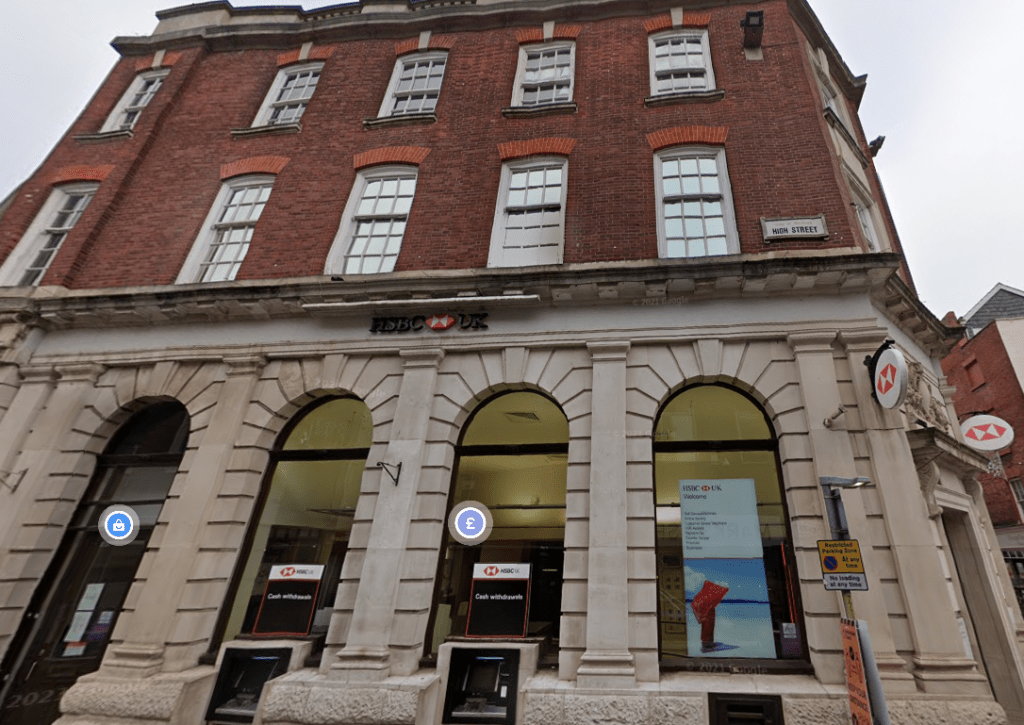
In the 1881 England census, Harry Evans and his wife Margaret were living as lodgers at 6 Clifton Grove in Gravesend, Kent, England (in Greater London, in a building that no longer exists at that address). His occupation is listed as “reporter, reader, printer, etc.” and his birthplace as Monmouth. His wife’s birthplace is listed as Rome, Italy (French) but that is likely in error as her official birth record states she was born in Paris, France. Their marriage date is unknown.

Harry and Margaret were likely only recently married, because they had no children living with them. The census was recorded on Sunday, 3 April 1881, and their first child (Harry Claude Arthur Lucian Evans) was born 21 November (and baptized 24 November) 1881. So she would have been early in her pregnancy as of the census. Note that in son Harry’s baptism record, the elder Harry is named “Harry Montague Evans” as in most early records. The record also includes the full maiden name of Harry’s wife: Marguerita Eugénie Adèle Léontine Dépaux. That baptism record was in York (Toronto), Canada, indicating that Harry and Margaret had emigrated prior to their son Harry’s birth.
Marguerita was born 14 March 1860 in Paris, in the third arrondissement, at 4 Rue du Vertbois, at 5 PM.
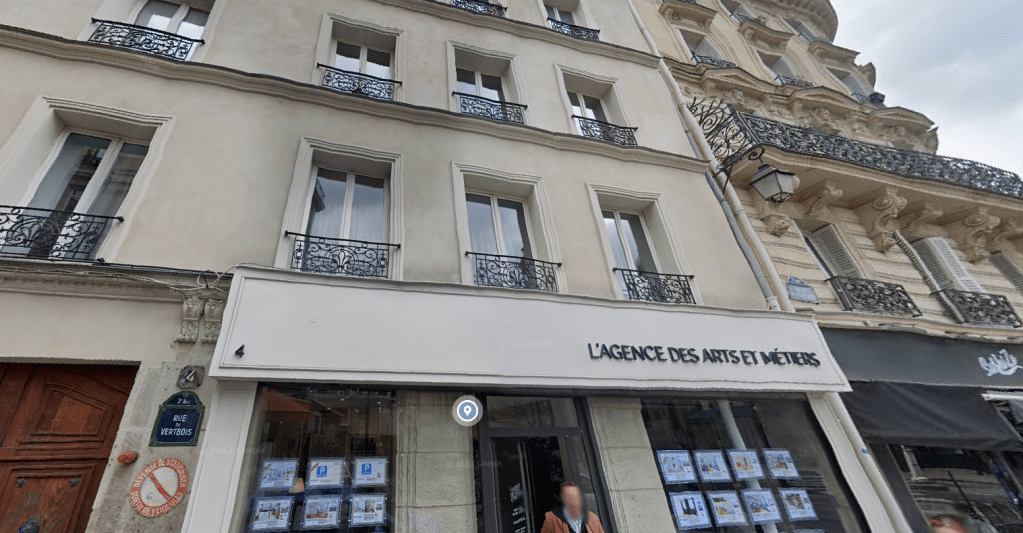
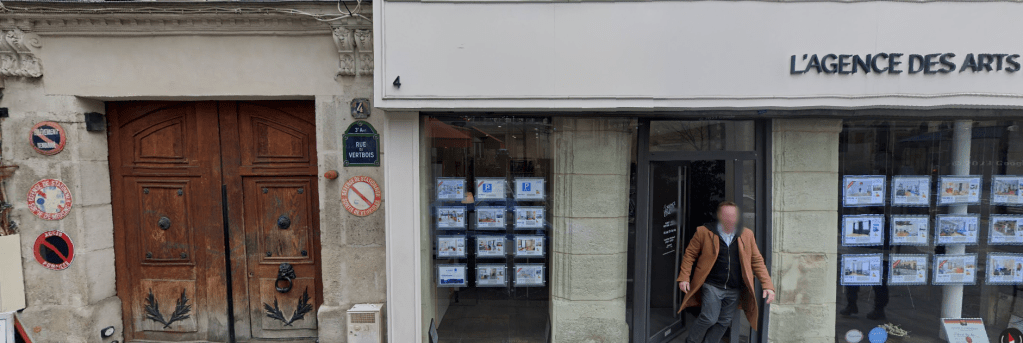
Her parents were Lucien Alexandre Dépaux (1836–1908), then a 24-year old cook (“cuisinier”), and Angélique Augustine Davoust (1835–1861), a 24-year old linen maid (“lingère”) who had been married for 2 1/2 years. The official document with this information appears to have prepared after the fact, possibly being dated 1878 (18 years later). So it is possible that she was born in Rome as mentioned in the earlier English census.

Margaret’s paternal family was from Chamigny in Seine-et-Marne (before 1790 in the province of Champagne).
Harry and Margaret’s second child Blanche Evelyn Evans was born 6 October 1883 in Sarnia, Lambton County, Ontario and baptized 2 November 1883. Her baptism lists her father as “Harry Evans” and her mother as “Margaret Depaux” and states that Harry was working as a printer.
The birth record of their youngest child Azalia Pearl has not been found, but from later records she was born 1890 or 1891 in Illinois, indicating that her parents had emigrated to the United States by 1891. The immigration records have not been found. In fact, no records of Harry, his wife Margaret, or his children are found until 1894.
On 7 October 1894, Marguerite Eugenie Evans married Charles (nee Carl) Dellgren, a Swedish immigrant, in Chicago. On 19 January 1895, a “Leon Harry Evans” married a “Jennie S. Goodall” also in the Chicago area. This is the first record where the given name “Leon” appears, but it is definitely the same person because he appears in later records with all three of his children as their father. It’s unclear whether “Leon” was an extra name from birth that wasn’t previously recorded or if it was a name that Harry adopted. But from this pair of records we can infer that Harry (Leon) Evans and his wife Margaret had divorced between 1890 and 1894.
In 1900, Leon was listed as “Leon H Evans” living in Chicago at 5926 Henry Street with his second wife Elizabeth (her full maiden name being Elisabeth Jennie O’Shaughnessy), his children Harry (18) and Blanche (16), and Elizabeth’s son from her first marriage, Willie Goodale. His birth country was listed (inaccurately) as “England.” He, his son, and his step-son were all working as printers.
His daughter Azalia Pearl was living with her mother Margaret and Margaret’s second husband Charles Dalgren (a plasterer) at 596 West Huron Street in Chicago, with her name listed as “Della” (probably due to an error by the census-taker). This “Della” is listed as the daughter (not step-daughter of Charles) and the location of her father’s birth (in this record only) is listed as “Sweden.” So there’s a question as to whether Azalia was actually Charles’ daughter, possibly contributing to the divorce of Harry Leon and Margaret. Based on later records that are consistent with Harry Leon being her father, I would guess that this is either an error by the census-taker or an effort by Charles and his new family to present Azalia as his daughter. She would have stayed with her mother because of her younger age (3 or 4 at the latest possible time of her parents’ divorce) and not because of her paternity.
In the 1910 census, Margaret and Azalia were living at 1749 North Erie Street in Chicago.
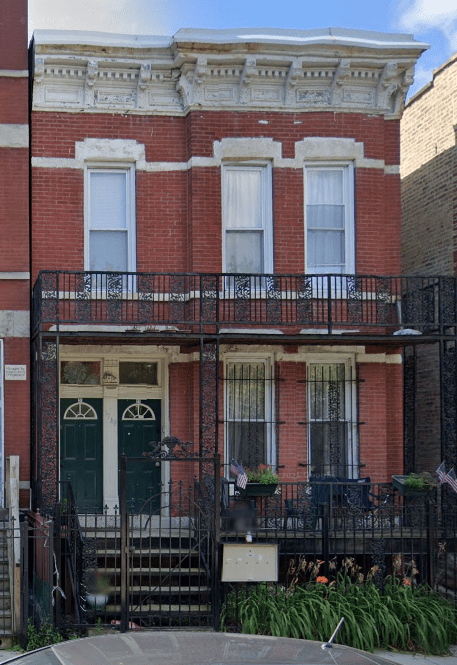
(probably the same address, despite the directional)
Margaret was listed as “divorced” with a total of three children, all living. She was still using the surname Dalgren but Azalia was listed as “Azalia Evans,” supporting Harry Leon as her father.
In the same 1910 census, Harry Leon (listed as “Leon H Evans”) was living with his wife Elizabeth and daughter Blanche. His son Harry had married and moved away. He was working as a printer for a newspaper. Oddly, his place of birth was listed as “Virginia,” a place connected to him in no known way.
In 1912, his daughter Azalia was married. The marriage announcement notes that she was the daughter of “Marguerite Evans” — not “Marguerite Dallgren” as might be expected.
Marguerite (Depaux Evans) Dallgren died 9 June 1917 in Chicago and was buried 11 June 1917 at Forest Home Cemetery. The death index noted she was divorced and that her father’s given name was Alexandre.
In 1920, Leon was listed again as “Leon H Evans,” living at 4818 Rice Street in Chicago with his wife Elizabeth, his step-son William Goodale, and his daughter, listed as “Azalia Evans” and noted as being divorced and an unemployed telephone operator. Again, oddly, Leon’s birth state is listed as Virginia, suggesting that perhaps this was a purported fact conveyed by Leon himself and not a census error. He was working as a printer at a printing company, as was his stepson William.
On 17 May 1929, Leon’s wife Elizabeth died in Chicago and was buried 20 May in Forest Park Cemetery. After his wife’s death, Leon moved in with his son Harry’s family in Stephenson County, Illinois.
In 1930, Leon was listed as living in Silver Creek in Stephenson County, Illinois. The head of household was Leon’s son Harry, listed as “Harry L C Evans.” This is clearly Harry Lucian Claude Evans, the full name of his son (whose baptism record, it’s worth mentioning, names his father as “Harry Montague Evans” and makes it quite clear that “Leon” is that same man). Along with Leon’s son Harry, and Harry’s wife Lillian were his grandchildren Beulah and Vernon. Leon’s birth country was listed as “England” (close enough; actually Wales) and his parents’ birth country was also listed as “England” (his father was born in England but of Welsh ancestry, and his mother like him was actually born in Wales). Leon was listed as “retired.”
In 1940, Leon was still living with his son Harry and Harry’s wife Lillian, and their son Vernon. His birthplace was again listed as “England.”
Leon died 29 Mary 1943 in Freeport, Illinois (in Stephenson County adjacent to Silver Creek township). His residence at the time of his death (and for 14 years previously) was listed in his obituary as 1620 South Locust Street, which was likely the same residence that was listed as “Silver Creek” in the 1930 and 1940 censuses. Interestingly, his obituary claims he was born in Virginia and then moved to England even though early records clearly have him born in Wales.
Harry Lucian Claude Evans (1881-1969)
Harry Lucian Claude Evans was born 20 November 1881 in Toronto, Ontario, Canada. His parents were Welsh immigrant Harry Leon Montague Evans (1853–1943) and French immigrant Marguerita Eugénie Adèle Léontine Dépaux (1860-1917) who apparently arrived in Canada in 1881 as newlyweds with his mother already pregnant. Harry’s family moved to Chicago between 1883 and 1891, and his parents divorced by 1894.
In the 1900 census, Harry was living with his father (who was going by Leon), his father’s second wife Elizabeth, Elizabeth’s son William Goodale, and his sister Blanche at 5926 Henry Street in Chicago (an address that no longer exists). Harry was working as a printer, as was his step-brother William, and possibly his father.
On 30 December 1903, Harry married Lillian Clara Kuehl in Chicago. Lillian was born 9 February 1886 in Illinois, the daughter of German immigrants John Kuehl (1844-1921) and Elizabeth Zoerck (1851-1892).
Their children were Blanche May (1905-1996), Beulah (1910-1990), and Vernon Harry (1920-1943).
In 1910 they were living in Chicago at 1025 Franklin Avenue (another address that no longer exists), with their first child Blanche. Harry was working as a compositor at a printing shop.
Harry registered for the WWI draft in 1918, at which time he was living at 432 Float Street in Freeport, Stephenson County, Illinois and working as a printer at W. T. Rawleigh Co. (There is a current address at 432 Float *Avenue* but the closest house currently is at 436 Float Ave.)
By 1920, Harry was living in Silver Creek in Stephenson County (address unknown) with his wife and children Blanche, Beulah, and Vernon. He was working as a “super” at a print shop.
He still lived in Silver Creek in 1930, but his daughter Blanche had married and moved with her husband Fernald Martin to nearby Freeport. His retired and widowed father Leon was also living with him. Harry was the manager at a printing factory and his daughter Beulah (19) was an assistant at a dentist’s office.
He was still in Silver Creek in 1940, living with his wife Lillian, son Vernon, and father Leon. Harry had changed industries and was a manager at a medical company. His daughter Beulah had married and moved away.
His son Vernon married in 1942 in Blackstone, Virginia, and the wedding announcement in the newspaper listed Harry’s address as 1620 South Locust in Freeport, Illinois. Sadly, Harry’s son Vernon died in August 1943, apparently while serving in the war in the 3rd Infantry Division during the Allied invasion of Sicily. Harry’s father Leon had already died in May of that year.
In 1950, Harry and his wife Lillian were still living at 1620 South Locust Street (today 1620 South Locus Ave). He was retired.

Harry’s wife Lillian died 1 April 1951. He remarried 26 November 1951 in Chicago to Hazel Colladay (nee Ellingson),the widow of Earl Colladay. Harry and Hazel eventually relocated to Stoughton in Dane County, Wisconsin. Hazel died there in 1968, and Harry died there on 21 February, 1969.
Ancestors of Rossiter Jacob Anken
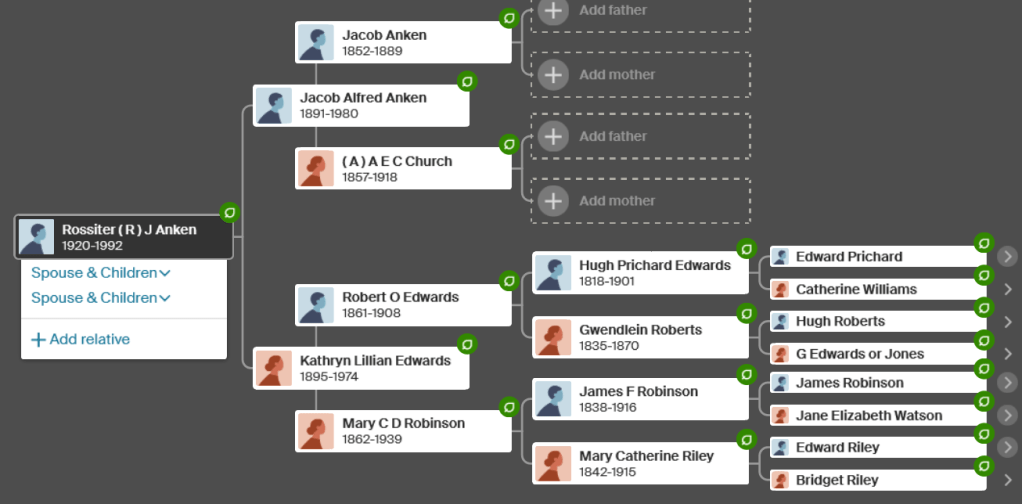
Jacob Anken (1852-1899)
Jacob Anken was born about 1852, probably in Switzerland. Based on later records, he and his wife spoke German as their native language.
He married his wife before 1881, again probably in Switzerland. Her ancestry (even her maiden name) is unknown, and her given name is found in different records as Ann, Elizabeth, and Clara.
On 26 April 1883, Jacob (age 31) arrived in New York with his wife Ann (age 25) and their daughter Marie (age 2) after traveling steerage in the French steamer “Labrador” sailing from Le Havre, France. Their place of origin was listed as Switzerland.
No other records of Jacob survive except for his gravestone in Oak Grove Cemetery in Portage, Columbia County, Wisconsin, where he is buried next to several family members who followed him in death. The gravestone lists his birth as 1852 and his death as 1899.
The 1900 census listed his wife Ann and three children, including Mary (1881), Freda (1889), Jacob (1891), and Clara (1895).
Note that there is a gravestone for a Maria Anken near the rest of the family that is hard to read but appears to be 1881-1890. Given that Mary was listed in the 1900 census, either it had a different date that cannot be correctly read or it is for another person. There are multiple records of his other children. Jacob’s wife is listed as “Elizabeth” in the 1905 Wisconsin state census, “Clara” in the 1910 census, and “Elizabeth” in several later records. Her Social Security death record has her name as “Elizabeth Church.” Probably she remarried later in life, rather than “Church” being her maiden name.
Jacob Alfred Anken (1891-1980)
Jacob Alfred Anken was born 9 September 1891 in Wisconsin. His parents were Jacob Anken (1852-1899) and Anna Elizabeth Clara Church (1857-1918), German-speaking immigrants from Switzerland who emigrated to the US about 1883.
Jacob’s father died in 1899 when he was only 8 or 9 years old.
In the 1900 census, Jacob was living with his mother (who was going by Ann) and his three sisters in Caledonia, Columbia County, Wisconsin. His mother was working as a seamstress.
In the 1905 Wisconsin census, he was still living in Caledonia with his mother (listed as Elizabeth) and two of his sisters. His sister Elizabeth, eldest of the siblings, had moved away (or possibly died, given the lack of records about her). Jacob was working as a farm laborer (age 13), the only family member listed as working.
Jacob was listed in the 1910 census living at 575 Howard Street in Portage (also in Columbia County, Wisconsin). He was listed working “odd jobs” as a laborer, while his sisters Fredia and Clara were spinners at a knitting factory and his mother was not working outside the home.
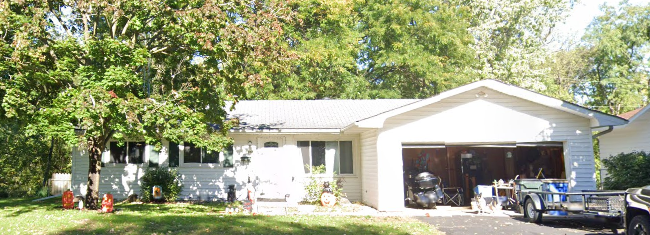
On 5 June 1914, Jacob registered for the draft and claimed an exemption based on being the sole provider for his mother. He was living at 515 Monroe Street and working as a carpenter. He listed his age as 25 but he was actually still 22.
In 1917, he was listed in the city directory for Portage living at 515 Monroe Street and working as a carpenter.
Jacob’s mother died in 1918. His mother’s home stayed in the family, and Jacob would be living there at least from 1930-1950 (and perhaps even longer either before or after).
On 10 September 1919, Jacob married Kathryn Lillian Edwards. Kathryn was born 30 March 1895 in Caledonia, Wisconsin and grew up in Baraboo in Sauk County, Wisconsin (both places also being close to Portage). Her parents were Robert Edwards (1861-1908), the son of Welsh immigrants, and Mary Robinson (1862-1939), whose father was born in Canada of English ancestry and her mother was born in Ireland.
In the January 1920 census, Jacob and Kathryn were living at 18 Sinclair Street in Janesville, Rock County, Wisconsin (over 80 miles south of Portage). (Why they did not live in the family home at 515 Monroe Street in Portage is unclear. Possibly one of his sisters was living there.) The next month, they gave birth to Rossiter Jacob Anken, their only child.
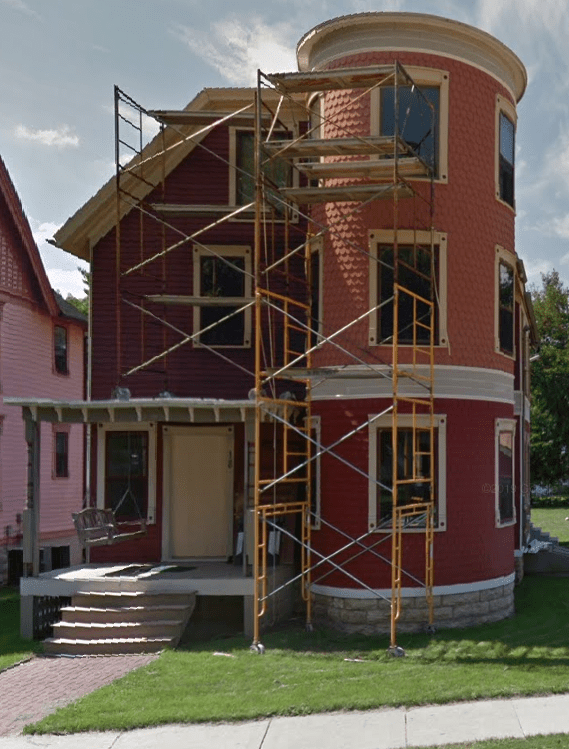
In the 1930 census, Jacob was living in his old family home at 515 Monroe Street with Kathryn and their son Ross. Jacob was working as a carpenter building houses and Kathryn was an insurance company correspondent. All three were still living in the same house in 1940, with Jacob owning his own carpenter/contracting company and his son Ross working as a clerk at a local lumber company.
In 1941, Jacob’s son Ross enlisted in the US Army Air Force. Jacob registered for the draft himself in 1942, though at age 49 he did not enlist and was not drafted. In 1950, Jacob (now going by “Jake”) and Kathryn were still living at 515 Monroe Street, and Jake was still working as a carpenter.
Little is known about Jacob’s later life. He apparently was an alderman in the second ward of Portage from roughly 1960 to 1980. He was also a member of Trinity United Church of Christ and several fraternal organizations. His wife died 17 July 1974 in Portage. Jacob died 6 April 1980, also in Portage.
Rossiter Jacob Anken (1920-1992)
Rossiter Jacob Anken was born 20 February 1920 in Portage, Columbia County, Wisconsin (about 40 miles north of Madison). His parents were Jacob Alfred Anken (1891-1980) and Kathryn Lillian Edwards (1895-1974). He was apparently their only child.
Rossiter was recorded in the 1930 census living with his parents at 515 Monroe Street in Portage, Wisconsin. His father worked as a carpenter building houses and his mother was an insurance company correspondent.
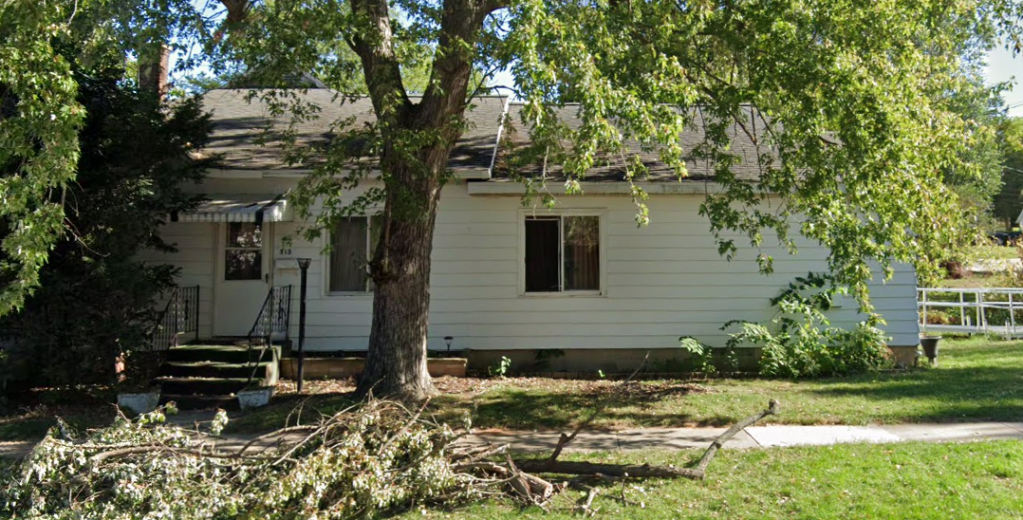
He was living in the same house with his parents in 1940, two years after high school graduation. Rossiter had shortened his name to “Ross.” He was working as a clerk with a lumber company (noted in other records as Barker Lumber and Fuel). His father was running his own carpenter and contracting company.
Ross registered for the draft on 1 July 1941. On 25 September 1941, Ross enlisted in the US Army Air Corps in Milwaukee.
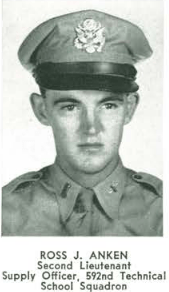
His unit trained aircrews for B-17s in Moses Lake, Washington. Ross was discharged from his original service on 15 April 1943, but reenlisted the next day and served almost three more years until 13 April 1946. The mission of the 592nd Technical School Squadron changed to unit replacement as of August 1943. It moved its operations to Drew Field, Florida in November 1943, and was inactivated in May 1944, at which time personnel were transferred to the 326th Army Air Force Base Unit. It’s unclear if Ross was with this unit for the duration of the war.
Ross continued to serve in the Air Force after the war. He was a Captain by 1951, when he was mentioned in the court martial of another airman. He obtained the rank of Major by 1962, when he is mentioned with that title in a news article. He was a Lieutenant Colonel as of 1967 when his daughter’s wedding announcement was published, and would retire at that rank.
Before 1945, Ross married Margaret Virginia Thomas. Margaret was born 3 March 1922 in Wisconsin, the daughter of Louis George Thomas (1893-1964) and Helena Cicilia Wolf (1899-1998).
Their children were Kathleen (1945), Margaret (1947), and Susan (1949).
Although the 1950 census record for Ross and his family has not been found, it seems that at some point in the 1950s the family was stationed in Washington, DC.
His wife Margaret was listed traveling with their three daughters in 1951 and 1954, possibly to visit him while he was deployed abroad.
Margaret died suddenly on 7 September 1955 in Washington, DC, at Walter Reed Army Medical Center. Her obituary mentions her husband and three daughters. Note that Ross’ obituary mentions a 4th daughter Karen (birth year unknown), but all indications are that she was born later and not the daughter of Margaret.
Ross is mentioned in a 1960 city directory for Madison, Wisconsin living at 4709 Ames Street and still serving in the USAF.

By 1962, per a news article about his daughter, his family was living at 458 Clifden Drive in Madison.
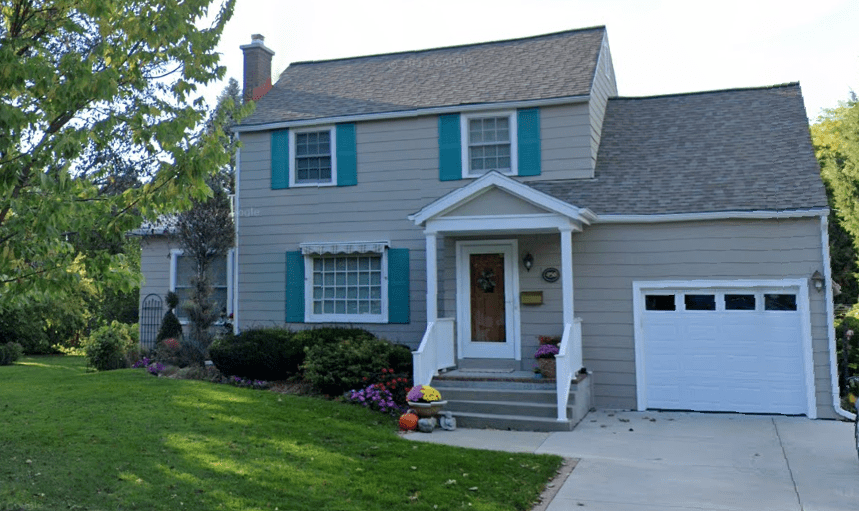
By 1965, he was living at 510 Piper Drive. He was still living at that address in 1967 when his daughter’s marriage announcement was published.
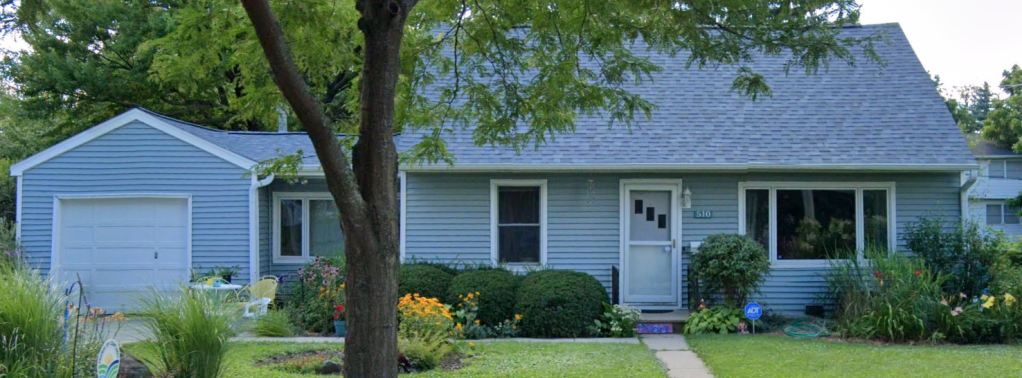
Ross retired from the Air Force in about 1969 after 28 years of service.
Ross married Esther Marie Linn, the widow of John Parker Luedtke, on 20 April 1974.
By 1986, Ross and Esther were living at 134 Nautilus Drive in Madison.
Ross died 8 October 1992 in Madison.
Ancestors of Margaret Virginia Thomas

Margaret Virginia Thomas was born 3 March 1922 in Wisconsin, the daughter of Louis George Thomas (1893-1964), an immigrant from Russia, and his second wife Helena Cicilia Wolf (1899-1998), who was born in Wisconsin.
In 1930, she was living with her parents and her younger sister Virginia in Milwaukee at 4709 40th Street. Her father worked as an “estimator engineer” (?) at an auto parts manufacturer.
By 1940, she was living with her parents and sister at 3055A North 24th Street in Milwaukee. Her father was still working as an estimating engineer at an auto parts factory.
Before 1945, she married USAF officer Rossiter “Ross” J Anken. Their children were Kathleen (1945), Margaret (1947), and Susan (1949).
Margaret took at least two trips with her daughters overseas (in 1951 and 1954), possibly visiting her husband while he was deployed, as they traveled on military ships.
By 1955, Margaret and Ross were living at least temporarily in Washington, DC. On 7 June, she took sick suddenly and died at Walter Reed Army Medical Center. She was buried in a cemetery for Anken family relatives in Portage, Wisconsin.
Not much is known about her ancestry, but her father and some of his maternal ancestrors are described below.
Louis George Thomas (1893-1964)
Louis George Thomas was born 24 April 1893 in Moscow, Russia. His father was English and his mother was Russian, and he grew up speaking Russian at home (though likely also grew up knowing English).
He arrived in Charleston, South Carolina on 9 January 1913. It’s unclear if he was in the United States earlier than that date, but his original arrival (per naturalization documents) was aboard the Manchester Spinner departing from Hamburg, Germany where Louis had lived prior to emigrating.
He declared his intention of citizenship on 21 January 1915, stating that his profession at that time was “seaman” and that he was living aboard the “U. S. R. C. “Windom” in Arundel Cove, A. A. Co., Maryland”. The “USRC” was the US Revenue Cutter service, a pre-cursor to the Coast Guard (1894-1915). It was merged into the newly created Coast Guard on 28 January 1915, just a week after Louis signed his intention of citizenship. The USRC Windom was built in 1896, recommissioned in 1915 as the USCGC Comanche, was in service as the USS Comanche in WWI, and was decomissioned in 1930.
Records don’t show any details about Louis’ USRC service, but his service was likely eventful. The Windom had been operating out of Galveston in the Gulf of Mexico since May 1912. It helped out with flood relief in New Orleans, then began patrols in the Gulf starting in June 1912, which continued through the end of 1913. Starting with the outbreak of war in Europe in August 1914, the Windom enforced America’s neutrality until November 1914, when it returned to Arundel Cove, Maryland. It arrived in Arundel Cove on 13 January 1915, just more than a week before Louis signed his intention of citizenship. It then was placed out of commision until December, at which time it became the USCGC Comanche.
It’s unclear if he continued to serve in the Coast Guard at this time or took civilian employment.
Louis was granted American citizenship in 1918. On 17 May 1918, he enlisted in the US Navy (USNR), served as a Chief Motor Mechanic in WWI, and was honorably discharged on 17 March 1919. It’s possible he continued to serve on the Comanche as it was in service to the Navy during the war, but the known records do not specify his assignment.
In the US census of 14 January 1920, Louis was living as a boarder in Milwaukee, Wisconsin on 208 22nd Street. He was listed as divorced and was working as a machinist in a machine shop. (It’s unclear where that address is located currently.) There’s no indication who his first wife was or exactly when they were married or divorced, although it likely overlapped with his service at sea.
On 20 April 1920, Louis married Helena Cicilia Wolf. Helena was born 12 April 1899 in Milwaukee. Her parents were Carl A (aka Charles) Wolf (b. 1873), a German immigrant, and Rosa Cecelia Hammer (1878-1926), who was born in Kansas City.
They had two daughters: Margaret Virginia (1922) and Virginia (1927).
In 1930, Louis, his wife, and his two daughters were living in Milwaukee at 4709 40th Street. Louis worked as an “estimator engineer” at an auto parts manufacturer.
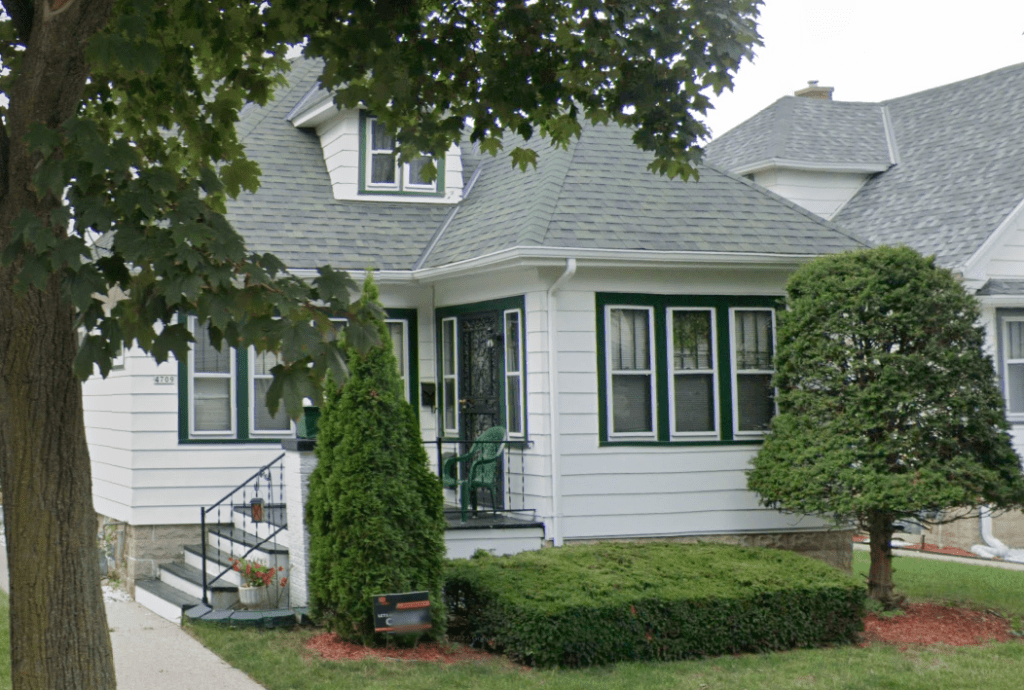
By 1940, Louis was living with his wife and daughters at 3055A North 24th Street in Milwaukee. He was still working as an estimating engineer at an auto parts factory.
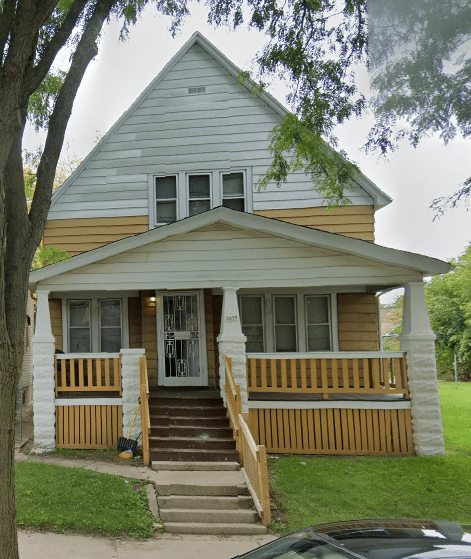
In 1942, Louis registered for the draft (although at age 49 he was unlikely to ever be drafted). His draft record indicates that he was working for A. O. Smith Corporation, which was formed in 1874 to build baby carriage and bicycle parts, but developed the world’s first steel automobile frame in 1899, and branched out into other automobile parts thereafter, as well as bomb casings during World War I. They also produced oil refining tanks, oil supply line pipes, water heaters, and brewing tanks. In World War II they produced bomb casings, torpedoes, and aircraft parts.
In the 1950 census, Louis was living just with his wife (still at 3055A North 24th), as both daughters had moved out. He was an estimate engineer at a steel products manufactory.
Louis died 27 March 1964 in Madison, Wisconsin (although he was living in Dekorra at the time). Louis’s wife Helena outlived him by over 30 years, dying 9 Februrary 1998 in Jackson, Oregon just two months short of her 99th birthday.
Carl Wolf (1873-1954)
Carl Wolf was born 12 March 1873 in Germany (specifically Prussia). His parents were Joseph and Mathilde Wolf, about which nothing else is known. He emigrated to the United States about 1895.
On 23 February 1897, Carl married Rosa Cecilia Hammer in Milwaukee, Wisconsin. Rosa was born 25 May 1878 in Kansas City, the daughter of German immigrants John Hammer (1835-1925) and Cecilia Erich (1845-1930).
Their children were John Joseph (1898), Helena Cecelia (1899), Annie (1902), Andrew Carl (1903), William (1904), Joseph Peter (1906), Carl (1911), Raymond (1913), and Florence (1924).
In 1900, Carl (listed as “Charles”) and Rosa were living with their children John and Helena at 1106 St. Paul in Milwaukee. Carl was working as a butcher.
In the 1905 Wisconsin census, Carl and Rosa were listed with children John, “Lena,” Annie, Andrew, and William. Carl was still working as a butcher.
In 1910, the family was living at 62 Muskego Avenue in Milwaukee, adding Joseph to the list of children in the household. Carl was still working as a butcher at a packing house.
In 1920, the family was living at 58 Muskego Avenue in Milwaukee, adding Raymond to the list of children, none having yet moved away. The list of professions is hard to read in places, but Carl was still working as at butcher, his son John was a florist, his daughter Lena was working at some kind of position at an “electrical shop”, daughter Anna was a stenographer at an electrical shop, and son Andrew was perhaps an “operator” at another kind of shop.
On 12 December 1924, Carl’s youngest child Florence was born.
Carl become a citizen on 16 April 1926. Sadly, his wife Rosa died two months later on 21 June 1926.
In 1930, Carl had moved into the household (at 1647 Sixth Street in Milwaukee) of his daughter Anna and her husband John Dempsey, along with Anna and John’s children Harry, Helen Jane, and Jackie; Carl’s oldest son John and three youngest children Carl, Raymond and Florence also lived in the same house. His other 5 children had moved elsewhere, including Helena who had married Louis George Thomas (see above) in 1920. Carl was working as a ham boiler in the packing house, John was the proprietor at a flower store, Carl Jr. was a retail salesman at the flower store and his son-in-law John Dempsey was a door hanger at an auto body factory.
In 1940, Carl was listed as the head of household at 3745 N Sixth Street in Milwaukee, living with his youngest daughter Florence (age 15), daughter Anna Dempsey, and grandchildren Harry, Helen, and Jack. John Dempsey, Anna’s husband, was not listed, but she was not listed as a widow. Carl was retired, and Anna was working as a retail saleslady at the flower shop (having worked 48 hours in the previous week).
Carl might have been the man (born 1873 in Germany) who as of the census on 7 April 1950 was living at St. Camillus, a Catholic hospital for men with chronic illnesses in Wauwatosa, Wisconsin at 10100 W Bluemound Street. The location later evolved in the 1960s into a nursing home, assisted living facility, and memory care community.
Carl died 2 April 1954 in Milwaukee and was buried at Holy Cross Cemetery and Mausoleum near his wife.
John Hammer (1835-1925)
John Hammer was born 5 October 1835 in the Hannover region of Germany (in Lower Saxony).
He married Cecilia Erich about 1868, probably in Germany. Cecilia was born 1 June 1845 in Germany. Her parents and ancestry are not yet known (her maiden name is known only from a marriage records of her sons Silverius and John). About 1869 they arrived in the United States.
Their children were all born in the United States, and included John (1873), Anton Bart (1875), Rosa Cecelia (1878), Silverius (1882), and twin sisters Annie and Mary (1884).
In 1880, John and Cecilia lived in Wyandotte, Kansas at 64 Everett Street with their first three children. John was working as a teamster.
The 1890 census records were lost, but by 1900 John was living at 161 Muskego Avenue in Milwaukee, Wisconsin with his wife Cecilia and his children John, Silverius, Mary and Annie. Rosa Cecelia had married Carl Wolf and moved out in 1897, and his son Bart had died in 1886. John was still working as a teamster, his son was a garden laborer, his son Silverius was a sausage maker, and his daughter Mary was a servant.
In 1910, John and Cecelia were living at their son Silvanus’ house at 1148 Willow Place in Milwaukee with Silvanus’ wife Lillian (who he had married a year previously) and their 10-month old son Lorence. The only person in the household working was Silvanus, who was a conductor at the Street Railway Company.
By 1920, John and Cecelia were back living in their own home at 1153 7th Street in Milwaukee, without any children. John remained retired and Cecelia was working out of the house as a servant. Their birth places are listed as “Bavaria” which contradicts earlier records that have John at least born in Hannover (Lower Saxony). The record notes they were both naturalized in 1899.
John died 9 October 1925 in Milwaukee. Cecelia died 1 June 1930. Note that Cecelia is the earliest known ancestor entirely on the maternal line.
 A Place to Call My Own


